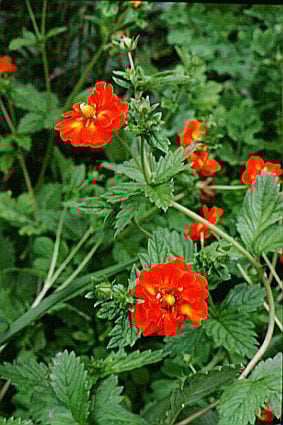
Potentilla 'William Rollisson' (d)

RHS Plant Profile
cinquefoil 'William Rollisson'
cinquefoil 'William Rollisson' Dorling Kindersley 2003

Synonyms

Potentilla russelliana 'William Rollison'

Award of Garden Merit
Herbaceous Perennial

A clump-forming herbaceous perennial to 45cm in height, with dark green, divided foliage and loose clusters of semi-double, orange-red flowers, the petals yellow on the reverse, produced through summer

Position

Full sun

Soil Types

Chalk, Loam, Sand

Max Height

0.1-0.5 metres

Max Spread

0.5-1 metres

Size

Time to Maturity
2–5 years
Max Spread
0.5-1 metres
Max Height
0.1-0.5 metres

Growing Conditions

Chalk Loam Sand
Moisture
Well–drained
pH
Acid or Alkaline or Neutral

Position

Full sun
Aspect
South–facing or East–facing
Exposure
Exposed
Hardiness
H7

Botanical Details

Family
Rosaceae
Native to GB/Ireland
No
Foliage
Deciduous
Habit
Clump forming
Potentially harmful
Fruit are ornamental - not to be eaten. Wear gloves and other protective equipment when handling. Pets: Fruit are ornamental - not to be eaten - see the HTA guide to potentially harmful plants for further information and useful contact numbers
Genus
Potentilla can be herbaceous perennials, deciduous shrubs, or annuals, with palmately or pinnately divided leaves and solitary or clustered, saucer-shaped, 5-petalled flowers appearing over a long period
Name Status
Accepted

How to Grow

Cultivation

Grow in poor to moderately fertile, well-drained soil in full sun

Propagation

Propagate by division in autumn or spring

Suggested planting locations and garden types

  • City and courtyard gardens
  • Coastal
  • Gravel garden
  • Cottage and informal garden
  • Rock garden
  • Flower borders and beds

Pruning

No pruning required

Pests

Generally pest-free

Diseases

May be susceptible to honey fungus