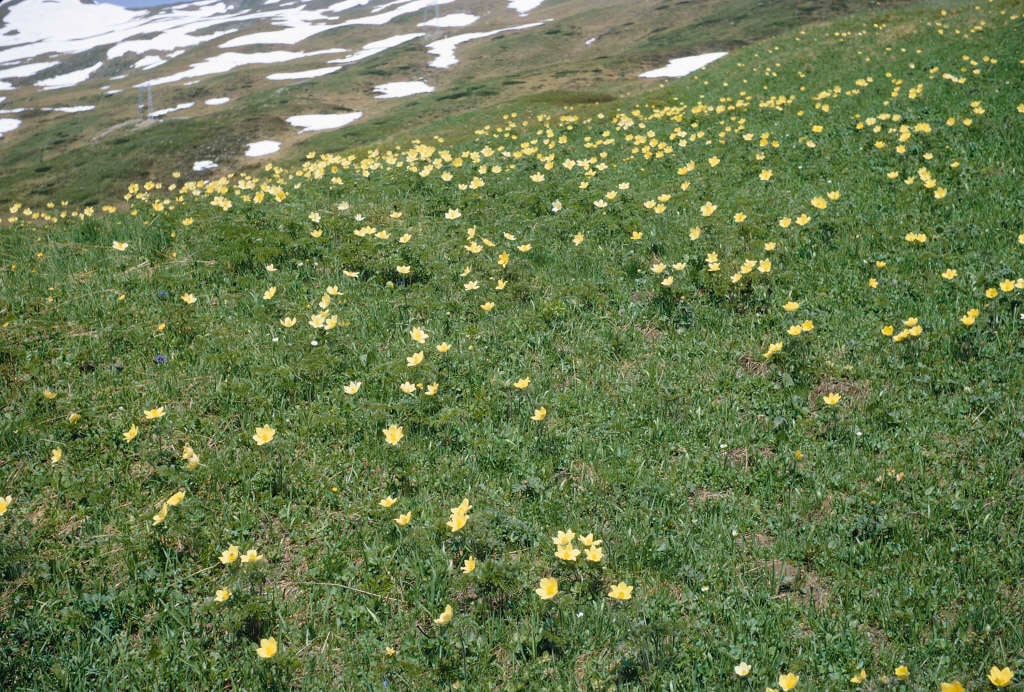
Pulsatilla alpina subsp. apiifolia

RHS Plant Profile
parsley-leaved pasqueflower
parsley-leaved pasqueflower RHS 1967

Other common names

sulphur-coloured windflower

Synonyms

Pulsatilla alpina subsp. sulphurea misapplied
Anemone sulphurea misapplied
Anemone alpina var. sulphurea misapplied
Pulsatilla lutea

Alpine Rockery Herbaceous Perennial

A clump-forming herbaceous perennial to 35cm, with softly hairy, much divided leaves and erect flowers 4-6cm in width, with five pale yellow petals, silky on the outside, followed by silky fruiting heads

Position

Full sun

Soil Types

Loam, Sand

Max Height

0.1-0.5 metres

Max Spread

0.1-0.5 metres

Size

Time to Maturity
2–5 years
Max Spread
0.1-0.5 metres
Max Height
0.1-0.5 metres

Growing Conditions

Loam Sand
Moisture
Well–drained
pH
Acid or Neutral

Position

Full sun
Aspect
South–facing or East–facing
Exposure
Exposed
Hardiness
H5

Colour & Scent

Season Stem Flower Foliage Fruit
Spring
Summer
Autumn
Winter

Botanical Details

Family
Ranunculaceae
Native to GB/Ireland
No
Foliage
Deciduous
Habit
Clump forming
Potentially harmful
Can cause mild stomach upset if ingested. Wear gloves and wash hands after handling
Genus
Pulsatilla are herbaceous perennials forming clumps of finely dissected leaves, with solitary, hairy bell-shaped or cup-shaped flowers followed by silky-plumed seed-heads
Name Status
Correct
Plant Range
Europe, SW Asia

How to Grow

Cultivation

Grow in fertile, very well-drained soil in full sun. It resents root disturbance and may be difficult to establish, so plant when small and leave undisturbed. Can also be grown in pots in an alpine house

Propagation

Propagate by seed sown in pots in an open frame as soon as seed is ripe. Propagate by taking root cuttings in winter

Suggested planting locations and garden types

  • Gravel garden
  • Rock garden
  • Patio and container plants

Pruning

Leave faded flowers as seedheads are an attractive feature

Pests

Generally pest-free

Diseases

Generally disease-free