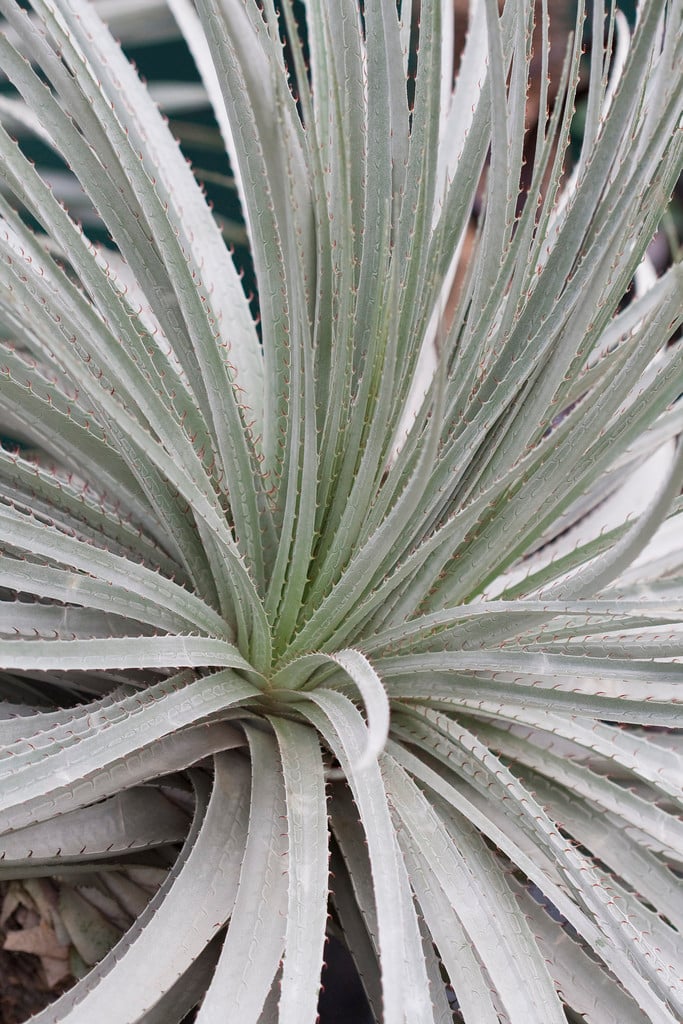
Puya coerulea

RHS Plant Profile
blue puya
blue puya RHS
Conservatory Greenhouse

An evergreen, terrestrial bromeliad to 2m with stout stems each ending in a spreading rosette of tough, narrow, silver leaves up to 60cm long with hooked spines along the margins. In summer, mature plants produce narrow, tubular, dark blue flowers clustered in upright spikes 40cm or more tall

Position

Full sun

Soil Types

Loam, Sand

Max Height

1.5-2.5 metres

Max Spread

1.5-2.5 metres

Size

Time to Maturity
10–20 years
Max Spread
1.5-2.5 metres
Max Height
1.5-2.5 metres

Growing Conditions

Loam Sand
Moisture
Well–drained
pH
Acid or Alkaline or Neutral

Position

Full sun
Aspect
South–facing or West–facing or East–facing
Exposure
Sheltered
Hardiness
H2
Drought Resistance
Yes

Colour & Scent

Season Stem Flower Foliage Fruit
Spring
Summer
Autumn
Winter

Botanical Details

Family
Bromeliaceae
Native to GB/Ireland
No
Foliage
Evergreen
Habit
Bushy
Genus
Puya are evergreen, terrestrial, perennial herbs with leathery, typically spiny, leaves forming dense rosettes. Native to Central and South America
Name Status
Correct
Plant Range
C Chile

How to Grow

Cultivation

Under glass grow in terrestrial bromeliad compost in full light. Water moderately when in active growth in mid-spring to late summer and apply a low nitrogen fertiliser every 6-8 weeks. Plants will tolerate temperatures below 0°C for brief periods if acclimatised to cool winter conditions. In warm, sheltered gardens grow plants outdoors in a sunny spot in sharply draining soil and protect from winter wet

Propagation

Propagate by seed sown at 19-24°C as soon as ripe

Suggested planting locations and garden types

  • City and courtyard gardens
  • Gravel garden
  • Sub-tropical
  • Architectural
  • Mediterranean climate plants
  • Low Maintenance
  • Wall side borders

Pruning

No pruning required

Pests

May be susceptible to scale insects

Diseases

Susceptible to root rots in wet soils