Quick Facts
Easy to grow
1
Plant in autumn
2
Depending on the species, they flower February to March or May to June
3
Bulb irises thrive in a sunny position in most soils
4
Last for several years
5
To make more plants, divide in autumn
6


Before you get started
Choosing bulb irises
All you need to decide is when you need colour in your garden – to start the year, or to accompany summer-flowering plants.
Iris × hollandica types reach 60cm (2ft) in tall when in flower and have unobtrusive grassy leaves. Colours range from yellow, blues, purples, whites and bi-coloured flowers.
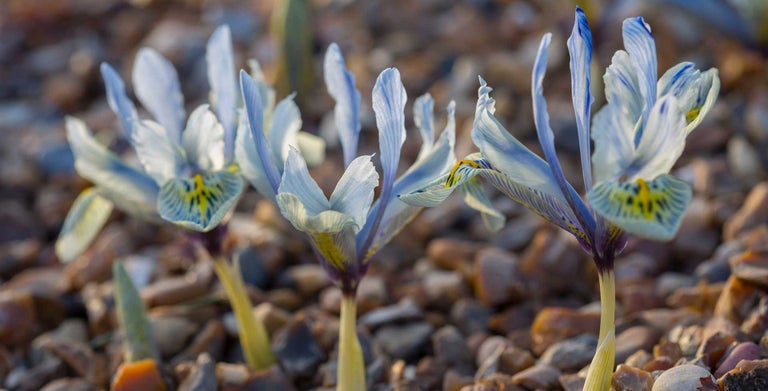
Iris reticulata is diminutive in stature at 15cm (6in) and flowers in February to March to start the year. The leaves die away in summer when the are dormant.
Planting
Where to plant bulb irises
Plant in well-drained soil in a sunny position.
When and how to buy bulb irises
You can buy iris in September and October by mail order, in nurseries, garden centres and DIY stores.
Sometimes you will see potted Iris reticulata types for sale in garden centres when they are flowering in spring; this is more expensive but you get instant enjoyment.
Planting
Choose a sunny position where the soil is well-drained. Iris reticulata planted en mass under a tree canopy can create an impressive spectacle to herald spring.
Plant bulbs as soon as possible after purchase. Planting them up to 15cm (6in) deep can help encourage your bulbs to reflower more reliably the following year. Space about a minimum of 5-7.5cm (2-3in) apart.
Plant potted bulbs just as you would for other perennials, with the on the top at the pot finishing just below the soil surface.
Ongoing Care
Routine care
Happily, these irises are very low maintenance. However, it’s best not to consider Iris reticulata as long term plants, especially on a soil that isn’t perfectly well-drained. Dutch iris are more reliable especially on a well-drained soil. Replacement is cheap and are widely available.
Pruning and Training
No actual pruning or is required. The foliage will die away naturally after flowering so just pull away the foliage once dead and straw-brown. At this stage, you may want to mark where the are (such as with a or label) to prevent you digging them up by mistake.
Propagating
You can divide the of Dutch iris and Iris reticulata types in autumn. Each single bulb tend to split into many ‘daughter bulbs’. Pot these small bulbs into 7.5cm (3in) pots with a mix of peat-free John Innes No. 2 and 10% horticultural grit by volume.
Water the compost to keep moist from autumn to late spring to support good development. They can take a couple of years to reach flowering size.
Problems
Although iris are usually trouble-free, slugs and snails sometimes favour bulb irises