Quick Facts
Easy to grow from seed
1
Likes well-drained garden soil, in full sun
2
Quickly grows to cover an arch or obelisk
3
Flowers from summer to autumn
4
Grow black-eyed Susans as an annual
5


Before you get started
Choosing a thunbergia
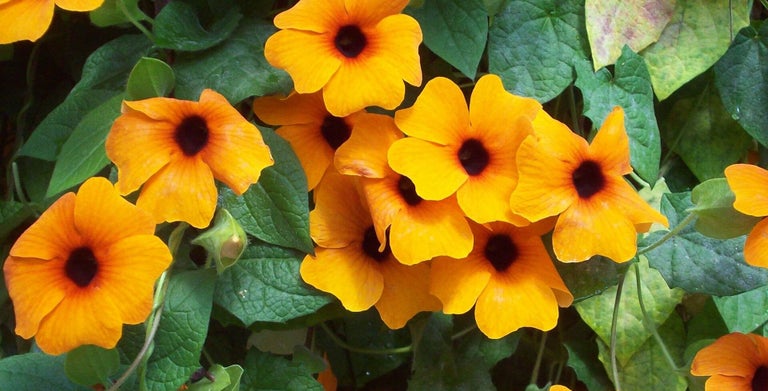
The most popular and easy-to-grow thunbergia is Thunbergia alata, known as black-eyed Susan for its yellow or orange petals and contrasting brown or black centre. While technically a tender , Thunbergia alata is usually grown outdoors as an annual climber, flowering from mid-summer to late autumn. They are perfect for twining up fences or obelisks, or for trailing out of a hanging basket.
The other group of thunbergia grown by gardeners are perennials such as Thunbergia grandiflora and T. mysorensis. These are best grown in a heated greenhouse or conservatory with a minimum temperature of 10-13°C (50-55°F) in winter.
Buying a thunbergia
Thunbergia alata is available as seed which can be purchased online all year round. This is the most economical way to buy black-eyed Susan and also means you should have the widest range of flower colours to choose from. Young plants grown in containers, ranging in size from 9cm to 3 litres are also available from late spring to early summer but the range is more limited. You can buy them in garden centres and online.
Seeds of other thunbergia are available online and plants suppliers found on the RHS Find a Plant.
Go to RHS Find a Plant and search for Thunbergia to browse the photographs and plant descriptions, and find out where to buy them.
Planting
Where to plant
Black-eyed Susan (Thunbergia alata) will grow in any garden soil but prefers fertile, well-drained soil, in full sun. Choose a spot where it will have some support, such as close to a wall or trellis, or where it can scramble into a well-established shrub. In pots and hanging baskets, use good quality peat-free with added grit for good drainage.
Tropical thunbergia grown permanently in pots under glass, do best in a peat-free loam-based potting compost such as John Innes No. 3. Find a spot that has a little shade or put up some shade netting to protect them from direct sunlight.
When to plant
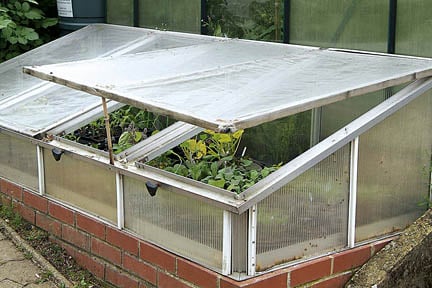
Young plants of black-eyed Susan (Thunbergia alata) can be planted into the garden when all danger of frost has passed. For most of the UK this is the end of May but in Scotland this is typically the end of June. Harden plants off first.
If growing thunbergia from seed, sow indoors in March or April, using a or warm windowsill (See the propagation section for more details).
Re-pot greenhouse or conservatory-grown plants in spring.
Ongoing Care
Watering
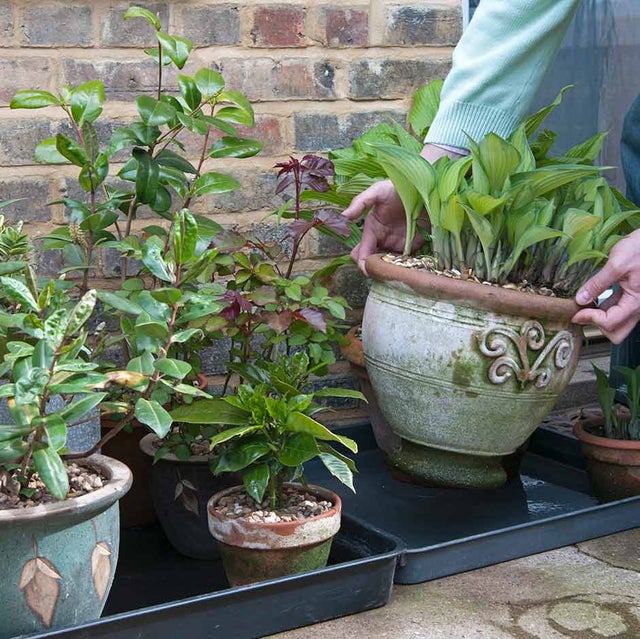
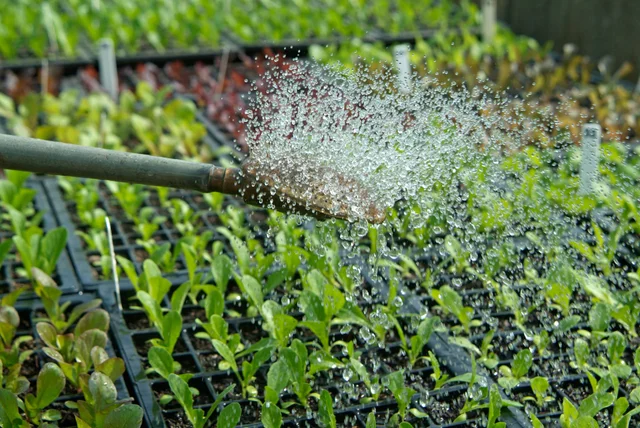
Water and young plants regularly, ensuring in the first few months the top 15cm (6in) of soil is damp but not soggy. Plants in the garden benefit from a good water at the time of planting. After that they should only need water in prolonged dry or hot spells.
Tropical perennials grown in containers like plenty of water in the spring and summer periods when growing strongly but go easy on the watering in winter, letting the surface dry between waterings.
Feeding
Usually, plants growing in a good garden soil will not need additional feeding. Just improve the soil by adding a 10cm (4in) layer of well-rotted garden as a after planting.
Thunbergia grown in containers benefit from a monthly liquid feed when actively growing.
Deadheading
Remove dead flowers to encourage more flowers to develop.
Overwintering
Thunbergia are tender climbers and so plants growing outdoors will be killed off by the first frosts. Black-eyed Susan (Thunbergia alata) are usually grown as so can be added to the compost heap at the end of the season.
For thunbergia growing indoors in a warm greenhouse or conservatory reduce the watering and stop feeding during the winter.
Pruning and Training
Thunbergia need a support such as an arch, pillar or fence for the young stems to climb up. If growing in pots, pop in some canes or an obelisk. In hanging baskets, stems can simply be allowed to tumble over the edge.
Propagating
Seed
Plants are easily raised from seed. Sow seed in trays or individual using peat-free and cover lightly with sieved . Germinate at 20-25°C (68-77°F) for 7-15 days. When plants are large enough to handle transplant into 7cm (3”) pots and grow them on until large enough to plant outside when all danger of frost has passed. Plants will need to be acclimatised to the outside conditions by putting them outside during the day but protecting at night.
Cuttings
You can also use nodal softwood cuttings in early summer to increase your stock of plants.
{^widget|(adviceprofiles)%7b%22content%22%3a%7b%22items%22%3a%5b%7b%22id%22%3a%22501%22%2c%22name%22%3a%22Seed%3a+sowing+indoors%22%2c%22url%22%3a%22%2fadvice%2fprofile%3fPID%3d501%22%2c%22image%22%3a%22%2fgetmedia%2fEFB8F88A-8082-4FB1-AA51-0479C0211D64%2fRHS_PUB0004404_733960%22%2c%22description%22%3a%22Sowing+seeds+indoors+allows+tender+plants+to+be+started+off+earlier+in+the+season.+When+they+have+grown+into+young+plants%2c+they+can+be+planted+outside+in+the+garden+or+vegetable+plot+once+the+weather+is+warm+enough.%22%2c%22label%22%3a%22Propagation%22%7d%5d%7d%2c%22type%22%3a%22AdviceInline%22%7d|(container)RHSRelatedLinksInlineWidget|(name)editabletext_1|(widget_displayname)RHS+Related+Links+-+below+(inline+widget)|(width)|(height)|(componentid)0^}
Problems
Generally trouble free when growing outside in the garden, however in conservatories or greenhouses thunbergia can be effected by red spider mite, whitefly and scale.