The history of the RHS Chelsea Flower Show
Discover 10 years of RHS Chelsea
Hunting for that garden you remember from a previous show?
Start exploringThe first show - 1913
May 20 1913 saw the first show at Chelsea, known as the Great Spring Show. The first shows were three-day events held within a single marquee. Royal visits were yet to become a tradition – the King and Queen did not attend in 1913, but the King's Mother, Queen Alexandra, attended with two of her children. The only garden to win a Gold medal before the war was also in 1913 and was awarded to a rock garden created by John Wood of Boston Spa.

The First World War
A few months after the second Chelsea show, war was declared in Europe. The show continued in 1915 and, while the number of exhibitors dropped, it was treated as a normal show. Things changed in 1916 – compulsory conscription began in January and many RHS staff members were called to war. There was also feeling that ornamental gardening was an inappropriate indulgence and after 1916, the show was cancelled for the duration of the war.

Post-war
In 1919, the Government demanded that the RHS pay an Entertainment Tax for the show – with resources already strained, it threatened Chelsea. Thankfully, this was wavered once the RHS convinced the Government that the show had educational benefit and in 1920 a special tent was erected to house scientific exhibits (now found in one corner of the Great Pavilion).

1920s
While the original shows were housed within one tent, the provision of tents increased after the war ended. In 1928, a tent for roses appeared and between 1920 and 1934, there was a tent for pictures, scientific exhibits and displays of garden design. In the late 1920s, two residents of Chelsea, the Countess of Lovelace & Jacqueline Hope, held tea parties for celebrities and titled guests to mark the show.

1930s
Between the two world wars, rock gardens were probably the most popular feature of the show, drawing large crowds. From 1932, the schedule for Chelsea changed. On Tuesday, judging took place followed by a royal visit. Wednesday morning was reserved for RHS Fellows and at noon, the show opened to the public for two and a half days. The show was discontinued in 1939 for the Second World War. The RHS instead focused on their 'Dig for Victory' campaign, showing how to grow food at home.

1940s
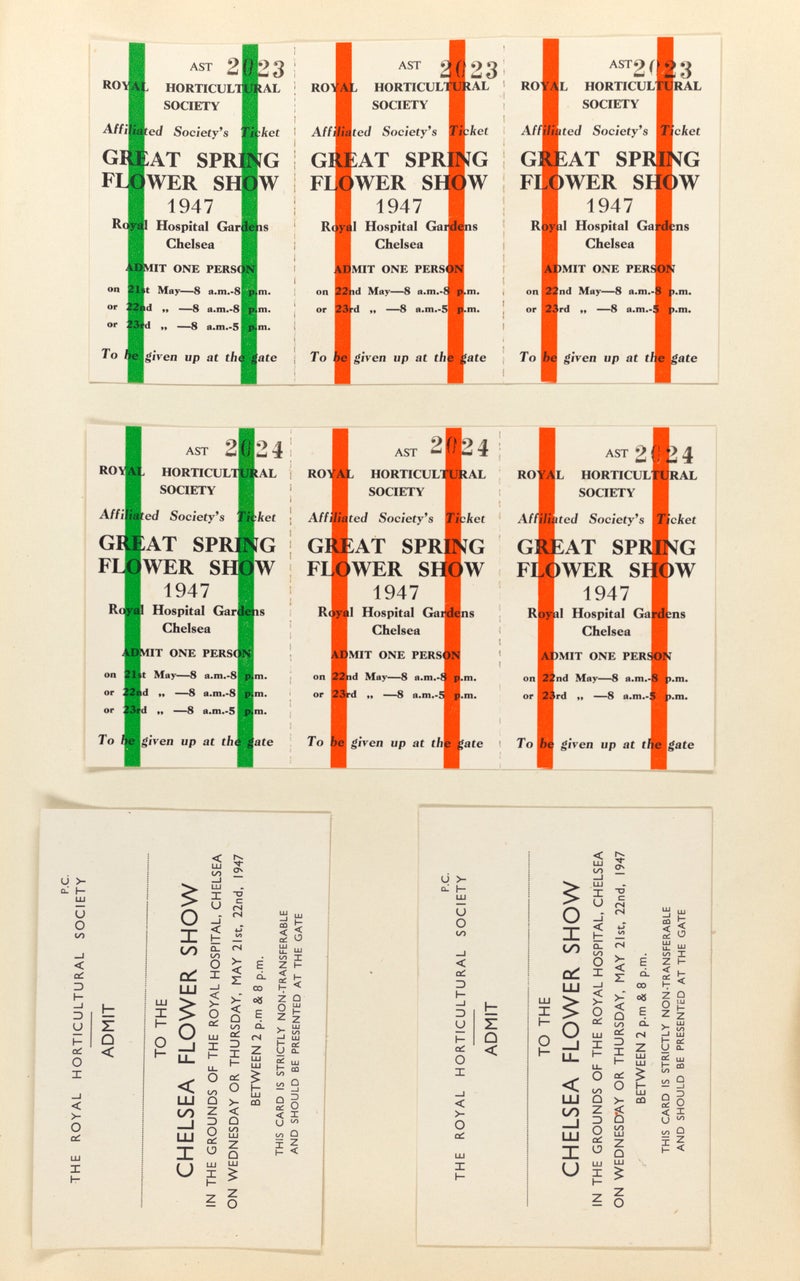
Following the end of the Second World War in 1945, it was decided to bring the show back as quickly as possible. The Chelsea show returned in 1947 and was hailed as a triumph. There were far fewer exhibitors and orchid stands, which was cleverly disguised by scattering the displays throughout the marquee. Despite this, it was said that the show represented the determined effort to keep the flag of British horticulture flying.
1950s
A big change came to Chelsea in 1951 when the tents were replaced by a single marquee that was bigger than anything before at the show. The structure was supported by 278 tent posts and covered 1.5 hectares, spending years in the Guinness Book of Records as the world's largest tent. The 50s also saw Queen Elizabeth II come to the throne. She was made a royal patron of the RHS in June 1952, making her first visit to the show as Queen in 1955.

1960s
The arrival of the 1960s was welcomed at Chelsea by the largest display of orchids ever staged at the show. There were 5000 square feet of orchid stands and displays. The popularity of rock gardens dwindled in the 60s, until there was only one at the show in 1965. They were replaced by the tree and shrub garden in the public's affection. Bonsai trees also made their first appearance at Chelsea in the 1960s with a display from the Japan Society of London.

1970s
The 70s saw a change in horticulture. Rather than growing plants from seed, people moved towards impulse-buying of container-grown plants. This decade also saw the rise of the celebrity garden designer who began appearing on TV. Legendary plantswoman Beth Chatto made her first appearance in 1976 – the following year saw her win the first of 10 consecutive Chelsea Gold Medals. In 1979, the show became so crowded that admissions were prevented for the first time in the show's history.

1980s
In 1980, there were only eight Show Gardens at Chelsea. By 1985 this had more than doubled. Visitor numbers were also on the rise and after overcrowding in 1987, tickets sold were limited the following year to 40,000 per day. But, so few tickets were sold that an advertising campaign was hastily created and the ceiling was lifted. 1988 also saw the arrival of the Courtyard Gardens – a small garden category. It received mixed reviews and didn’t return until 2001.
1990s
The 90s brought two more nursery women into the public eye – Carol Klein and Jekka McVicar, appearing first at Chelsea in 1990 and 1993 respectively. Mediterranean gardens became popular in the 90s and this decade also saw the arrival of conceptual gardens – gardens that exist to express a theme. Hampton Court Palace Flower Show was established in 1990, with the RHS taking over the show in 1993. A hierarchy of flower shows soon established, with Chelsea becoming the peak for garden designers.

2000s
A big change came in 2000 with the removal of the old marquee. Its remains, made up of five hectares of canvas, were recycled into 7,000 handbags, jackets and aprons. It was replaced with a pavilion that started as a double but later became a single structure. Design became more daring in the early 21st century – one being James May’s garden made from plasticine. It failed to win any awards, but protest was averted when he was presented with an ‘RHS Gold medal’ made of plasticine.

2010s
The 2010s saw garden design become increasingly daring. One example of this was seen in 2010 with Laurie Chetwood and Patrick Collins’ design containing a 9m-tall structure as a framework for an edible garden. Joe Swift designed his first garden for the show in 2012 for the Homebase Teenage Cancer Trust. His efforts were well received and he won a Gold medal. In 2016, Jardin Blanc was unveiled at Chelsea, with Raymond Blanc spearheading a revolution in the show’s catering options.

100 years of Chelsea
The Chelsea Flower Show celebrated its 100th birthday in May 2013. A temporary ban on gnomes was lifted, with well-known faces – including Elton John and Helen Mirren – painting gnomes to sell for charity. In total, 20 Gold medals were given to gardens in 2013, with a non-British firm taking ‘Best in Show’ for the first time. The Chelsea Plant of the Year became the Chelsea Plant of the Centenary – with Geranium ‘Rozanne’ (introduced by Blooms of Bressingham) winning the crown.

Today
Today, RHS Chelsea Flower Show retains its unrivalled status as the premier event in horticulture. For garden and landscape designers and their sponsors, specialist nurseries, florists and specialist sellers it continues to be the world’s most prestigious flower show. In 2020, the show went digital for the first time, delivering inspirational articles and fun and informative videos created by designers, judges, plant experts and RHS Garden Advice.
