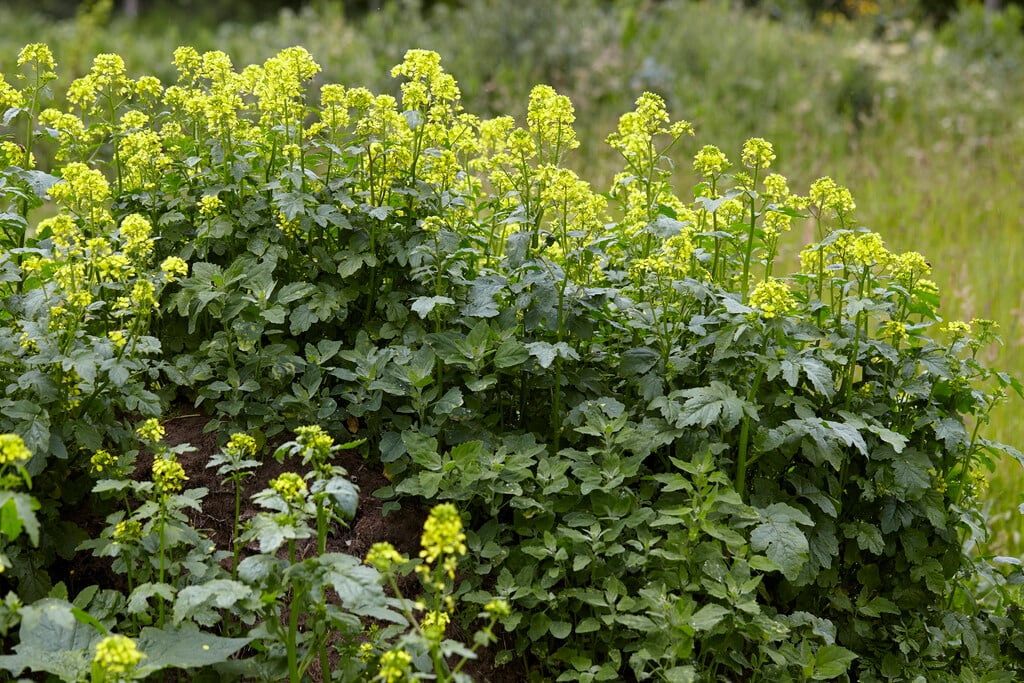
Brassica napus

RHS Plant Profile
oilseed rape
oilseed rape visionspictures.com

Other common names

canola, colza, colza oil plant, oil seed rape, rape

Annual Biennial

The wild hybrid plant (a cross between cabbage and turnip) from which swede and oilseed rape have been selected. It is a biennial which has silvery-green leaves and bright yellow flowers, much loved by bees

Position

Full sun

Soil Types

Chalk, Clay, Loam, Sand

Max Height

0.5-1 metres

Max Spread

0.1-0.5 metres

Size

Time to Maturity
1–2 years
Max Spread
0.1-0.5 metres
Max Height
0.5-1 metres

Growing Conditions

Chalk Clay Loam Sand
Moisture
Moist but well–drained or Well–drained
pH
Alkaline or Neutral or Acid

Position

Full sun
Aspect
East–facing or North–facing or South–facing or West–facing
Exposure
Exposed or Sheltered
Hardiness
H5

Colour & Scent

Season Stem Flower Foliage Fruit
Spring
Summer
Autumn
Winter

Botanical Details

Family
Brassicaceae
Native to GB/Ireland
No
Foliage
Evergreen
Habit
Columnar upright, Spreading branched
Genus
Brassicas can be annual, biennial or perennial plants, most are upright with alternate, often glaucous leaves, long taproots and clusters of cross-shaped, yellow or white flowers. The genus includes a number of species bred to produce food crops, such as cabbages, turnips, mustards and oilseed rape, as well as others grown for their ornamental value
Name Status
Correct

How to Grow

Cultivation

Grow in full sun in firm, fertile soil - including coastal regions

Propagation

Propagate by seed

Suggested planting locations and garden types

  • Wildlife gardens

Pruning

No pruning required

Pests

Generally pest-free

Diseases

Generally disease-free