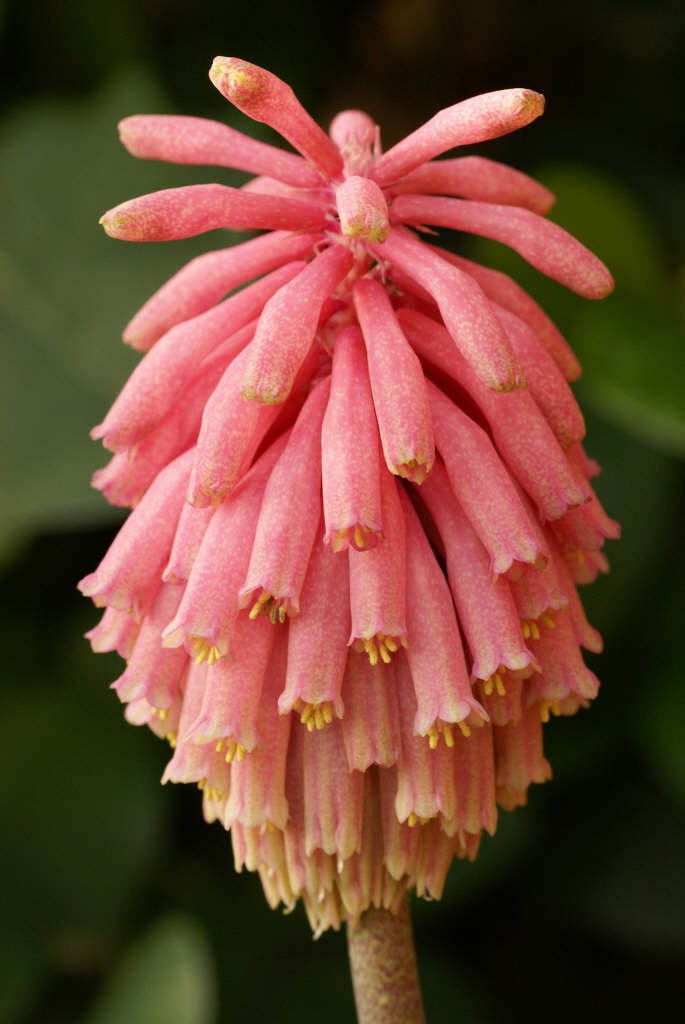
Veltheimia bracteata

RHS Plant Profile
forest lily
forest lily Christopher Whitehouse

Other common names

unicorn root

Synonyms

Veltheimia viridifolia Jacq.

Award of Garden Merit
Bulbs Houseplants Conservatory Greenhouse

A species of tender, bulbous perennial to 45cm with a basal rosette of strap-shaped, wavy, glossy leaves. Spikes of tubular pink, white or green flowers appear on upright stems from late winter to early spring, becoming dormant in summer

Position

Full sun

Soil Types

Chalk, Loam, Sand

Max Height

0.1-0.5 metres

Max Spread

0.1-0.5 metres

Size

Time to Maturity
2–5 years
Max Spread
0.1-0.5 metres
Max Height
0.1-0.5 metres

Growing Conditions

Chalk Loam Sand
Moisture
Well–drained
pH
Acid or Alkaline or Neutral

Position

Full sun
Aspect
South–facing or West–facing
Exposure
Sheltered
Hardiness
H2

Colour & Scent

Season Stem Flower Foliage Fruit
Spring
Summer
Autumn
Winter

Botanical Details

Family
Asparagaceae
Native to GB/Ireland
No
Foliage
Deciduous
Habit
Clump forming
Genus
Veltheimia are bulbous perennials with strap-shaped leaves and stout stems each bearing a terminal raceme of nodding, tubular flowers
Name Status
Correct
Plant Range
S Africa (Cape)

How to Grow

Cultivation

Best container grown in a loam-based, peat-free compost with added sharp sand and in full sun. Grow under glass but can be placed outside in warm weather. Re-pot only when congested to avoid root disturbance; plant in autumn with neck of bulb just above soil surface. Water freely when in growth and apply a low nitrogen liquid fertilizer every two weeks. Keep just moist when dormant. Needs protection from frost and low temperatures

Propagation

Propagate by seed in autumn or offsets in late summer

Suggested planting locations and garden types

  • City and courtyard gardens
  • Cottage and informal garden
  • Houseplants
  • Patio and container plants
  • Conservatory and greenhouse

Pruning

Cut back flowers as they fade

Pests

Generally pest-free

Diseases

Generally disease-free