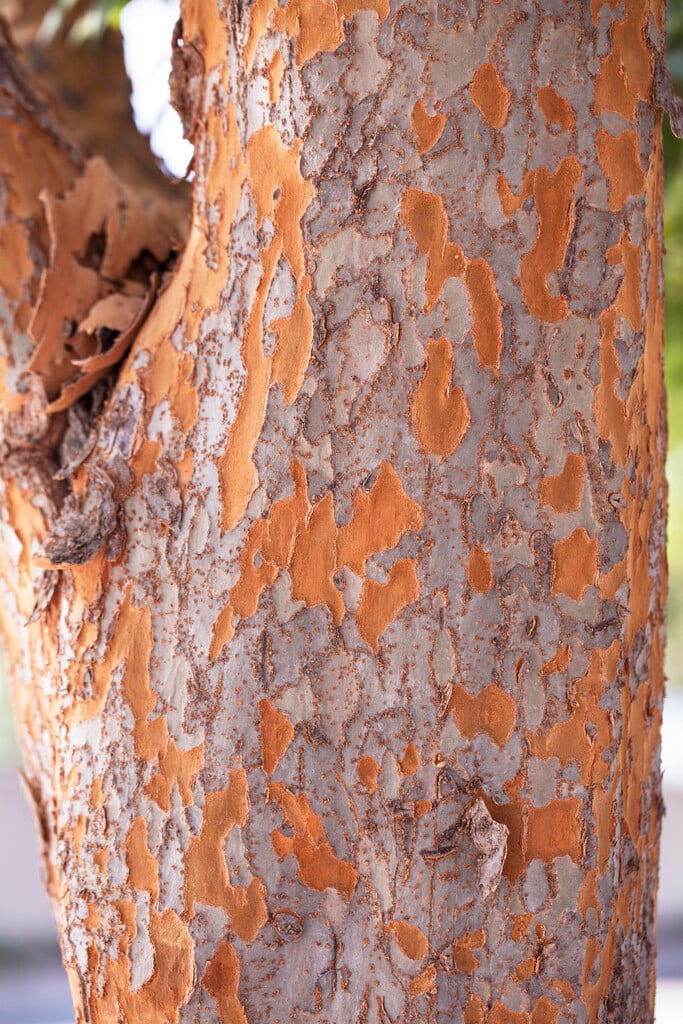
Ulmus parvifolia

RHS Plant Profile
Chinese elm
Chinese elm visionspictures.com

Other common names

lacebark

Synonyms

Ulmus chinensis
Ulmus sieboldii

Trees

Spreading, deciduous or semi-evergreen tree about 18m tall, with small, leathery, glossy rich green leaves to 8cm long, that turn yellow or red in autumn, then remain on the branches until midwinter. Tiny red flowers from late summer to autumn are followed by winged green fruit 8mm across in late autumn

Position

Full sun, Partial shade

Soil Types

Chalk, Loam, Sand

Max Height

Higher than 12 metres

Max Spread

wider than 8 metres

Size

Time to Maturity
20–50 years
Max Spread
wider than 8 metres
Max Height
Higher than 12 metres

Growing Conditions

Chalk Loam Sand
Moisture
Well–drained
pH
Acid or Alkaline or Neutral

Position

Full sun Partial shade
Aspect
East–facing or South–facing or West–facing
Exposure
Exposed or Sheltered
Hardiness
H7

Colour & Scent

Season Stem Flower Foliage Fruit
Spring
Summer
Autumn
Winter

Botanical Details

Family
Ulmaceae
Native to GB/Ireland
No
Foliage
Deciduous, Semi evergreen
Habit
Spreading branched
Genus
Ulmus are deciduous trees, often large, with elliptic or ovate leaves often colouring well in autumn; inconspicuous flowers are followed by winged fruits
Name Status
Correct
Plant Range
Far East

How to Grow

Cultivation

Grow in any well drained soil in full sun or partial shade

Propagation

Propagate by softwood cuttings in summer. Chip budding and grafting may also be used. Propagate by seed, see trees and shrubs from seed

Suggested planting locations and garden types

  • Architectural
  • Cottage and informal garden

Pruning

Pruning group 1

Pests

May be susceptible to aphids, bark beetles, horse chestnut scale and elm gall mites

Diseases

May be susceptible to coral spot, honey fungus and phytophthora. Shows strong resistance to Dutch elm disease