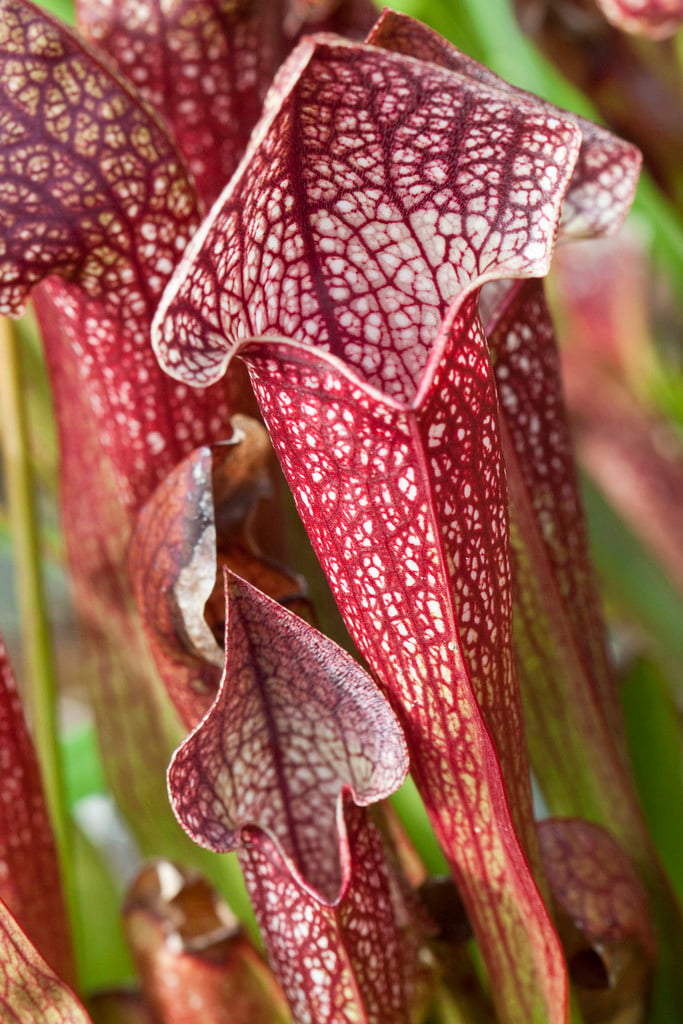
Sarracenia 'Jenny Helen'

RHS Plant Profile
pitcher plant 'Jenny Helen'
pitcher plant 'Jenny Helen' RHS
Award of Garden Merit
Bogs Conservatory Greenhouse Houseplants

A hybrid with slightly hooded pitchers reaching 30cm in height. They have a green base rising to a white colouration with red veining. Flowers are dark pink

Position

Full sun

Soil Types

Loam

Max Height

0.1-0.5 metres

Max Spread

0.1-0.5 metres

Size

Time to Maturity
2–5 years
Max Spread
0.1-0.5 metres
Max Height
0.1-0.5 metres

Growing Conditions

Loam
Moisture
Moist but well–drained or Poorly–drained
pH
Acid or Neutral

Position

Full sun
Aspect
South–facing or West–facing
Exposure
Sheltered
Hardiness
H3

Colour & Scent

Season Stem Flower Foliage Fruit
Spring
Summer
Autumn
Winter

Botanical Details

Family
Sarraceniaceae
Native to GB/Ireland
No
Foliage
Evergreen
Habit
Clump forming, Columnar upright, Matforming
Genus
Sarracenia can be evergreen or herbaceous, rhizomatous perennials with rosettes of phyllodes mostly modified into insect-catching tubular pitchers with hooded lids, and solitary, nodding cup-shaped flowers in spring
Name Status
Accepted

How to Grow

Cultivation

Grow under glass, keep moist in full light with shelter from hot sun. Use a peat-free acidic potting medium with sustainably sourced moss. In winter, keep slightly drier, cool and well ventilated. Irrigate with lime-free water. They will generally lose some of their leaves over winter during a period of dormancy. Most Sarracenias can be grown outside in milder parts of the country, but care should be taken in colder conditions. Choose a position in full sun, sheltered from cold winds. See carnivorous plant cultivation

Propagation

Propagate by division

Suggested planting locations and garden types

  • Patio and container plants
  • Conservatory and greenhouse

Pruning

No pruning required. Remove dead leaves as necessary

Pests

May be susceptible to scale insects, mealybugs, aphids and tortrix moth caterpillars

Diseases

Generally disease-free