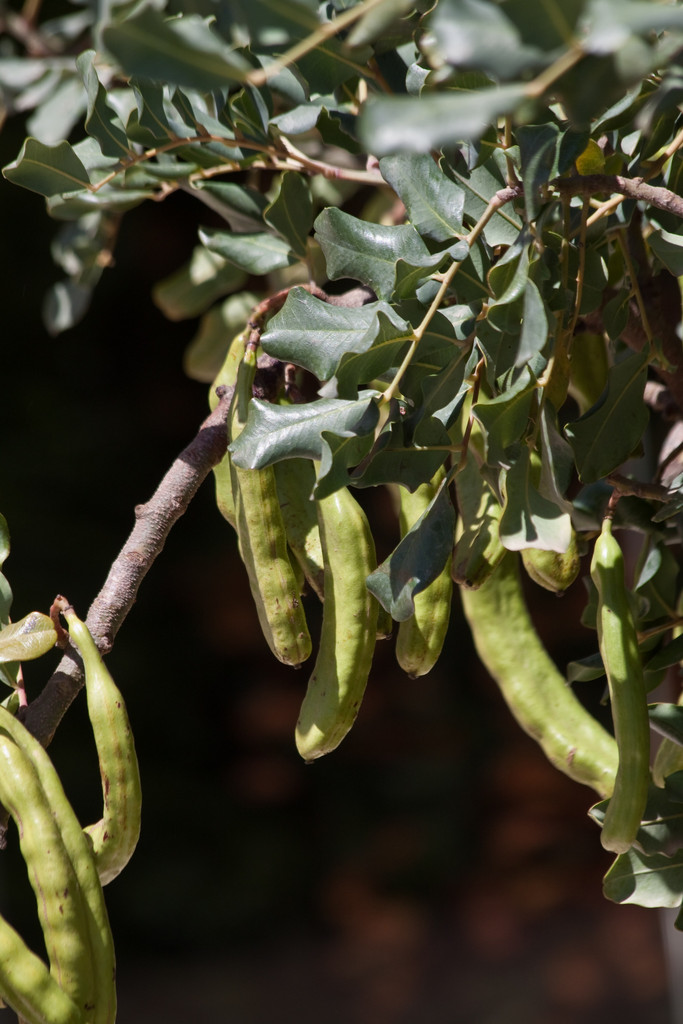
Ceratonia siliqua

RHS Plant Profile
carob
carob RHS

Other common names

algoroba bean, algorroba bean, carob tree, European locust tree, karoub, locust bean, St John's bread, tragasol

Trees

A Mediterranean evergreen shrubby tree with thick brown bark and dark green, leathery, pinnate leaves. Tiny green-tinted red flowers in racemes 2-6cm long, during spring, are followed by edible black-brown leathery pods containing a sweet pulp

Position

Full sun

Soil Types

Chalk, Loam, Sand

Max Height

8-12 metres

Max Spread

4-8 metres

Size

Time to Maturity
10–20 years
Max Spread
4-8 metres
Max Height
8-12 metres

Growing Conditions

Chalk Loam Sand
Moisture
Well–drained
pH
Acid or Alkaline or Neutral

Position

Full sun
Aspect
West–facing or South–facing
Exposure
Sheltered
Hardiness
H3
Drought Resistance
Yes

Colour & Scent

Season Stem Flower Foliage Fruit
Spring
Summer
Autumn
Winter

Botanical Details

Family
Fabaceae
Native to GB/Ireland
No
Foliage
Evergreen
Habit
Bushy
Genus
Ceratonia are evergreen shrubs or small trees with wavy-margined, pinnate leaves. Erect racemes of tiny petal-less flowers are followed by conspicuous bean-like fruit
Name Status
Correct
Plant Range
Mediteranean to Iran

How to Grow

Cultivation

Grow in well-drained soil in full sun with shelter from a south or southwest facing wall

Propagation

Propagate by seed soaked in water for 24 hours or propagate by semi-ripe cuttings with bottom heat

Suggested planting locations and garden types

  • Cottage and informal garden
  • Mediterranean climate plants

Pruning

Prune only to keep within bounds

Pests

Generally pest-free

Diseases

Generally disease-free