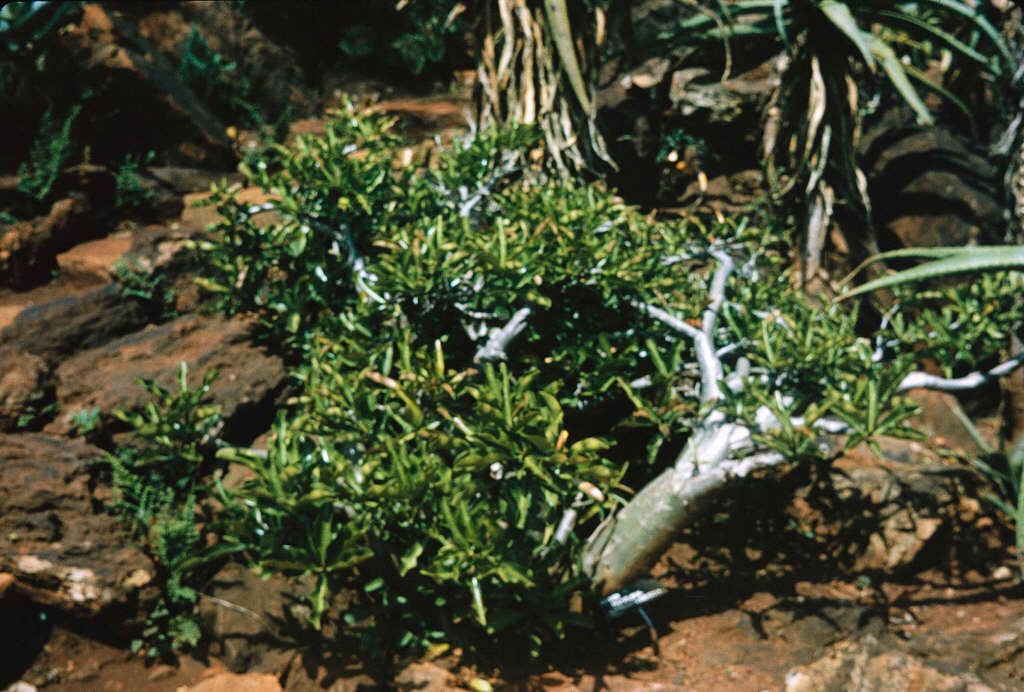
Adenium obesum

RHS Plant Profile
desert rose
desert rose RHS

Synonyms

Adenium arabicum, Adenium coetaneum, Adenium honghel, Adenium obesum 'Desert Rose', Adenium obesum var. obesum

Cactus Succulent

A succulent, shrubby perennial with very swollen stem-like caudex tapering to a branched apex bearing small clusters of red, pink or white flowers, which open before the ovate leaves

Position

Partial shade

Soil Types

Loam, Sand

Max Height

1-1.5 metres

Max Spread

1-1.5 metres

Size

Time to Maturity
2–5 years
Max Spread
1-1.5 metres
Max Height
1-1.5 metres

Growing Conditions

Loam Sand
Moisture
Well–drained
pH
Alkaline or Neutral

Position

Partial shade
Aspect
South–facing or West–facing
Exposure
Sheltered
Hardiness
H1A

Colour & Scent

Season Stem Flower Foliage Fruit
Spring
Summer
Autumn
Winter

Botanical Details

Family
Apocynaceae
Native to GB/Ireland
No
Foliage
Deciduous
Habit
Bushy
Potentially harmful
Harmful if eaten. Wear gloves and other protective equipment when handling Pets (dogs, cats): Harmful if eaten - see the HTA guide to potentially harmful plants for further information and useful contact numbers
Genus
Adenium are shrub-like, succulent perennials with a bottle-shaped, swollen caudex, branched at the apex and bearing terminal clusters of simple leaves, with small salver-shaped flowers
Name Status
Correct
Plant Range
Arabia, Tropical Africa

How to Grow

Cultivation

Under glass grow in peat-free, loam-based potting compost with added sharp sand in full light with shade from hot sun

Propagation

Propagate by seed sown as soon as ripe at 21°C (70°F). Root cuttings from non-flowering shoots in summer with bottom heat

Suggested planting locations and garden types

  • Architectural

Pruning

No pruning required

Pests

May be susceptible to aphids

Diseases

Generally disease-free