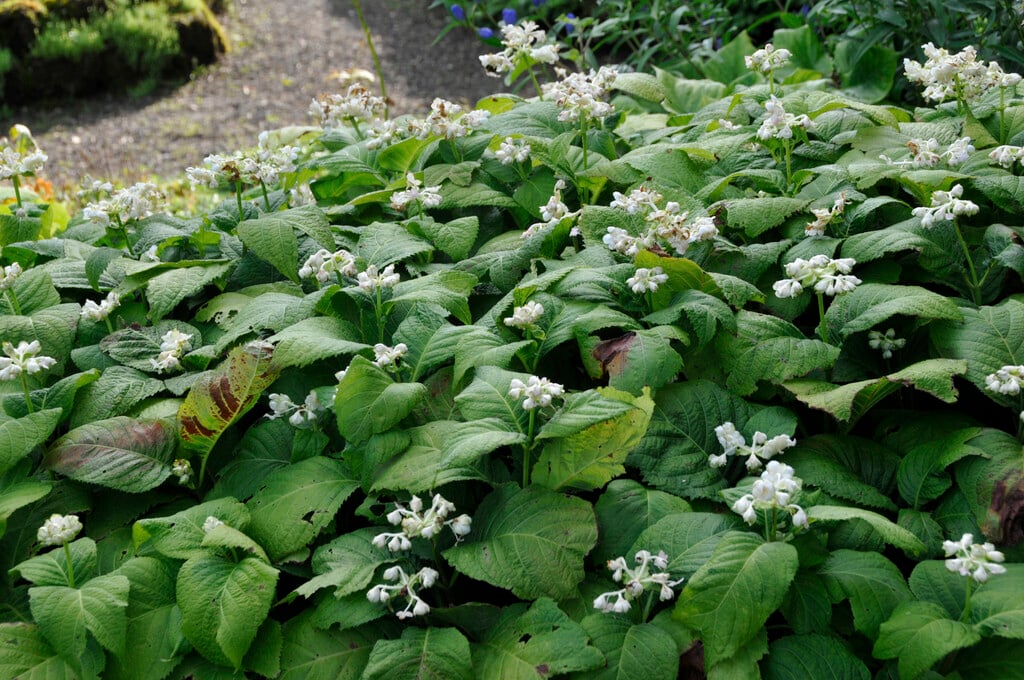
Hydrangea bifida

RHS Plant Profile
two-lobed false hydrangea
two-lobed false hydrangea visionspictures.com

Synonyms

Deinanthe bifida

Herbaceous Perennial

A clump-forming perennial with toothed, oval leaves with a characteristic fish-tail split at the tip. Height 40cm (16in). In summer branched clusters of pure white, hydrangea-like flowers with yellow stamens are borne above the foliage.

Position

Partial shade

Soil Types

Chalk, Clay, Loam

Max Height

0.1-0.5 metres

Max Spread

0.1-0.5 metres

Size

Time to Maturity
2–5 years
Max Spread
0.1-0.5 metres
Max Height
0.1-0.5 metres

Growing Conditions

Chalk Clay Loam
Moisture
Moist but well–drained
pH
Acid or Alkaline or Neutral

Position

Partial shade
Aspect
East–facing or North–facing or West–facing
Exposure
Sheltered
Hardiness
H5

Colour & Scent

Season Stem Flower Foliage Fruit
Spring
Summer
Autumn
Winter

Botanical Details

Family
Hydrangeaceae
Native to GB/Ireland
No
Foliage
Deciduous
Habit
Bushy
Potentially harmful
Skin allergen. Wear gloves and other protective equipment when handling. Pets (dogs, cats): Harmful if eaten. For further information and contact numbers regarding pets, see the HTA guide to potentially harmful plants
Genus
Hydrangea can be deciduous or evergreen shrubs, or self-clinging climbers, with flowers in clusters usually comprising both small fertile and more showy sterile flowers; often good autumn colour
Name Status
Correct
Plant Range
Japan

How to Grow

Cultivation

Grow in any reliably moist, humus-rich soil in partial shade. Shelter from cold, drying winds. Dislikes heat or drought.

Propagation

Propagate from seed sown in containers in a cold frame as soon as ripe. Germination is erratic. Seedlings take several years to reach flowering size. Alternatively, divide clumps in early spring. These can be slow to re-establish.

Suggested planting locations and garden types

  • City and courtyard gardens
  • Cottage and informal garden
  • Flower borders and beds

Pruning

No pruning required. Cut back dead stems in autumn/winter

Pests

May be susceptible to slugs

Diseases

May be susceptible to a leaf spot, powdery mildews, grey moulds (Botrytis) and honey fungus (rarely)