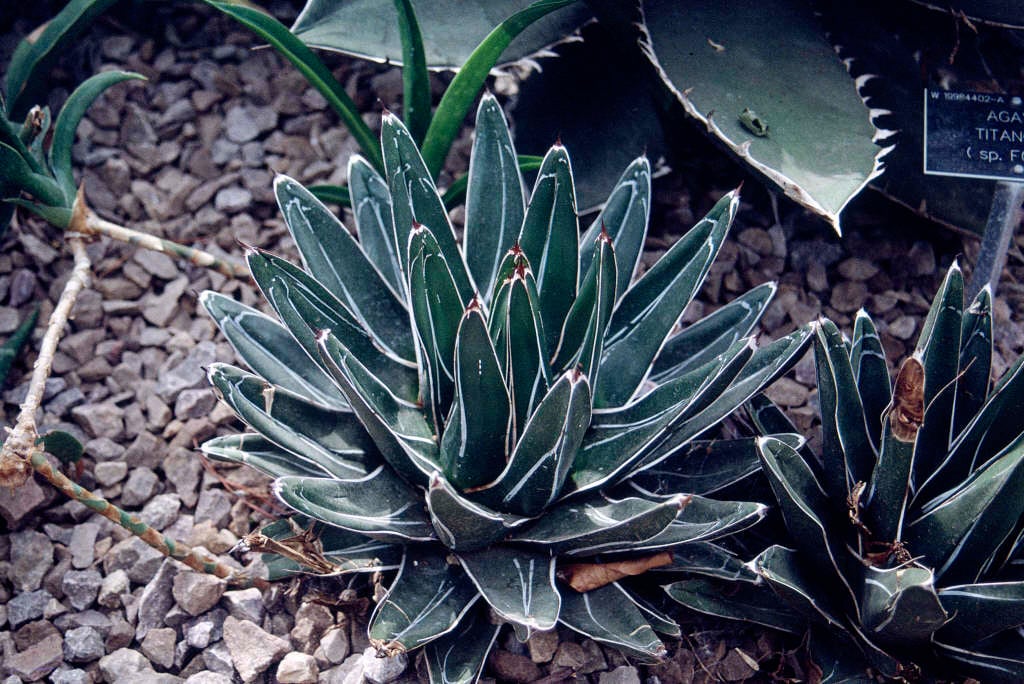
Agave victoriae-reginae

RHS Plant Profile
royal agave
royal agave RHS 2002

Other common names

Queen Victoria century plant

Synonyms

Agave victoriae-reginae f. longifolia
Agave victoriae-reginae var. nickelsiae
Agave ferdinandi-regis
Agave (_scabra_ × _victoriae-reginae_)
Agave victoriae-reginae f. longispina

Award of Garden Merit
Cactus Succulent Conservatory Greenhouse

An evergreen perennial forming a rosette of thick, straight, mid-green, spine-tipped leaves to 30cm in length, with creamy-white flowers borne in narrow, erect or arching racemes to 4m in length

Position

Full sun

Soil Types

Loam, Sand

Max Height

0.1-0.5 metres

Max Spread

0.1-0.5 metres

Size

Time to Maturity
5–10 years
Max Spread
0.1-0.5 metres
Max Height
0.1-0.5 metres

Growing Conditions

Loam Sand
Moisture
Well–drained
pH
Acid or Neutral

Position

Full sun
Aspect
South–facing or West–facing
Exposure
Sheltered
Hardiness
H2
Drought Resistance
Yes

Colour & Scent

Season Stem Flower Foliage Fruit
Spring
Summer
Autumn
Winter

Botanical Details

Family
Asparagaceae
Native to GB/Ireland
No
Foliage
Evergreen
Habit
Tufted
Potentially harmful
Skin irritant. Wear gloves and other protective equipment when handling. Pets (dogs, cats): harmful if eaten. For further information and contact numbers regarding pets, see the HTA guide to potentially harmful plants
Genus
Agave can be perennial or monocarpic succulents, forming rosettes of usually rigid, fleshy, spiny-edged leaves, with funnel-shaped flowers in racemes or panicles often much taller than the rosettes
Name Status
Correct
Plant Range
Mexico

How to Grow

Cultivation

Grow under glass in a standard cactus compost, water freely in summer and apply a balanced liquid fertiliser 3-4 times during the growing season. May be bedded or stood out in borders or patios in summer. Keep almost dry in winter. Provide winter protection, or grow in a container and overwinter in a greenhouse or conservatory. See houseplant cacti and succulent cultivation for further information

Propagation

Propagate by offsets taken in spring or autumn

Suggested planting locations and garden types

  • Patio and container plants
  • Coastal
  • Mediterranean climate plants

Pruning

No pruning required

Pests

May be susceptible to scale insects

Diseases

Generally disease-free