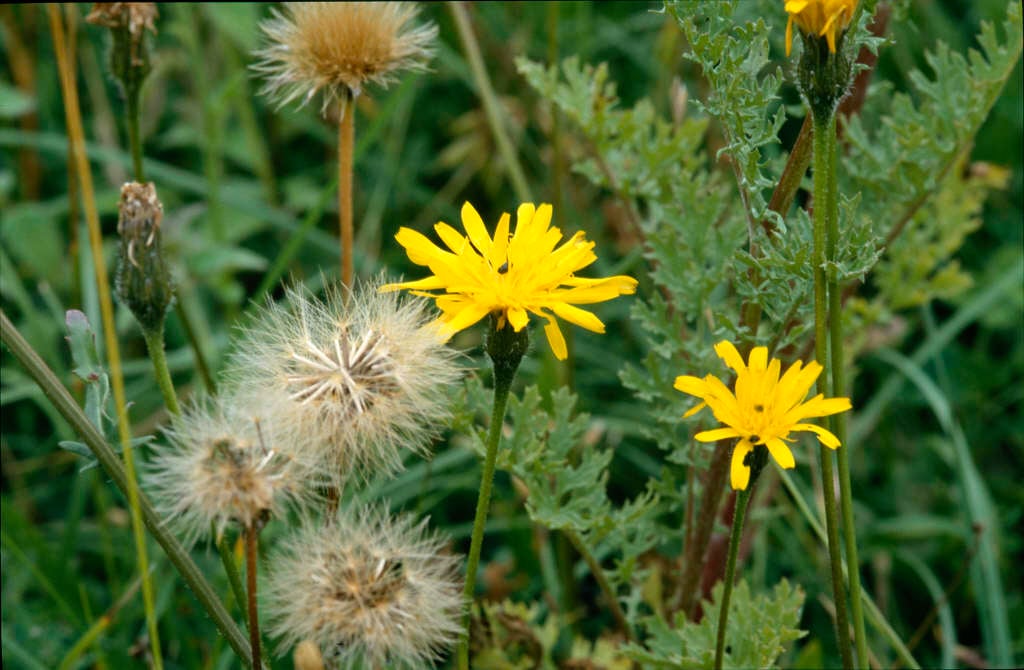
Leontodon hispidus

RHS Plant Profile
rough hawkbit
rough hawkbit RHS

Other common names

peradyl garw

Synonyms

Apargia hispida, Leontodon hastilis, Leontodon hastilis var. glabratus, Leontodon proteiformis

Herbaceous Perennial

A native perennial forming a rosette of coarsely hairy, lobed leaves, with leafless, unbranched stalks bearing yellow, dandelion-like flower heads in summer and early autumn

Position

Full sun

Soil Types

Chalk, Loam, Sand

Max Height

0.1-0.5 metres

Max Spread

0-0.1 metre

Size

Time to Maturity
2–5 years
Max Spread
0-0.1 metre
Max Height
0.1-0.5 metres

Growing Conditions

Chalk Loam Sand
Moisture
Well–drained
pH
Alkaline or Neutral

Position

Full sun
Aspect
West–facing or South–facing or East–facing
Exposure
Exposed or Sheltered
Hardiness
H5

RHS Recommended: for People & Planet

Growing conditions for maximum benefit

This plant will provide the maximum benefits if it is healthy and allowed to grow to maturity

For Bio-Diversity

  • Plants for Pollinators

Colour & Scent

Season Stem Flower Foliage Fruit
Spring
Summer
Autumn
Winter

Botanical Details

Family
Asteraceae
Native to GB/Ireland
Yes
Foliage
Deciduous
Habit
Clump forming
Genus
Leontodon are herbaceous perennials with a basal rosette of entire or pinnately lobed leaves, and simple or branched stems bearing yellow flowerheads in summer or autumn
Name Status
Correct

How to Grow

Cultivation

Often grown as a wildflower in grassy habitats and best grown in an open situation in well-drained alkaline soil with full sun

Propagation

Propagate by seed in spring or by division in spring

Suggested planting locations and garden types

  • Wildlife gardens
  • Wildflower meadow
  • Cottage and informal garden

Pruning

No pruning required

Pests

Generally pest-free

Diseases

Generally disease-free