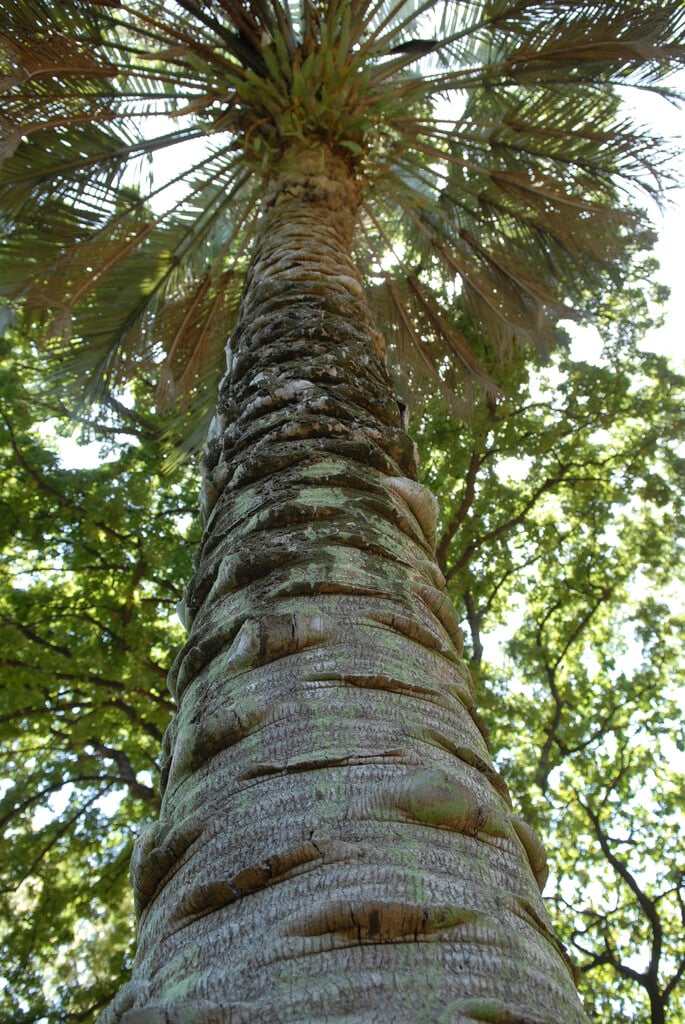
Butia yatay

RHS Plant Profile
yatay palm
yatay palm visionspictures.com

Other common names

jelly palm

Synonyms

Cocos yatay

Palms

An elegant, single-stemmed palm tree to 10m tall, with strongly arching leaves divided into numerous slender, grey-green leaflets. In summer it produces a long, branched cluster of yellow flowers; these are followed by conical, green to purple fruits. Hardy to around -10°C given a very free-draining soil

Position

Full sun, Partial shade

Soil Types

Loam, Sand

Max Height

8-12 metres

Max Spread

1.5-2.5 metres

Size

Time to Maturity
more than 50 years
Max Spread
1.5-2.5 metres
Max Height
8-12 metres

Growing Conditions

Loam Sand
Moisture
Well–drained
pH
Acid or Alkaline or Neutral

Position

Full sun Partial shade
Aspect
South–facing or West–facing
Exposure
Sheltered
Hardiness
H4
Drought Resistance
Yes

Colour & Scent

Season Stem Flower Foliage Fruit
Spring
Summer
Autumn
Winter

Botanical Details

Family
Arecaceae
Native to GB/Ireland
No
Foliage
Evergreen
Habit
Columnar upright
Genus
A genus of relatively hardy palms, native to South America, with feathery, grey-green drooping foliage, some grown as stemless plants and others as small trees. Many species of Butia produce edible fruits which can be made into jellies and alcoholic drinks
Name Status
Correct
Plant Range
Brazil to Argentina

How to Grow

Cultivation

Outdoors grow in deep, well-drained soil in full sun or partial shade. Hardiness is dependent on the ground being dry in very cold spells. See palm cultivation outdoors. Under glass grow in loam-based potting compost in bright, filtered light. When in growth, water moderately and apply a balanced liquid fertiliser monthly; keep just moist in winter. Pot on or top-dress in spring. See palm cultivation indoors

Propagation

Propagate by seed; germination may be slow and erratic

Suggested planting locations and garden types

  • Architectural
  • City and courtyard gardens
  • Coastal
  • Mediterranean climate plants
  • Patio and container plants
  • Sub-tropical
  • Conservatory and greenhouse

Pruning

No pruning required

Pests

May be susceptible to glasshouse red spider mite and scale insects when grown under glass

Diseases

Generally disease-free