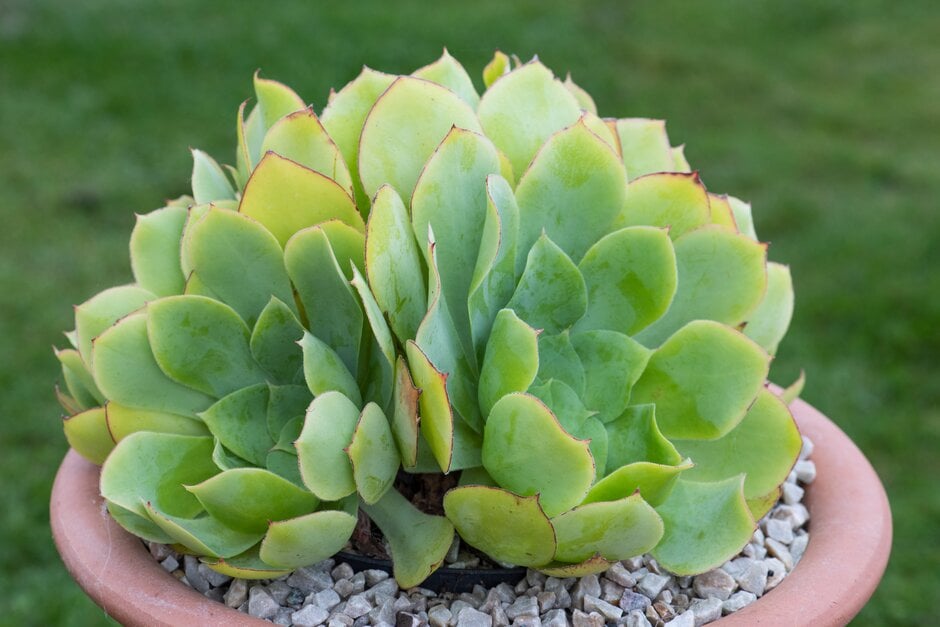
Aeonium cuneatum

RHS Plant Profile
Tenerife tree houseleek
Tenerife tree houseleek RHS
Award of Garden Merit
Cactus Succulent Conservatory Greenhouse Houseplants

A succulent evergreen subshrub, with sparsely branching stems tipped with large, cup-shaped rosettes of fleshy, wedge-shaped green leaves, with finely hairy and sometimes wavy edges. Mature rosettes produce spikes of yellow flowers in summer

Position

Partial shade

Soil Types

Loam, Sand

Max Height

0.5-1 metres

Max Spread

0.5-1 metres

Size

Time to Maturity
5–10 years
Max Spread
0.5-1 metres
Max Height
0.5-1 metres

Growing Conditions

Loam Sand
Moisture
Well–drained
pH
Acid or Alkaline or Neutral

Position

Partial shade
Aspect
South–facing or West–facing
Exposure
Sheltered
Hardiness
H1C
Drought Resistance
Yes

Colour & Scent

Season Stem Flower Foliage Fruit
Spring
Summer
Autumn
Winter

Botanical Details

Family
Crassulaceae
Native to GB/Ireland
No
Foliage
Evergreen
Habit
Bushy
Genus
Aeonium are evergreen succulents often of shrubby habit, with fleshy leaves in terminal rosettes on the shoots, and racemes or panicles of small, star-shaped flowers with numerous narrow petals
Name Status
Correct

How to Grow

Cultivation

Best grown in containers, in a free-draining medium in part shade or bright filtered light. Water moderately when in growth, not at all when dormant, and feed 2 or 3 times during the growing season. Overwinter in a greenhouse, conservatory or indoors. See houseplant cacti and succulent cultivation for further information

Propagation

Propagate by stem cuttings, kept at 18°C and barely moist until rooted

Suggested planting locations and garden types

  • Houseplants
  • Patio and container plants
  • Conservatory and greenhouse

Pruning

No pruning required, though stems can be tipped during the growing period to promote a bushy habit

Pests

May be susceptible to aphids and mealybugs

Diseases

Generally disease-free