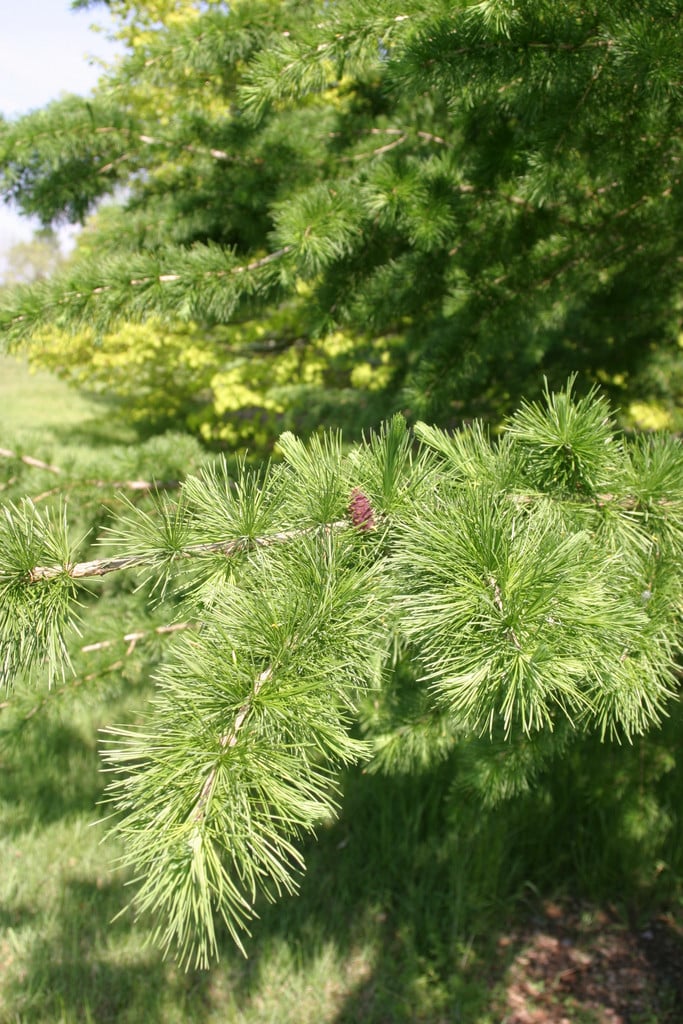
Larix gmelinii

RHS Plant Profile
Dahurian larch
Dahurian larch RHS

Synonyms

Larix dahurica

Conifers Trees

A deciduous, coniferous tree that can reach 35m, with a broadly conical shape and horizontal branches. Bright green, needle-like leaves are carried in bunches, and turn yellow in autumn. Male flowers are yellow, females start purple then ripen into erect, brown cones about 3cm long

Position

Full sun

Soil Types

Clay, Loam, Sand

Max Height

Higher than 12 metres

Max Spread

4-8 metres

Size

Time to Maturity
more than 50 years
Max Spread
4-8 metres
Max Height
Higher than 12 metres

Growing Conditions

Clay Loam Sand
Moisture
Moist but well–drained
pH
Acid or Neutral

Position

Full sun
Aspect
North–facing or West–facing or East–facing or South–facing
Exposure
Exposed
Hardiness
H7

Colour & Scent

Season Stem Flower Foliage Fruit
Spring
Summer
Autumn
Winter

Botanical Details

Family
Pinaceae
Native to GB/Ireland
No
Foliage
Deciduous
Habit
Bushy
Genus
Larix are deciduous trees of conical habit, with good autumn colour from the soft, needle-like leaves which are borne in whorls on spur-like lateral shoots and spirally arranged on young growth; small ovoid cones persist on the branches
Name Status
Correct
Plant Range
NE Asia

How to Grow

Cultivation

An exceptionally hardy tree that does best in areas with very cold winters and cool summers. In milder areas it is easily damaged by late spring frosts

Propagation

Propagate by seed in containers in early spring, grafting in winter, or root semi-ripe cuttings in summer under mist; cuttings are difficult to root

Suggested planting locations and garden types

  • Architectural
  • Low Maintenance

Pruning

No pruning required

Pests

May be susceptible to adelgids

Diseases

May be susceptible to honey fungus in gardens where it is present but insufficient data to determine degree of susceptibility