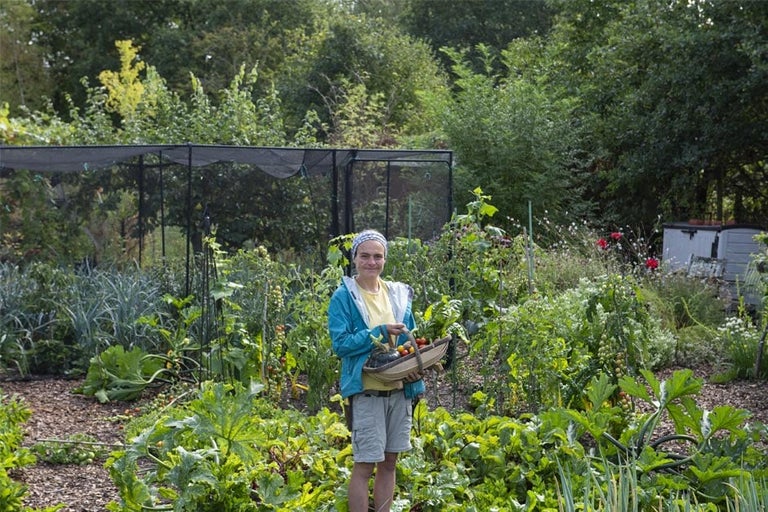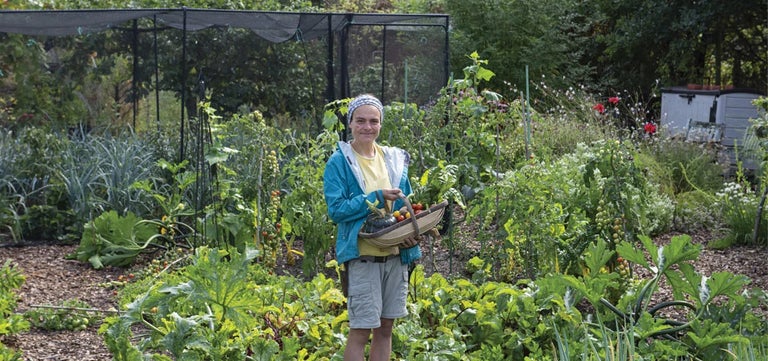
Liz’s Allotment Life: Taking stock of the year so far
As summer gets underway, RHS Wisley Edibles Horticulturalist Liz Mooney shares the planting, harvesting and seasonal jobs keeping her allotment busy

A hosepipe ban, relentless heat and a summer glut of vegetables have made every decision on the allotment count. RHS Wisley Edibles Horticulturist Liz Mooney shares the practical techniques helping her grow productive crops while using less water
It has been a few weeks since the last blog. Between my master’s dissertation on vegetables and keeping up with the summer workload in the World Food Garden at RHS Wisley, life has been a bit hectic. While RHS Wisley work and my dissertation have calmed down a little, the weather has not and the relentless heat continues.
My area – Surrey – is now under a hosepipe ban, meaning every drop counts and keeping the allotment productive is all about making the most of the water you use.
Before I get into what I’m doing on the plot, it’s worth checking the rules where you live. In my area, there is an exemption for watering food crops on allotments where a watering can isn’t sufficient, although the wording leaves plenty open to interpretation. Whether or not you choose to use that exemption, this dry spell is a good reminder that water is precious. I’ve been trying to make every watering can count, and these are the approaches that have been working for me.
By this point in the season, many crops are established and need less water than we might think, so blanket watering is best avoided.
Watering priority

After spending the past year researching perennial vegetables for my Masters, this summer has been a fascinating reminder of their resilience in practice. Unlike annual crops, established perennials have years to develop deep, extensive root systems that exploit moisture reserves lower in the soil profile, reducing their reliance on watering during prolonged dry spells. As a result, they are generally much more resilient to drought once established. It’s too late to change this year’s planting, but in the future perennials might be the crop of choice.
At this point in the season, I’m overflowing with allotment produce and can’t keep up with eating all the courgettes, cucumbers and chard available and now my cabbages have joined the harvest.

I sowed these in earlier in the year before planting them out and I have started to harvest them this week. Rather than letting surplus go to waste, I have decided to try to preserve the cabbage for over the winter.
I have frozen red cabbage before with great success but have always found white cabbage to be distinctly unpleasant on de-frosting. This year I have shredded and gently braised the cabbage with homegrown onions and a splash of red wine vinegar before freezing it as a ready to reheat winter side dish. It smells lovely, and the initial taste is very good, so let us hope it isn’t damaged too much by the freezer.
Liz’s freezer tip: shredded braised ‘greyhound’
Note: Because green cabbages lose their crisp texture after defrosting‚ pre-cooking them as a ready to reheat winter side dish is a good storage hack.
The focus over the next few weeks will be harvesting the summer abundance, keeping on top of the few bits of watering and filling the freezer in preparation for self-sufficiency over winter.
Here’s to hoping for a little rain soon!