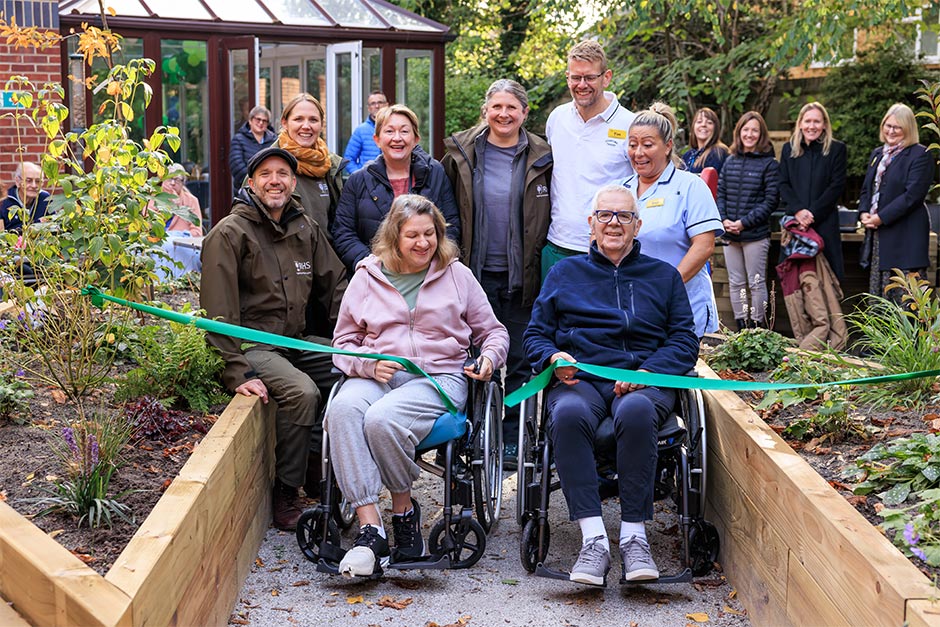
From sharing harvests to tackling isolation at the “Generous Garden”
As part of their Level 4 RHS Diploma in Horticultural Practice, students based at RHS Garden Wisley designed and built a community food-growing garden in Surrey
- Type of garden: community garden
- Location: Woking, England
- Budget: £12,000, plus £100 per year for materials for monthly gardening workshops
- Dimension: 300 square metres
- Implementation phase: 24–28 June 2024
- Key features: ornamental and edible plants, allotment-style beds, play area, gazebo
How the Wellbeing Garden began
The Generous Garden in Sheerwater, Woking
Level 4 RHS Wisley diploma students joined forces with the local community to bring this wellbeing garden to life, guided by expert landscape architect David Wallbridge and supported by enthusiastic volunteers. The design was produced by RHS student Felicity Gray and selected by members of the community, including ShopWise staff, customers and trustees.
Budget and process
Felicity Gray praised the team effort involved in creating the community garden
Among its key features, the Generous Garden has a children’s play area
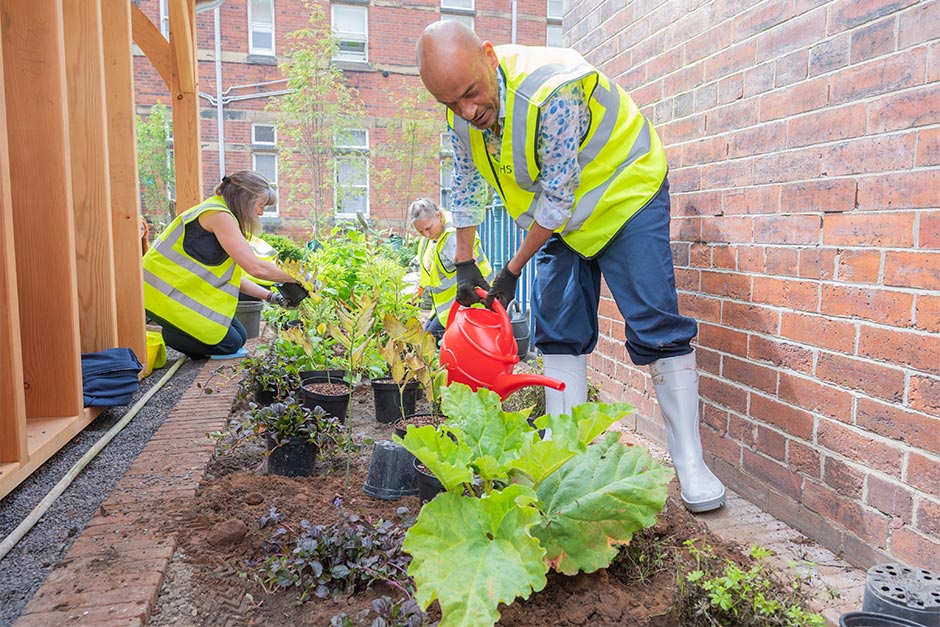
Felicity Gray led the project with course tutor David Wallbridge and, together with her fellow students, installed the key hard-landscaping elements of the garden using the knowledge and practical skills gained on the RHS Diploma. She said: “I focused on what the residents were asking of the garden, as there were many different local groups willing to make use of the space, each with different requirements. In this way, the garden needed to be generous in its provision. From there, I ran with the idea of ‘generosity’ and how I wanted this to look and feel within the design.”
The design included a strong focus on fragrant florals, with flowering evergreen shrubs such as Sarcococca confusa, Choisya ternata and Skimmia japonica, but also climbers including jasmine and rambling roses. Some of the features already at the site were reused, such as existing planters that were painted dusty pink and wooden benches refreshed in cornflower blue.
Learnings: what challenges did you encounter?
The local community was involved throughout the planning, design and building process
Another lesson learnt by the team was how essential it is to set clear boundaries for people engaging with a public garden. To help manage interactions and ensure the space was used appropriately, they had to deal with behaviours such as riding bikes during a workshop or dropping litter in the garden.
“We also found it challenging to envisage all the potential users of the garden at the start of the project, which made it harder to include all the necessary requirements in the design,” said Julie. “Ensuring the brief was inclusive and flexible was beneficial, as it enabled us to involve other charities and organisations whenever they wanted to access the space.”