Developing motor skills and confidence through inclusive gardening
A place where students with special needs can develop their motor skills, teamwork and self-confidence through inclusive gardening
- Type of garden: walled garden
- Location: Silverwood School, Wiltshire
- Budget: over £500 to get started, about £500 for maintenance per year
- Dimension: over 400 square metres
- Implementation phase: started in 2015, ongoing
- Key features: raised beds, pathways, sensory planting, edible archways
How the wellbeing garden began
The walled garden in Rowde has been used for outdoor learning since 2015
In September 2020, a merger with two campuses in Trowbridge and Chippenham expanded the school’s green infrastructure. New spaces – including a woodland and polytunnels – became available for students to explore.
“Before then, Silverwood School only had formal pupils. Now, we also welcome pre-formal students, who have limited mobility and severe language difficulties, as well as semi-formal students, who face learning challenges but are more independent,” explained Tim Melrose, Outdoor Learning and Community Development Curriculum Lead. In 2024, early-years curricula were added to the existing secondary provision. “The new students have transformed how we use the garden, as we’ve had to adapt the environment to meet a wider range of needs,” he added.
By using safety equipment and accessible tools, such as long-handled planters or ergonomic snips, the students feel more included and can complete their tasks independently. The Rowde site also hosts a farm, where chickens, sheep and pigs support therapeutic activities.
Budget and process
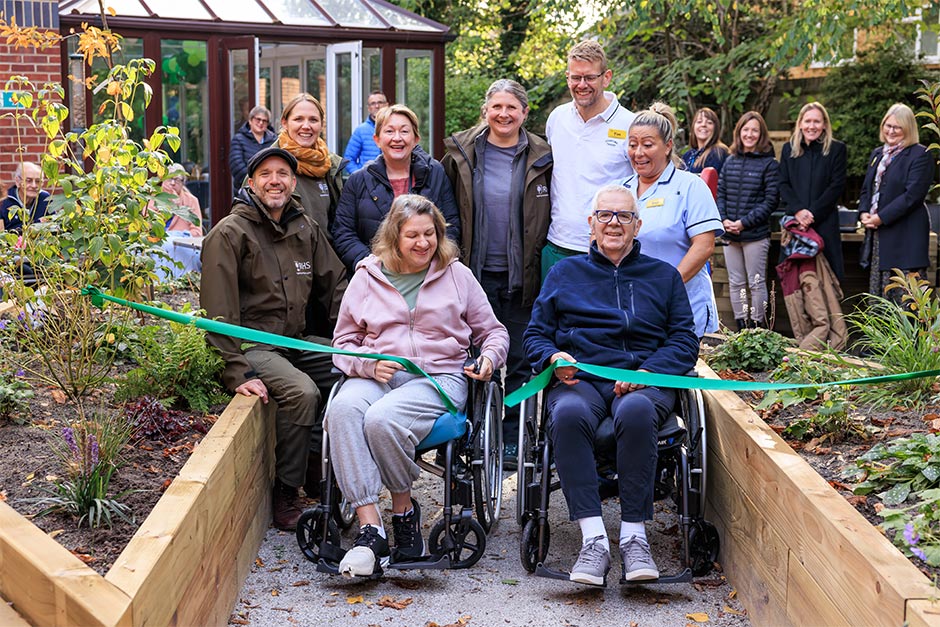
Edible archways offer wheelchair users an accessible way to harvest produce
The garden is experienced in many ways, adapted to each class’s needs
The garden is experienced in many ways, adapted to each class’s needs. “For pupils in the semi-formal curriculum, delivered through a thematic-based approach, the garden is experienced through playing, touching and feeling, while formal pupils are involved in task-based activities and land-based studies qualifications, which can help them with career progression,” explained Jenni.
While the younger students use a ‘literacy scheme’, where the real-life experience starts from the analysis of a book, the secondary students are engaged through value-based learning, with each term focused on a value such as cooperation, perseverance, courage or kindness.
The wellbeing garden required approximately £500 to get started, with a further £500 needed annually for general maintenance.
Learnings: challenges encountered
“The most difficult part of managing a wellbeing garden in a school is keeping on top of it over summer, when children are on holiday. Fortunately, we have some volunteers coming in to help with weeding. They also support at weekends to care for the animals,” said Jenni.
Summer is also the time of year when all the hard work shows results, with fruits and vegetables ready to be harvested. Silverwood stores the produce in large freezers, waiting for it to be cooked and enjoyed by students and staff.
Learnings: what went well?
Getting funding can be challenging for a local authority school like Silverwood. However, they have found a sustainable way to keep going. Along with funds provided by the school, some of the budget comes from selling plants, eggs and produce in the farm shop to staff and school taxi drivers, as well as through summer and Christmas fairs. In addition, the school works with the Silverwood Charity Trust, which helps them raise larger sums of money for bigger projects, such as restoring the greenhouse or creating a sensory garden for the Trowbridge students.
The apple storage at the Rowde campus
Chickens support therapeutic activities
Impact of the wellbeing garden so far
“A large number of our pupils don’t have the opportunity to explore an outdoor environment away from school, so our wellbeing garden means a lot to them,” said Tim, who strongly believes in the value of outdoor learning to develop motor skills, teamwork and self-confidence. “Sensory experience, in particular, is a big part of how children with special needs understand, which means it is important they have the opportunities to touch the soil or compost, feel the sun or rain on their skin, handle seeds and taste herbs or the produce they have grown.”
Jenni added: “I’ve noticed that many of our students seek out the garden to relax and regulate themselves, as they know they need to be mindful around insects and animals.”