RHS Show exhibitors share their peat-free tips
Learn how top growers have approached growing peat-free, and their top tips for gardeners at home
Many of the exhibitors at our RHS Shows are already growing plants peat-free, ahead of our Sustainability Strategy aim of all RHS operations, including Shows, being peat-free from the end of 2025. How do these businesses approach growing for internationally-renowned shows like the RHS Chelsea Flower Show and RHS Hampton Court Palace Garden Festival?
We spoke to some of the exhibitors who are already 100% peat-free across their whole business about how they go about growing their plants without peat.
All the nurseries we spoke to for this piece are featured on our 100% peat-free nurseries list, and visitors to RHS Shows can look out for new signage to easily pick out 100% peat-free exhibitors.
Find out more about why gardening peat-free is the best option for the climate and wildlife, as well as lots of tips and advice on successful peat-free gardening, on our peat-free hub.

Kitchen Garden Plant Centre’s Neil Jones at RHS Hampton Court Palace Garden Festival 2024
Choosing peat-free compost
The Kitchen Garden Plant Centre, a nursery growing herbs and edible plants, have been peat-free for seven years, and also grows without .
Owner Neil Jones told us, “We trialled lots of different peat-free mixes, and some worked better than others. Some mixes meant plants dried out quickly, so it was all about adjusting the watering regime on the nursery. We’re really happy with the mix we use now, which is proving as good as peat ever was. Our Mediterranean herbs in particular like the in our current mix.
“For many of the major manufacturers, there is so much research behind their products, and mixes have improved a lot in the last couple of years.”
Kitchen Garden Plant Centre’s gold medal at RHS Hampton Court Palace Garden Festival this year is testament to Neil and Niamh’s efforts towards finding the perfect peat-free mix for their plants.
"Mixes have improved a lot in the last couple of years"

British Cosmos’ display RHS Chelsea 2024
Jonathan Sheppard, who holds National Plant Collections for cosmos and hollyhocks, exhibited at RHS Chelsea for the first time in 2024, securing a silver medal for his Cosmos bipinnatus display. This was despite the challenges of the extreme weather at the start of the year, which resulted in flooding on his collections and low temperatures holding back flowering.
Jonathan’s decision to grow peat-free formed an important part of his show display, as he is passionate about helping gardeners and growers alike understand the positive action they can take by forgoing peat.
"How things are grown has to be as important as the appearance of what we grow"
Jonathan says, “Peat has been the backbone of the horticultural industry for a long time, but in so many cases it’s just not needed. As a more amateur grower, I want to help to show that you can grow without peat to the standard of the professionals, meaning gardeners can grow pretty much any plant they want peat-free in the home environment. How things are grown has to be as important as the appearance of what we grow.
“It’s worth trying a few peat-free formulations to see what works best for the plants you grow, along with what may suit seed-sowing versus more that are being potted on, as different brands and formulations can have quite different properties.”
Fine-textured propagation composts are optimised for the purpose with different physical and chemical properties compared to coarser growing-on mixes, so it’s worth using a product that is specific to the growing stage you are using it for (more on selecting a compost). Sharing bags with friends or neighbours will cut costs and help you use up the bag before the mix starts to deteriorate (it’s generally best to use up bagged compost within six months of purchase).
Top tips for choosing peat-free compost
- Like Neil did, we recommend gardeners try out a few different peat-free composts to find the one that best suits you and the plants you grow – perhaps share a bag with a friend to make this cheaper
- Peat-free composts have different components in varying proportions, which is why the first brand you try might not be the one that is best suited to your plants
- With more research behind peat-free mixes now and more different options out there, it’s well worth trying again if you didn’t have success with peat-free in the past
- Choosing a product that suits your purpose is important to successful peat-free growing, so for seeds and cuttings look out for a specific seed and cutting mix, which will be finer in texture and contain less feed. More on peat-free propagation
Watering and feeding

Driftwood Bonsai’s display at RHS Hampton Court Palace Garden Festival 2024
Driftwood Bonsai, a RHS Hampton Court gold medal winner, grow their trees in coir (coco peat), mixed with traditional Japanese growing media – akadame (a clay-like material) and kyadama (similar to pumice).
Founder Marcus Whitworth says, “We found we didn’t need peat as our plants grew very well without it, so we stopped using it a long time ago. We perfected our own bespoke mix using coir as a base material and adding other ingredients before putting the trees in. We found pure coir, which the trees sometimes arrive on the nursery in, held too much moisture.”
Top tips for watering and feeding plants in peat-free compost
- Peat-free compost holds water differently to peat-based products, meaning watering may need to be different. Generally, watering little and often is the best practice. Gardeners should always check whether the compost lower down the container is moist, as peat-free compost may look dry on top but still be holding a good amount of moisture around the roots.
- You may need to feed a little earlier compared to if you were used to growing in peat. The first feed for seeds should be given when they develop their first true leaves, and around three to four weeks after potting up a container in peat-free.
- For plants in beds and borders, continue with best practice as before, adding organic matter (ideally homemade compost; if not then well-rotted manure or a dedicated soil improver) to the soil before planting, mulching with more organic matter once planted and watering until established.
- The slightly different watering and feeding treatment needed when growing peat-free applies both to young plants in propagation and when later growing on in containers.
Peat-free compost ingredients
Jack of Surreal explained that they had an easy transition to peat-free, as they never found their succulents benefitted for being grown in peat. Coir, a by-product of the coconut industry, works very well for them – and it shows, their display won a gold medal at Chelsea in 2024.

Surreal Succulents’ display RHS Chelsea Flower Show 2024
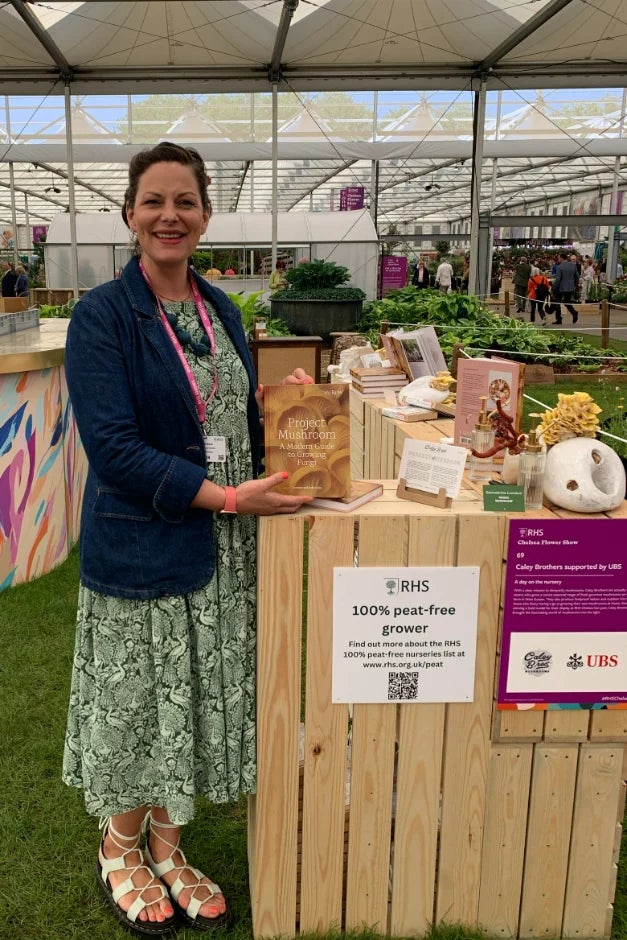
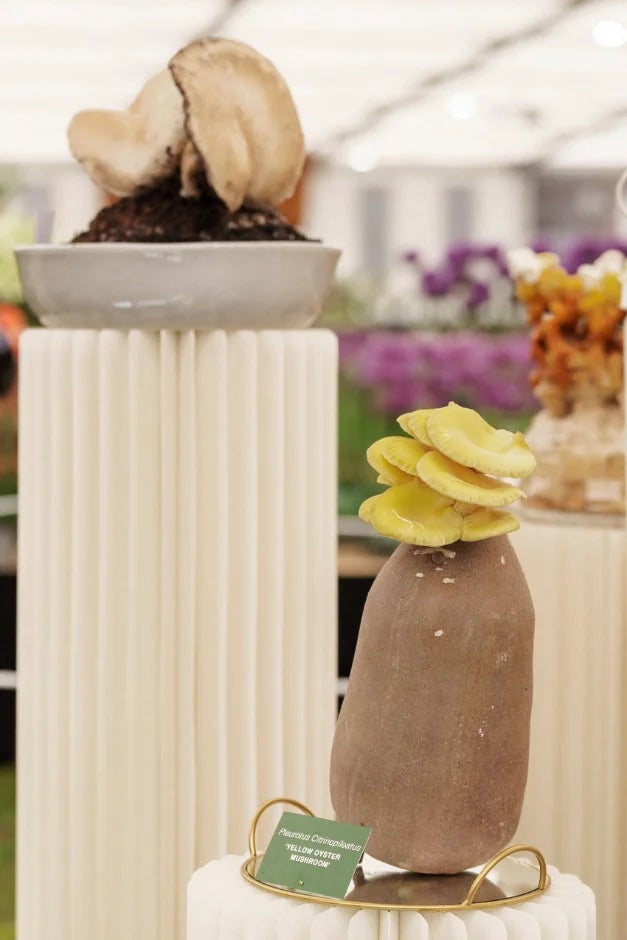
The Caley Brothers grow 100% peat-free mushrooms, in all sorts of shapes, sizes and colours. After contributing to displays in the House Plant Studios at RHS Shows, the Caley Brothers had their first solo display in 2023. They won a gold medal for their exhibit, which showcased the wide variety of mushrooms that can be grown at home, beyond the more standard button and chestnut types you might find in the supermarket. In 2024, they received a silver gilt medal at RHS Chelsea and gold at RHS Hampton Court.
Jodie Bryan, one of the sisters behind the company, suggests seeking out more exciting and unusual mushrooms, as these are more likely to be peat-free than more conventional edible mushrooms. Many of these species need less growing media (compost) generally, so are lighter on resources, and will even grow in easily accessible by-products like coffee grounds or straw, contributing to the circular economy.
The Caley Brothers have always had great success without the need for peat, following some early experimentation to find the growing mix that worked best for their fungi. They have never had to sacrifice on quality to grow peat-free.
For more information on all aspects of peat-free gardening, visit our peat-free hub.