
Deadheading plants
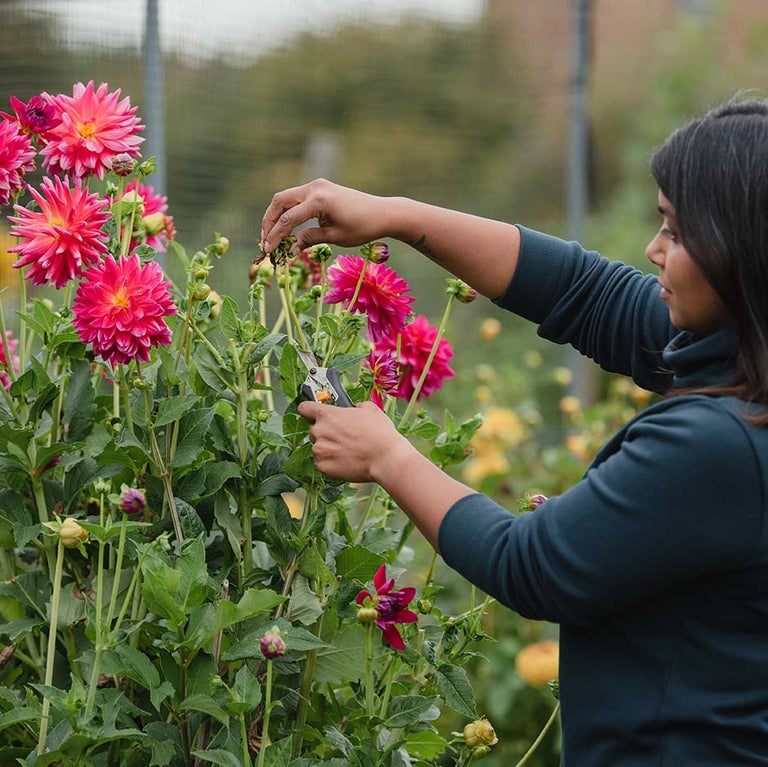
Deadheading is the term used for the removal of fading or dead flowers from plants. It is done to keep plants looking attractive and encourage more blooms, whether in beds and borders, containers or hanging baskets.
Common name - Peony wilt
Scientific name - Botrytis paeoniae
Plants affected - Paeonia spp. (peonies)
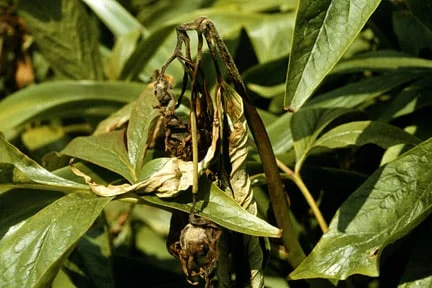
Main symptoms - Brown patches on leaves, flowers fail to open
Caused by - Fungus
Timing - Mainly spring and early summer

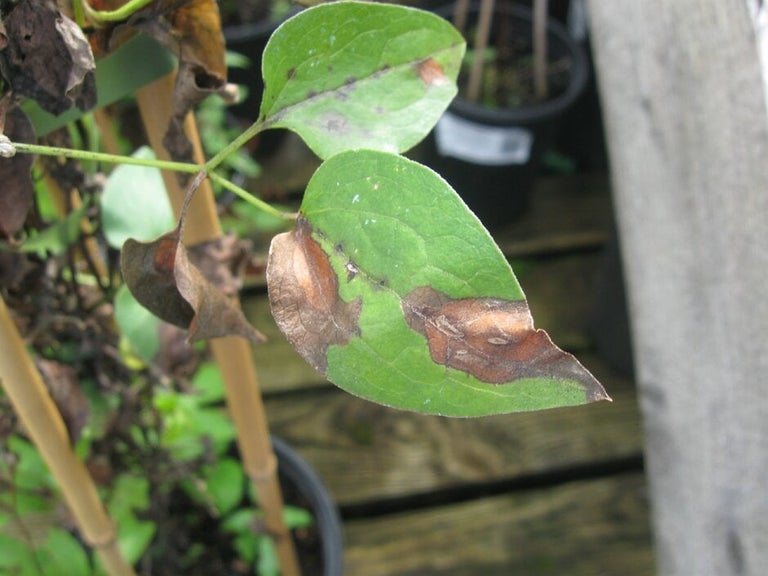
Peony wilt is an infection of the leaves and stems of peonies and tree peonies by the fungus Botrytis paeoniae, which is closely related to the grey mould pathogen Botrytis cinerea. This disease generally appears in spring or early summer when the shoots of affected herbaceous paeonies wilt and turn brown for no apparent reason.
This fungus only attacks Paeonia spp.
You may see the following symptoms:

Remove all infected material promptly and burn or send to landfill. This will reduce the production of airborne spores and prevent the formation of sclerotia (see 'Biology' section below) to contaminate the soil.
Note that the first infections in spring and early summer start from spores released from germinating sclerotia. Good hygiene will reduce this risk, but since the spores are airborne and may blow in from elsewhere, it will not eliminate it. Later in summer there is an increased risk of infection as more airborne spores are released from infected plants.
There are no chemical controls available to gardeners.
Botrytis paeoniae is closely related to the grey mould pathogen Botrytis cinerea. Grey mould has a very wide host range, but B. paeoniae is one of a number of species that attack specific plants, in this case only peonies and tree peonies.
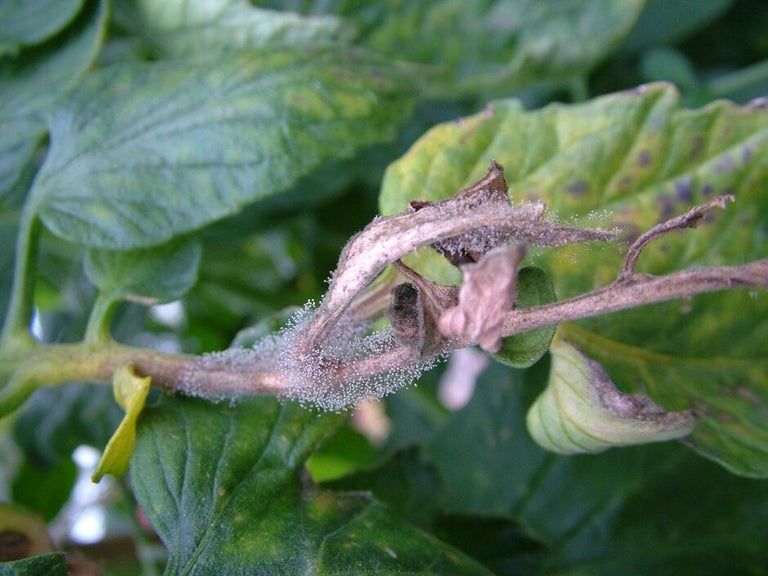
Botrytis paeoniae forms black, seed-like resting structures (sclerotia) in the tissues it kills. These fall to the soil along with the dead tissues and remain there until the following spring. They then germinate and release airborne spores which infect leaves and stems when conditions are suitably wet. Infected tissues die rapidly and turn brown. Further airborne spores are released from fuzzy grey fungal growth on the affected parts under wet conditions.