

Greenhouse: ventilation and shading
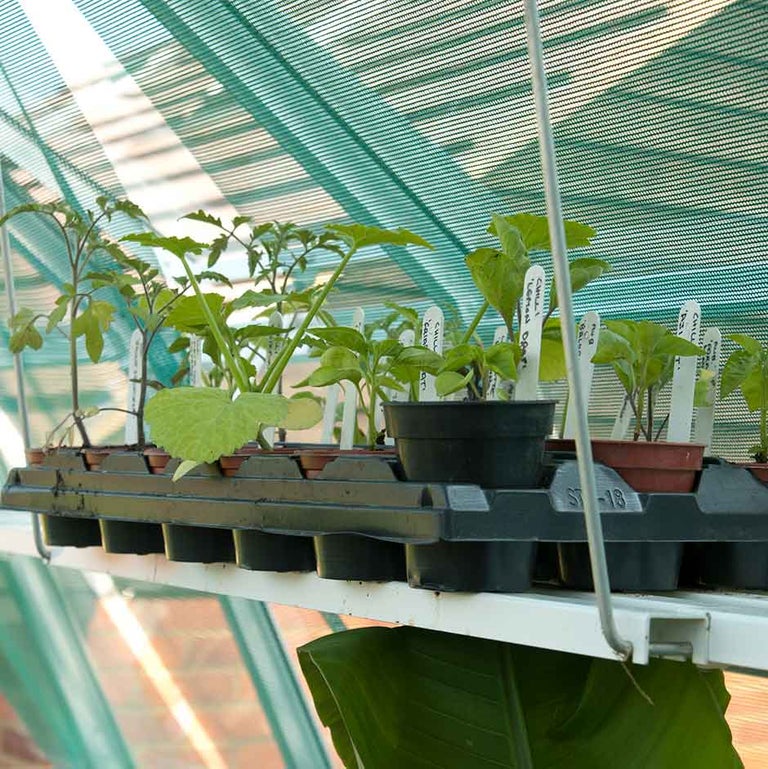
Greenhouses, whether of glass or plastic, can overheat in sunny weather. Plants can be protected from excess heat by shading and ventilation.
Common name - Grey mould
Scientific name - Botrytis cinerea
Plants affected - Many ornamentals and fruit
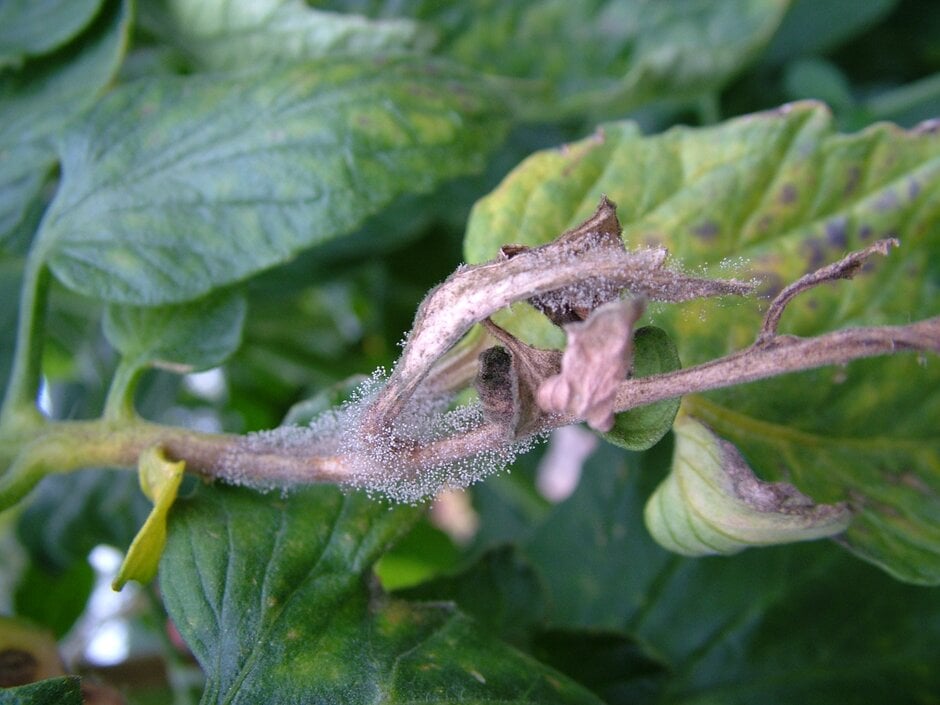
Main symptoms - Fuzzy grey mould
Caused by - Fungus
Timing - All year round

Grey mould is a disease caused by the fungus Botrytis cinerea. It normally enters through a wound or infects plants under stress, but will infect healthy plants as well, especially under humid conditions. It can be expected at any time of year.
It is common on grapes, strawberries, blackberries, raspberries, gooseberries, beans, cucumber, courgettes, lettuce and tomatoes. It is also a problem for plants grown under glass, where conditions can be humid and overcrowded. It will infect Chrysanthemum, Cyclamen, Pelargonium, Primula - in fact, most ornamental plants.
You may see the following symptoms:

Grey mould causing collapse of a cyclamen plant, with lots of grey-brown spores visible. Image: John Scrace
No fungicides are approved for use against grey mould by gardeners.
Botrytis cinerea is an ubiquitous fungus, whose airborne spores are always present. It thrives as a saprophyte (a micro-organism living on dead organic material), but can also infect living plants under certain conditions. On green plant parts a wound or other stress is usually needed for infection, but on flowers and fruits it can infect without wounds, particularly under humid conditions.
It is also able to cause latent infections, where the plant is infected but symptoms of the disease may not be produced for a considerable time. In some fruit crops the fungus enters flowers and colonises the developing fruit, but does not break out and cause a rot until the fruit begins to ripen and the sugar content rises. This is very noticeable with strawberries. It can also cause latent infections in primulas, where research has shown the fungus is seed-borne and develops with the plant, only breaking out after considerable growth has occurred.
The fungus forms black, seed-like resting structures (sclerotia) in dead plant tissue, which can carry the fungus through periods when host plants are scarce. These can stay dormant for some time, but will eventually germinate to produce more spores.
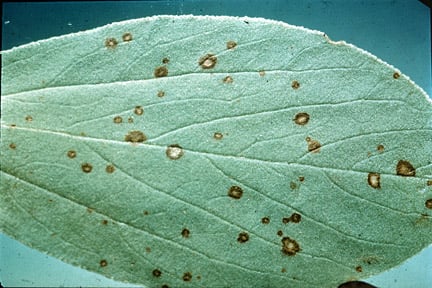
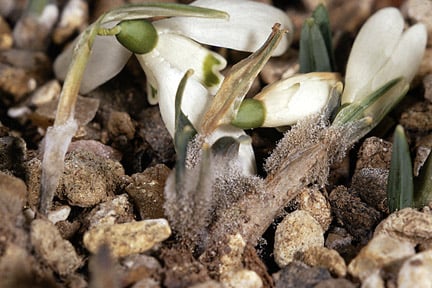
Botrytis cinerea has a very wide host range, but there a number of closely-related species which are much more specific to their host, including those infecting snowdrop (B. galanthina), peony (B. paeoniae), onion (B. allii) and broad bean (B. fabae).