Getting Started
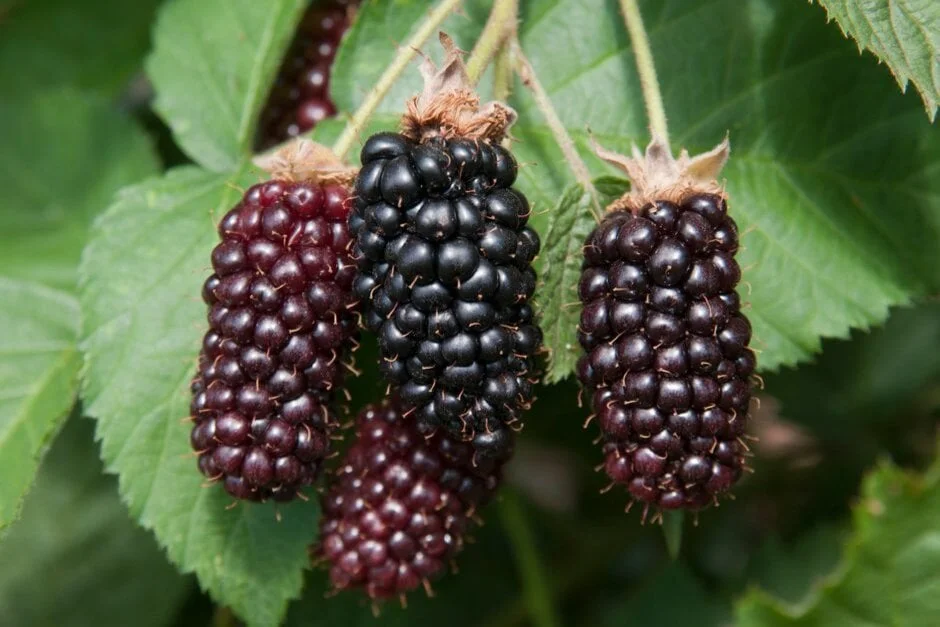
Hedgerow brambles (Rubus fruticosus) provide a free harvest for foragers, but for gardeners there are many delicious blackberry varieties to enjoy. The fruits of named varieties are larger, plumper and sweeter than those of wild blackberry bushes. Several berries are available to grow too, blending blackberries with near relatives to create tayberries, loganberries, boysenberries and more, as well as other Rubus species such as dewberries and wineberries. These tasty fruits are rarely, if ever, available in supermarkets, so are well worth growing yourself.
Most are vigorous plants, requiring plenty of space. They need annual pruning and ongoing training to keep them tidy and within bounds. Their long, fast-growing stems are usually spread out along horizontal wires attached to posts, a wall or a fence. But if you’re short on space, there are some compact varieties that can be grown in large pots.
The succulent black or dark red fruits ripen from mid-summer to early autumn depending on the variety. Most crop abundantly, giving you lots of fruits to eat fresh, cook in desserts, add to smoothies and make into jam.
Jobs to do now
Harvest
Prune out fruited stems
Position and tie in new stems
Month by Month
Plant
Harvest


Choosing What To Grow
There is a tempting array of delicious blackberry varieties to choose from. These can vary in sweetness and size, depending on the variety, with some up to 5cm (2in) long. Cropping time and duration vary too. The flowers can be white or pink, and some varieties are thornless, which makes pruning, training and picking easier.
Plant size is a key consideration with blackberries, as they can grow quite large and need to be trained onto horizontal wires to keep them tidy. So choose a variety to suit your available space – very vigorous varieties can grow up to 4m (13ft) wide, while less vigorous varieties grow to a width of 2.5m (8ft). There are also a few compact varieties that can be grown in containers with no supports, such as ‘Little Black Prince’, which only reaches 1m (3¼ft) tall and wide.
There's also a good selection of blackberry hybrids and closely related species to choose from. The main choices are:
- Tayberry – a raspberry and blackberry cross. The fruit is red and usually longer than a raspberry. It is sharper in flavour than a raspberry, but usually sweeter than a loganberry. Best used for jams and cooking, but can also be eaten fresh. Harvest in July and August
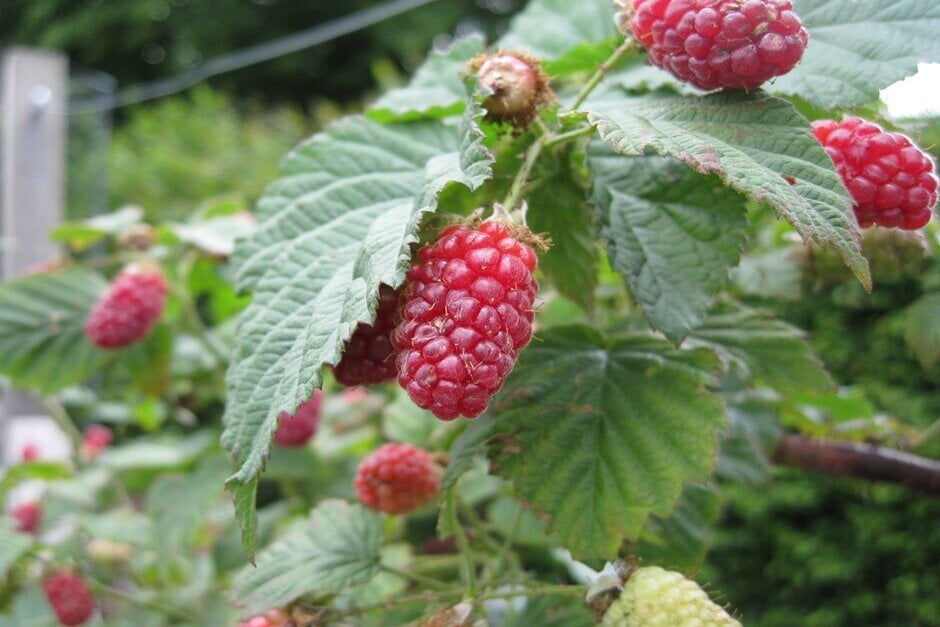
- Loganberry – a raspberry and blackberry cross. Fruits are dark red and sharper tasting than raspberries. Ideal for jams and cooking, but can also be eaten fresh. Harvest from July onwards
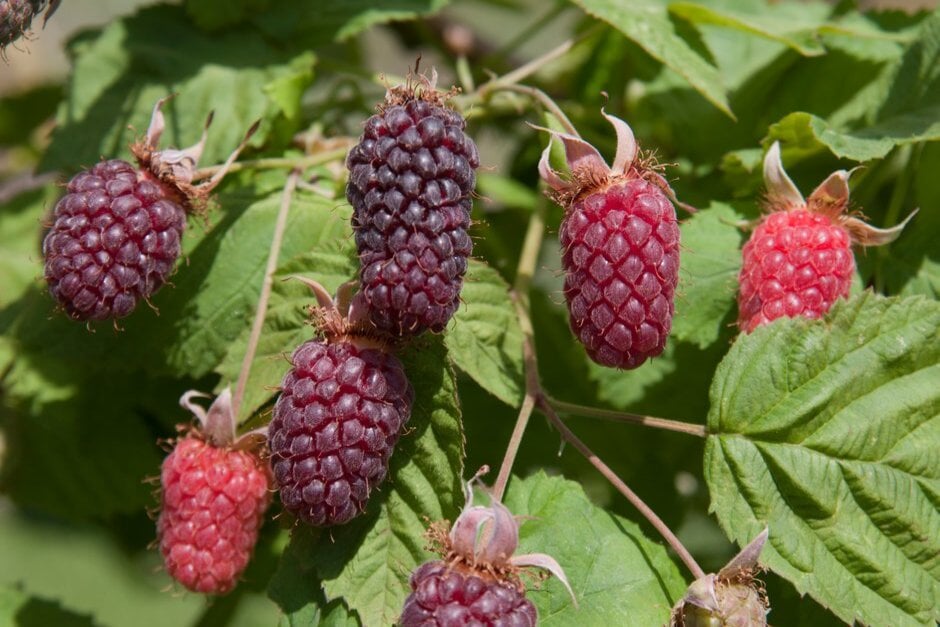
- Boysenberry – a loganberry, raspberry, dewberry and blackberry cross. Very hardy and moderately vigorous. Heavy crops of juicy dark fruits with a wild blackberry flavour. Grows well in light, free-draining soil. Early season crop, usually ripening in July
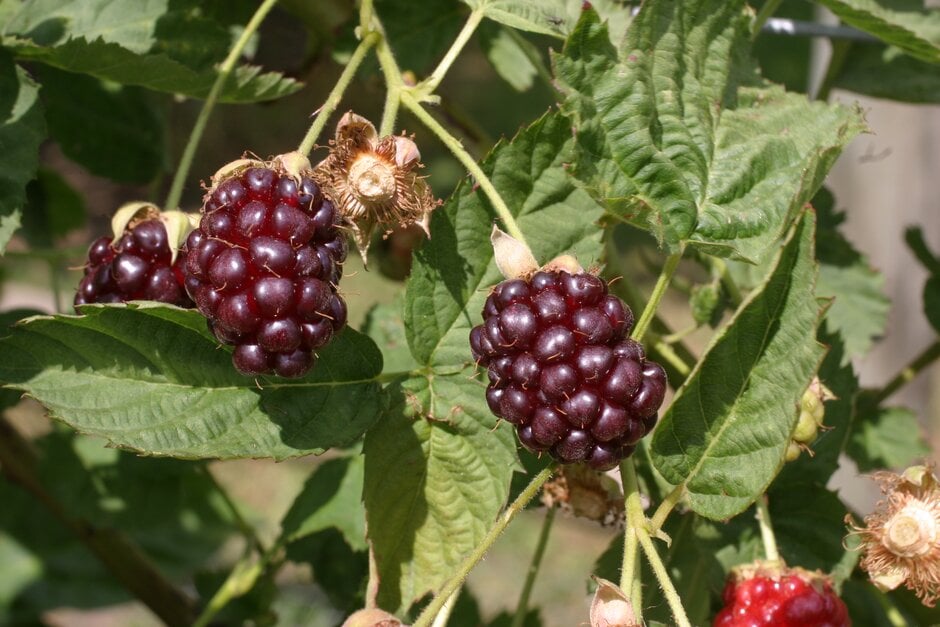
- Tummelberry – a tayberry and unnamed seedling cross. Thorny, medium vigour, suitable for colder areas. Moderate crops of medium-sized red fruits. Can be eaten raw, but better made into jam. Usually ready to harvest from July onwards
- Dewberry – a common name given to several Rubus species (including R. caesius). Can be grown as ground cover or on a support. Small dark fruits with a grey bloom. Harvest in July and August
- Wineberry – an East Asian species, moderately vigorous with attractive stems covered with soft, bright red bristles. Moderate crop of small, sweet, juicy fruits turning from golden yellow to red when ripe. A long cropping period, potentially from July to September
When choosing varieties, look in particular for those with an RHS Recommended: Award of Garden Merit (AGM), which shows they performed well in trials, so should grow and crop reliably. See our list of AGM fruit and veg (135kB pdf) and our Recommended Varieties below.
You can also see many soft fruits, including blackberries, growing in the fruit and veg plots in all the RHS gardens, so do visit to see how they are grown, compare the varieties and pick up useful tips.
What and where to buy
Blackberries are widely available in garden centres and from online suppliers, while and species berries are mainly sold online by fruit nurseries and other specialist suppliers. They are usually sold as container-grown plants, but may occasionally be available as plants from autumn to early spring.
Recommended Varieties


Loganberry 'Ly 654' AGM
A thornless loganberry (raspberry/blackberry hybrid). Good yields.

Blackberry ‘Loch Ness’ AGM
A popular and widely grown blackberry. Compact with thornless stems.

Preparing The Ground
Choose a sunny, sheltered site to get the best crop, although blackberries and berries will fruit in light shade. They grow well in fertile soil with good drainage. Avoid planting in areas that are likely to become in winter.
Remove weeds from the area. No soil preparation is generally needed before planting. However, if your soil is poor, dig a bucketful of organic matter, such as garden or well-rotted manure, into the soil you remove from your planting hole and use this to backfill after planting. This minimises soil disturbance and helps your plant get off to a strong start.
Before planting, put a support system of horizontal wires in place – see Pruning and Training, below. This may be on a sunny garden wall or fence, or between sturdy posts inserted into the ground.
Planting
Mid-autumn to early spring is ideal planting time, although plants bought in pots can be planted all year round (but avoid planting in hot, dry weather). Position in the ground at the same level they were growing in the container.
With plants, these are only available from autumn to spring, and should be planted straight away. Position the plant so that the uppermost roots are about 5cm (2in) below the soil surface.
If planting against a wall, position the hole at least 30cm (1ft) from the base, where the growing conditions should be better. If you have very chalky, sandy or heavy clay soil, add some organic matter, like garden , to the excavated soil before backfilling the hole.
Check the potential spread of your plants and space them accordingly. Moderately vigorous varieties need 2.5–3.5m (8–11ft) between plants, but allow up to 4m (13ft) between particularly vigorous blackberry varieties.
Planting in a container
There are a few compact blackberry varieties that are suitable for planting in a container. For these, choose a pot at least 45cm (18in) wide and deep and fill with a good quality loam-based such as peat-free John Innes No 3.
Plant Care
Most blackberries and their relatives are vigorous scrambling plants that once established need little regular maintenance, other than pruning and training.
Watering
Water well immediately after planting and during any prolonged dry spells during the first . Well- shouldn’t need extra watering. Plants in containers need regular watering throughout the growing season to keep the slightly moist.
Mulching
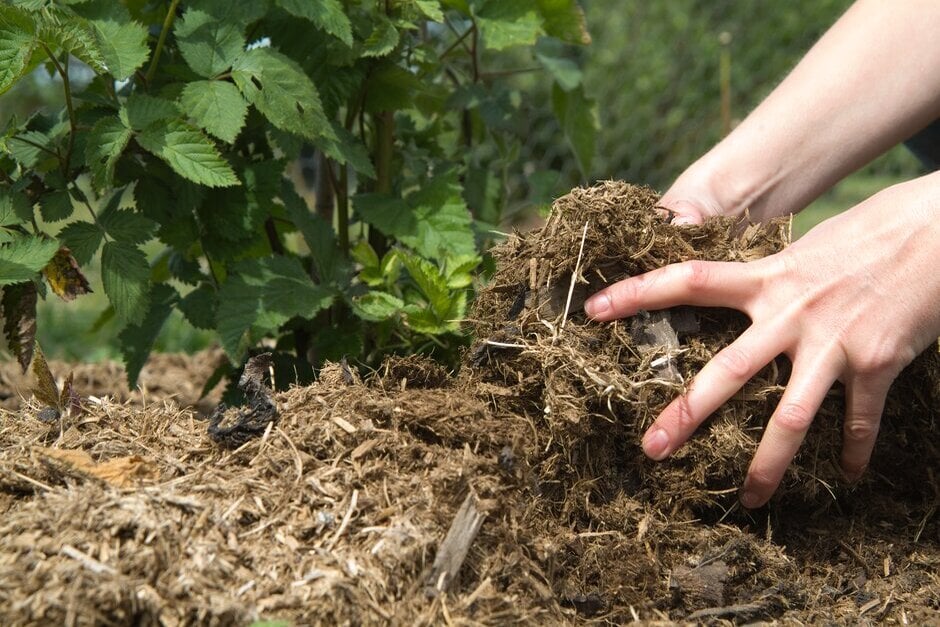
Apply a 5–7.5cm (2–3in) layer of organic , such as garden , over the area in early spring. Leave a slight gap around the base of the stems to prevent rotting. Mulching will improve your soil, help to retain moisture and suppress weeds.
Feeding
Blackberries and berries growing in regularly mulched soil shouldn't need any additional feeding. However, if harvests are particularly poor, or your plant is showing signs of nutrient deficiency, apply an organic-based, granular general fertiliser to the soil in early spring.
Propagating
It’s easy to produce new plants by rooting the ends of vigorous young stems into the ground in mid- to late spring. This method of propagation is known as stem-tip layering – more information can be found in the guide below.
Protecting crops
Birds will happily eat the fruits of blackberries and berries. If they are taking too many, protect your crop by covering plants with plastic-free or reused netting. Raise the netting above the fruits using bamboo canes or wood, such as hazel or chestnut poles. Ensure the netting is taut and fastened securely so birds and other wildlife don’t get entangled in it. Alternatively, grow your plants inside a fruit cage.
Pruning And Training
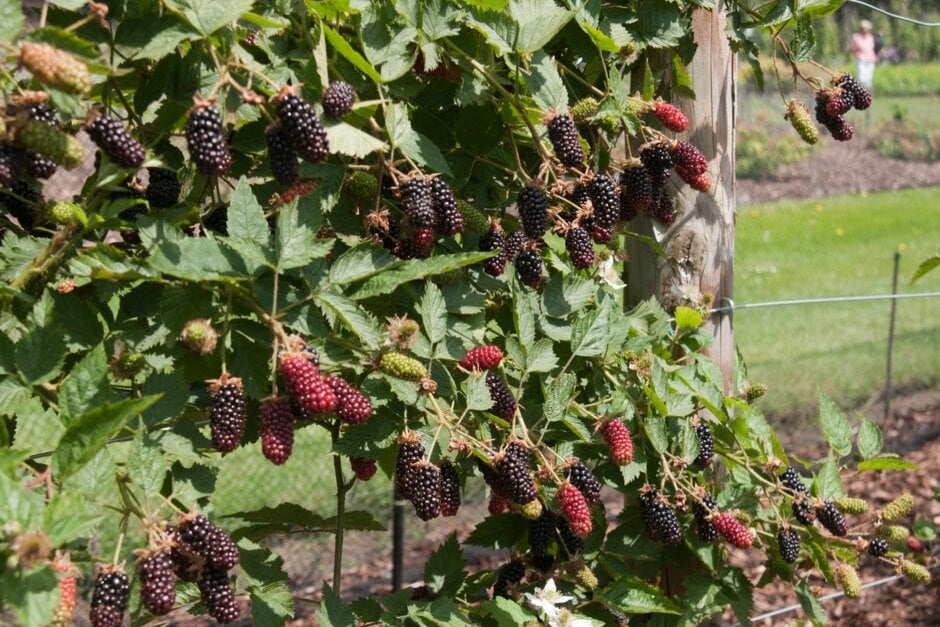
To keep these vigorous scrambling plants under control, it’s best to train them along horizontal wires fixed to a wall, fence or posts. Ideally, set up supports and wires before planting. Space the horizontal wires about 45cm (18in) apart, with the lowest wire about 45cm (18in) above the ground.
Most blackberries and /species berries produce their fruit on stems (canes) that grew the previous spring and summer. Removal of old fruited stems is necessary to create space for new productive stems.
Good to know
Some varieties are thornless, but many have sharp thorns (prickles), so it's advisable to wear thick gloves and handle them with care.
Pruning and training new plants
Pruning new plants, whether or container grown, generally means you won't get any fruits in the first year, but it will encourage strong new shoots and good establishment.
- Straight after planting cut down all the stems to healthy buds 20–25cm (8–10in) from the ground. The plant will then send up vigorous new shoots in spring
- Over the first spring/summer regularly tie in these new stems to the wires to keep them tidy – they won’t fruit in the first summer
- In the first winter cut back any side-shoots produced on the first year’s stems to about 7.5cm (3in) long
- In the second year start the regular process of training and pruning, see below. Every spring the plant will send up new stems from the base. Loosely tie these together in the centre of the plant, with the previous year’s stems trained out along the horizontal wires, where they will produce fruit in summer
Pruning and training established plants
Pruning should be done every year after harvesting in summer or autumn. Prune out the old, fruited stems at the base, this stimulates new stems to grow in spring for a crop the following year (their second year). Left unpruned, plants will grow into a tangled, thorny mass of stems that generally fruit less and are difficult to harvest. Training the stems onto wires has two main aims:
- To separate the old and new stems, so it’s easy to know which ones to prune out
- To keep these vigorous and often thorny plants under control
During spring and summer, loosely tie together the new stems, aiming to keep the bundle in the centre of the plant. When the fruited stems have been pruned out, the new stems can be put in place along the wires. For more details, see our guide below.
Harvesting
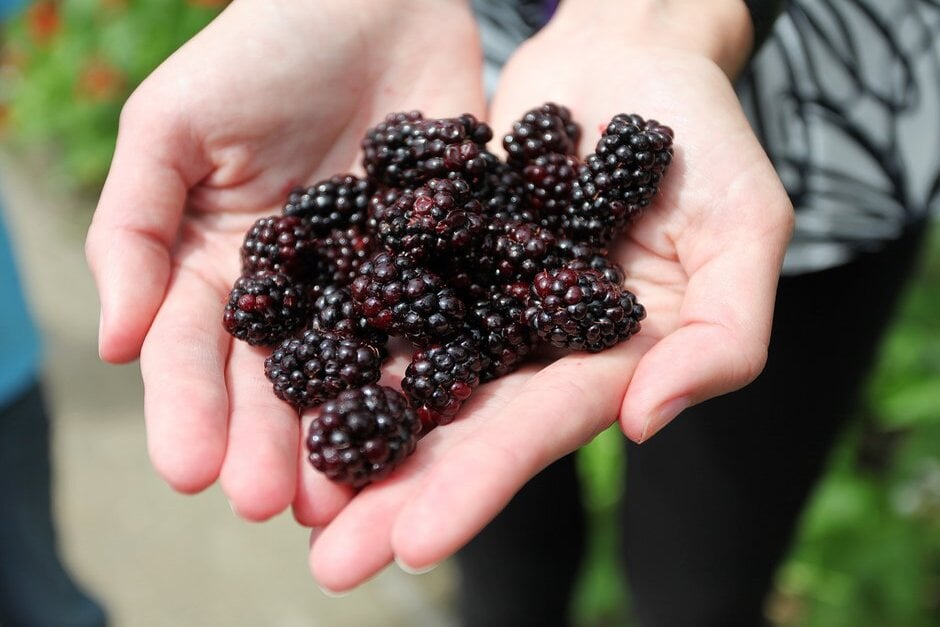
Fruits ripen from mid-summer to early autumn, depending on the species and variety. Pick the fruits as soon as they’re ripe, as they won’t ripen any further after picking. If you don't want picked fruits to get squashed, place them in a shallow bowl or punnet, keeping them only two or three layers deep. Eat them fresh, freeze them or use them in jams, jellies and other delicious desserts.
Problem Solving
Once established, blackberries and berries are usually healthy, vigorous plants. They need to be pruned and trained to keep them under control. Birds like the fruits too, so protect your precious harvest with netting raised up on a framework above the fruits. For other common problems, see below.
Common Problems

Grey mould
Grey mould, caused by the fungus Botrytis cinerea, is a very common disease, causing a soft decay of plant tissues accompanied by a growth of fuzzy gr...

Raspberry viruses
Maintaining a healthy bed of raspberry plants is often difficult due to their susceptibility to virus infection. Many different viruses can cause a de...

Raspberry and blackberry aphids
Several species of aphids can suck sap from the leaves, shoot tips and flower stalks of raspberry, blackberry and other related hybrid berries.


