
Disposing of diseased material
A key part of disease control within a garden is good hygiene. Infected material from plants in the garden and allotment should be removed promptly and disposed of carefully in order to limit the spread of disease.
Common name - Kerria twig and leaf blight
Scientific name - Blumeriella kerriae
Plants affected - Kerria japonica
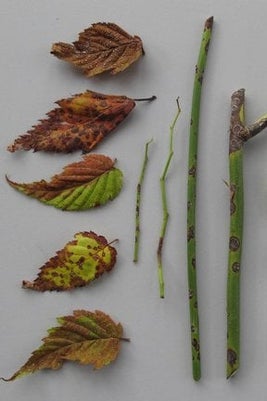
Main symptoms - Leaf spots, stem lesions, defoliation
Caused by - Fungus
Timing - Throughout the year

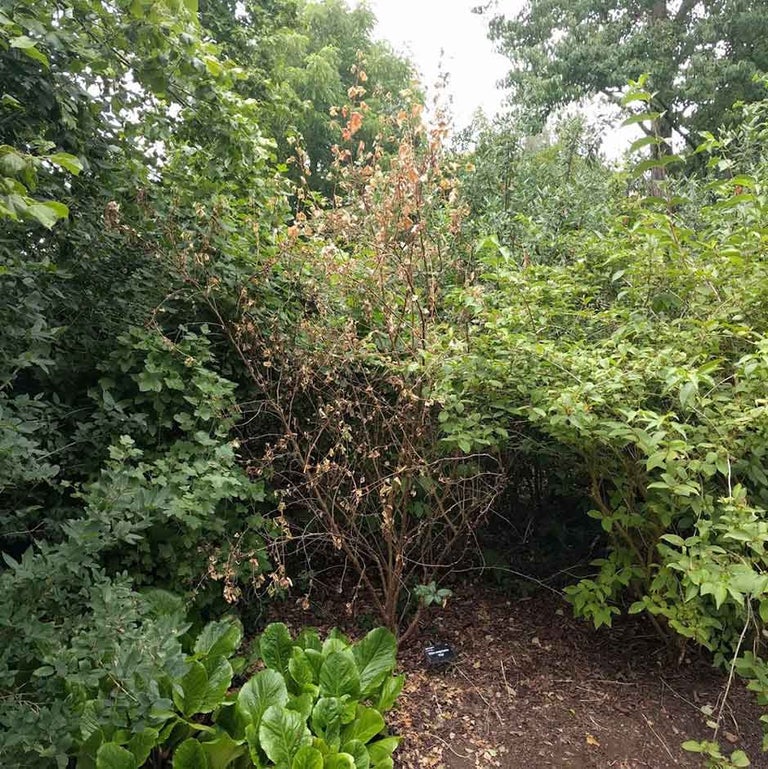
Since 2014 RHS Gardening Advice has received numerous reports and samples from across the UK of Kerria japonica exhibiting severe defoliation, spots on the leaves and stem lesions. Upon closer examination it was determined that the symptoms were caused by the fungus Blumeriella kerriae. This fungus has been recorded on Kerria japonica in America but had not previously been recorded on any plant in the UK. It is not known how this fungus arrived in the UK, but is now becoming widespread.
Unfortunately, the fungus appears to be very difficult to control and produces large quantities of spores on the stem lesions and leaf spots. The good news is that this fungus appears to be specific to Kerria, so other plants in the garden should not be at risk.

Early leaf symptoms on Kerria
The RHS believes that avoiding pests, diseases and weeds by good practice in cultivation methods, selection, and encouraging or introducing natural enemies, should be the first line of control. If chemical controls are used, they should be used only in a minimal and highly targeted manner.
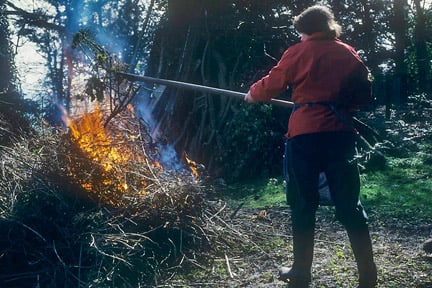
The disease is best managed by removing all infected plant material and either burning it or disposing of it at your local council composting facility. Home heaps rarely reach the temperatures achieved by large-scale facilities required to kill fungal spores. Clearing fallen leaves should help to reduce fungal inoculum in the following year.
The RHS recommends that you don't use fungicides. Fungicides (including organic types) may reduce , impact soil health and have wider adverse environmental effects. If you do intend to use a fungicide, please read the information given in the link and download below to ensure that use, storage and disposal of the product is done in a responsible and legally compliant manner.
The products listed in the ‘Fungicides for gardeners’ document below are legally available for use by home gardeners in the UK. This information is provided to avoid misuse of legal products and the use of unauthorised and untested products, which potentially has more serious consequences for the environment and wildlife than when products are used legally. Homemade products are not recommended as they are unregulated and usually untested.
There is no specific information available on the efficacy of any home garden fungicide against kerria twig and leaf blight.
Fungicides for gardeners (Adobe Acrobat pdf document outlining fungicides available to gardeners)
The cause of twig and leaf blight on Kerria japonica is the fungus Blumeriella kerriae.
The development of Kerria twig and leaf blight is likely to be favoured by wet weather conditions. In damp conditions Blumeriella kerriae produces large numbers of asexual spores from each spot/lesion. Spores are likely to be transferred between plants via rain splash, wind, and transfer on contaminated tools.
The fungus overwinters on fallen leaves and lesions on the stems then releases spores to reinfect new growth in spring. Spore production has been observed throughout the year on Kerria plants in the UK. The sexual stage of the fungus has not yet been observed to occur in the UK.