Dark blotches on the ends of aubergine, tomato and pepper are alarming, but do not mean the end of the crop. This is called blossom end rot and is caused by lack of calcium in the fruits. By making minor adjustments in watering you will usually be able to protect subsequent fruits from blossom end rot.
By The RHS Advice Team
Quick facts
Plants affected - Tomatoes and related crops such as aubergines and peppers.
Blossom end rot is a physiological problem, caused by adverse growing conditions rather than a pest or disease. Certain vegetables that form large fruits, such as aubergines, peppers and (most often) tomatoes are particularly susceptible.
Symptoms
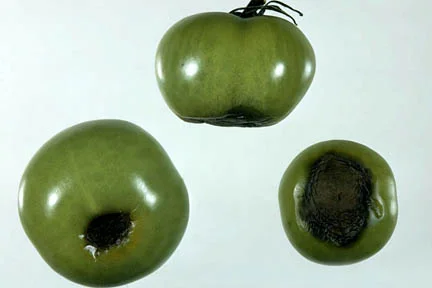
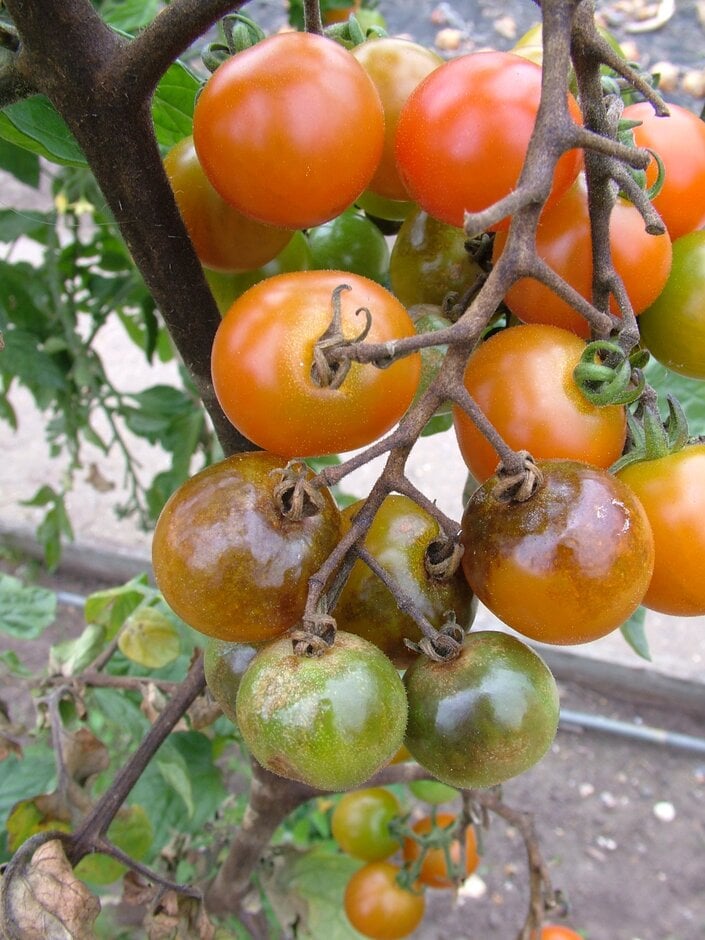
Blossom end rot shows as a circular patch, varying in colour from greenish brown to black, at the end of the fruit that had the flower (the end furthest from the plant). As this patch increases in size it becomes sunken so that the fruit has a flattened appearance at the affected end. The blackened patch varies greatly: in some fruits it is only 1cm (1/2in) across, while in others it is 2.5cm (1in) or more in diameter.
Cause
Blossom end rot is caused by lack of calcium in the fruits. Calcium deficiency reduces cell membrane permeability and this leads to swelling of the cells followed by leakage and destruction of the membrane structure. There is also a reduction in growth of new cells. This causes the characteristic dark, sunken areas.
It is very rare for soils, growing bags or potting media to actually lack calcium. There is almost always plenty in the soil and indeed within the plant. However for calcium to reach the parts of the plant that are furthest from the roots there needs to be a good flow of water through the plant. The fruits are distant from the roots and do not compete as well as the leaves for calcium, leading to a local lack of calcium at the ends of the fruit.
Plants grown with limited root space (e.g. in pots or growing bags) are most at risk of irregular water supply leading to local calcium deficiency in the fruits. Plants in border soil, whether outdoors or in the greenhouse, are less likely to be affected.
A similar problem can arise if fertiliser is added to dry soil around plants, because the concentrated in the soil water will restrict water uptake by the plant. Additionally, some fertiliser ingredients - ammonium salts for example - compete with calcium for access to the plant roots, further exacerbating the calcium deficiency.
Very high air can also limit water uptake by plant roots, so good daytime of greenhouses is helpful.
Control
There is nothing you can do to save fruits once they have blossom end rot, but you can prevent subsequent fruits from being affected by the following:
The soil or potting should be kept consistently moist throughout the and must never be allowed to dry out. During hot periods it may need watering two or more times a day. It is better to water twice a day than once with a double volume. Growing bag compost is very difficult to moisten evenly and thoroughly once it has dried out
Automatic watering systems, use of larger containers, or growing in border soil are all potential solutions where frequent watering is not possible. Covering the soil or potting compost with will also help to conserve moisture around plant roots
Applying liquid fertiliser may help, but this must only be applied to moist soil, and following the manufacturer's recommendations
Applying foliar sprays of calcium salts such as calcium nitrate are not effective because calcium is not readily absorbed by the fruits and transport from leaves to fruit is poor. The nitrate in this fertiliser can also promote lush growth that leaves less calcium available for the fruits