Getting Started
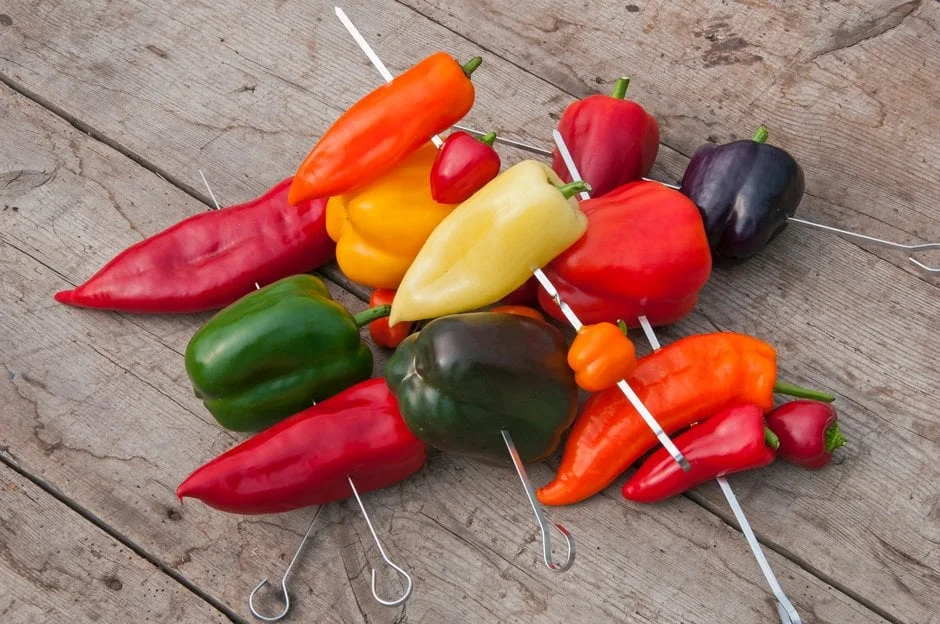
Sweet peppers (Capsicum), also known as bell peppers or pointed peppers depending on the fruit shape, are tender plants that need lots of sun and consistent warmth to crop well. They are usually grown under cover in the UK, in a greenhouse, polytunnel, conservatory or coldframe. They are only really successful outdoors in milder parts of the country or in long, hot summers, and benefit greatly from or protection. Wherever you’re ultimately going to grow them, they need to be sown in warmth indoors, from late winter to early spring.
Closely related to chillies, they make attractive plants with their colourful, glossy fruits, which ripen from mid-summer to early autumn. They also take up little space, usually reaching only about 60cm (2ft) tall and 30cm (1ft) wide, and grow well in large pots.
Jobs to do now
Water as needed
Harvest
Bring plants indoors to aid ripening
Month by Month
Sow
Plant
Harvest


Choosing What To Grow
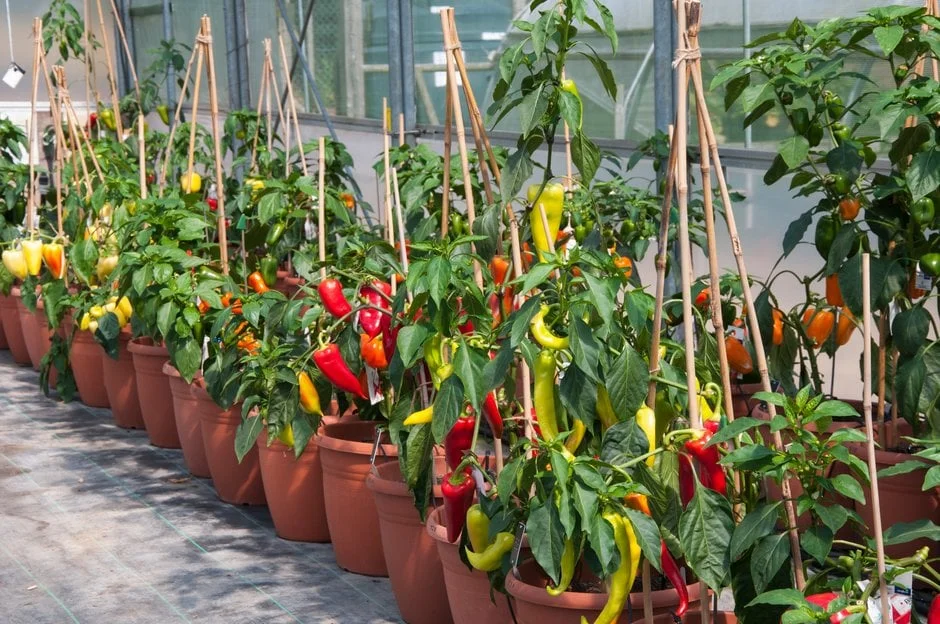
There are many varieties of sweet pepper, with fruits of various shapes, sizes and colours, from wide and rounded to long and pointed, large or small, in shades of green, bright red, orange, yellow and purple. Long, pointed peppers are generally sweeter and have a thinner skin than rounded bell peppers.
Some varieties are more suitable for outdoor cropping than others. Larger fruits take longer to grow and ripen, so if you’ll be planting outdoors, with a shorter , it’s best to choose a variety with smaller fruits. You’ll also find several dwarf or compact varieties, ideal for containers on a sunny patio or balcony, or even a kitchen windowsill.
When choosing, look in particular for varieties with an RHS Recommended Award of Garden Merit (AGM), which should grow and crop reliably – see our list of AGM fruit and veg (135kB pdf) and our Recommended Varieties below. You’ll also find sweet peppers growing in the veg areas at the RHS gardens over the summer months, so do visit to compare varieties and pick up growing tips.
What and where to buy
Sweet pepper seeds are widely available in garden centres and from online seed suppliers. Many also sell young plants in spring and early summer. These are ideal if you don’t have a suitably warm, bright place to raise good plants, or just want a few. Grafted plants may also be available – these are more vigorous and should crop more reliably in cooler growing conditions. They can be ordered from online suppliers for delivery from mid-spring.
Recommended Varieties


Sowing
Sow sweet pepper seeds indoors from mid-February to early March for plants that are to be grown under glass, and in late March or early April for growing outdoors. To germinate, they need 18–21°C (65–70°F), so after sowing, place in a , if available, or on a warm windowsill. Once the appear, keep at 16–18°C (60–64°F) in bright light and water to keep the evenly moist. When seedlings have two true leaves, move them into their own 7.5–9cm (3–3.5in) pot, maintaining a high temperature to encourage good growth.
For step-by-step sowing instructions, see our guides below.
Planting
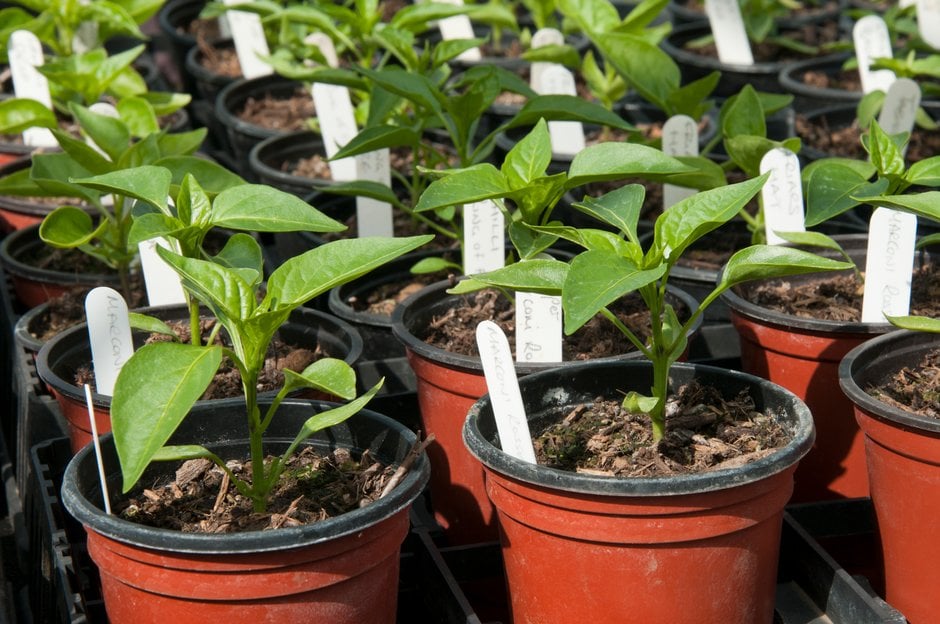
Young sweet pepper plants, either grown from seed or newly bought, must be kept indoors in the warmth, usually until at least late May. Then you can either plant them into their final container in a greenhouse or similar protected location, or get them ready for the great outdoors.
Sweet peppers will grow and crop best in a greenhouse, polytunnel, conservatory or coldframe. In very warm, sheltered locations, you can plant them outside too, once overnight temperatures are reliably above 12°C (54°F). However, they are likely to produce fewer fruits outdoors, and the shorter means the fruits may struggle to ripen before temperatures start to drop in early autumn. Before planting outside, carefully harden off your plants for a couple of weeks, to acclimatise them to outdoor conditions. Give them your warmest, sunniest spot, ideally on a sunny patio or beside a south-facing wall, with temperatures of 15°C (59°F) or more. Plant them in their new location at the same level they were previously growing in their pot, and add canes to support taller varieties.
Planting in containers
Plant your young peppers into their final container in late April if growing in a heated greenhouse, mid-May in an unheated greenhouse, or late May/June if growing outside. Choose a container at least 30cm (1ft) wide and fill with peat-free multi-purpose , planting one pepper in the centre. Alternatively, plant two or three in a standard growing bag. Add canes to keep the plants stable and upright.
Planting in the ground
Choose a spot with well-drained, fertile, moisture-retentive soil. If your soil is poor or very heavy, dig in a few bucketfuls of organic matter, such as garden compost or well-rotted manure, before planting. Alternatively, if you practise no-dig, mulch the soil ahead of planting directly into the . Warm the soil with cloches for a couple of weeks before planting so plants get off to a strong start. Space sweet pepper plants 38–45cm (15–18in) apart, depending on the variety. Compact varieties can be spaced 30cm (1ft) apart. Cover young plants with cloches to provide wind and cold protection, preferably until the end of June.
Plant Care
Temperature and humidity
Sweet peppers can cope with a minimum night temperature of 12°C (54°F), but will grow better if kept above 15°C (59°F). However they don't like to be too hot – temperatures over 30°C (86°F) can reduce fruiting, so keep the greenhouse well-ventilated and put up shading in summer.
Peppers also like high , so add moisture to the air in warm weather by ‘ ’ the greenhouse regularly – pour a full watering can over the floor, leaving it to evaporate during the heat of the day.
Watering
Sweet peppers need a steady supply of water to grow and crop well, so water as needed, aiming to keep the soil or potting evenly moist. Flower buds may fall off if plants get too dry. Plants in containers can dry out very quickly in summer, so check the compost regularly and be prepared to water daily in hot, dry weather.
If you are growing your pepper plants in the ground, mulch the soil with a thick layer of organic matter to help reduce moisture loss.
Feeding
Feed pepper plants in containers with an organic, high potassium, liquid fertiliser weekly, as soon as flowering starts. Plants growing in enriched soil may not need regular feeding, but doing so can help to boost yield.
Pruning And Training
Pinching out the growing tips of pepper plants is not usually needed to ensure a good crop, but can be done once plants reach around 30cm (1ft) tall to produce a bigger crop of smaller fruits. Be aware that pinching out can delay fruiting.
Support each plant with a sturdy bamboo , tying in the main stem as it grows. If plants produce a heavy crop of large peppers, more support may be needed as the stems can be quite brittle and snap easily. Insert bamboo canes around the plant and attach the fruit-laden side-shoots using soft .
Harvesting
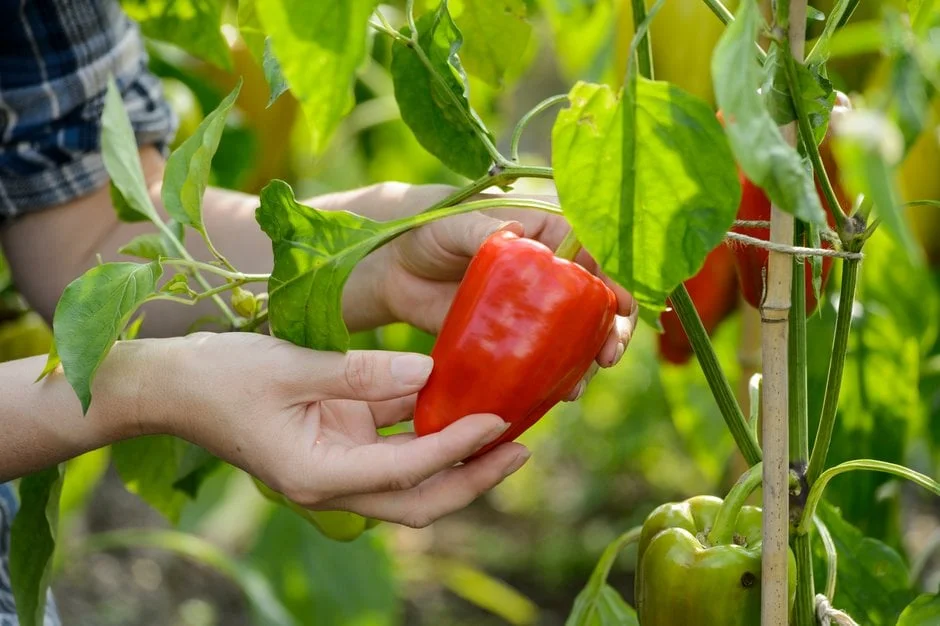
In a greenhouse, sweet peppers can be harvested from mid-summer into autumn. Outdoors, they will start fruiting later, usually in August, and finish earlier, once temperatures start to drop in early autumn. Pick as required when the fruits are swollen and glossy. Most sweet peppers ripen from green to red, but some varieties turn yellow, orange or purple. The fruits get sweeter as they ripen. You can harvest your peppers at whichever colour and stage of maturity you prefer, but bear in mind that leaving fruits on the plant to ripen fully will hinder further fruit development.
Towards the end of the season, cover outdoor plants with plastic-free or bring potted plants indoors, to help the remaining fruits ripen.
Problem Solving
Aphids are attracted to sweet pepper plants, so check shoot tips and under leaves regularly to prevent colonies getting established. Several other -sucking insects can be problematic too, especially in a greenhouse and in dry conditions.
Common Problems

Blossom end rot
Dark blotches on the ends of aubergine, tomato and pepper are alarming, but do not mean the end of the crop. This is called blossom end rot and is cau...


Grey mould
Grey mould, caused by the fungus Botrytis cinerea, is a very common disease, causing a soft decay of plant tissues accompanied by a growth of fuzzy gr...


