How plants grow
Mighty oaks from little acorns grow – but how exactly? Here you can discover how plants stretch upwards as well as outwards throughout their lives and how we can help them grow up big and strong.
Fertilisers boost available nutrients for plant growth
Plants in the ground seldom need routine feeding
Organic fertilisers are derived from plants or animal by-products
Inorganic fertilisers are synthetic plant nutrients or mined minerals
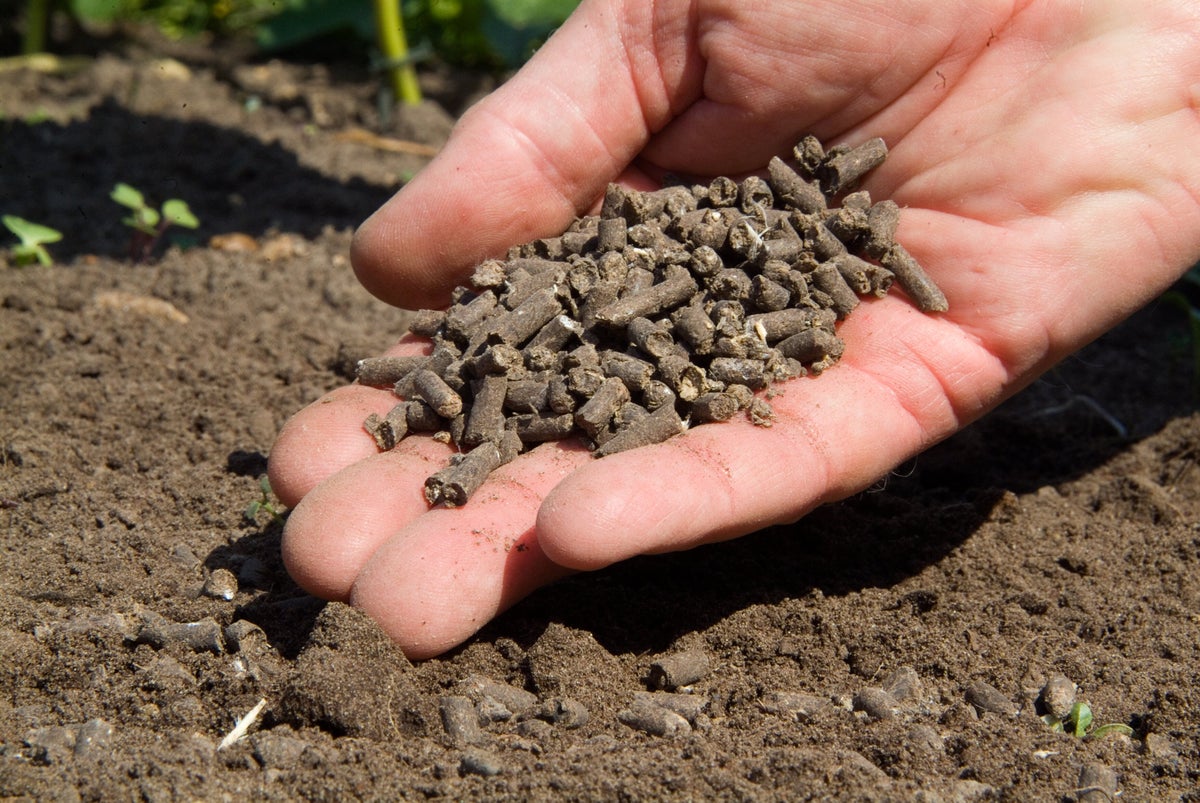
They are available as liquids, granules, pellets or dry powders
Bought fertilisers have a large carbon footprint
Homemade fertilisers have a lower environmental impact
Incorrect application and overuse can cause pollution

You don’t need to routinely use fertilisers in your garden. Most UK soils adequately feed plants without applications of fertilisers. If you opt to grow plants that naturally thrive in your garden, you will rarely need to feed. However, feeding can be beneficial for:
See our advice on how to feed plants for guidance on when to feed and how to do so efficiently and effectively.
Fertilisers are concentrated sources of plant that can improve growth. They are bought by gardeners as pellets, granules, powders and liquids.
General-purpose fertilisers contain at least three major nutrients (macronutrients):
Many fertilisers also contain the remaining three major nutrients (macronutrients): calcium (Ca), magnesium (Mg) and sulphur (S).
Additional nutrients called trace elements (micronutrients) are added to some fertilisers, particularly in specific plant foods such as plant fertilisers. These are needed in much smaller quantities by plants and include boron (B), copper (Cu), iron (Fe), manganese (Mn), molybdenum (Mo), zinc (Zn).
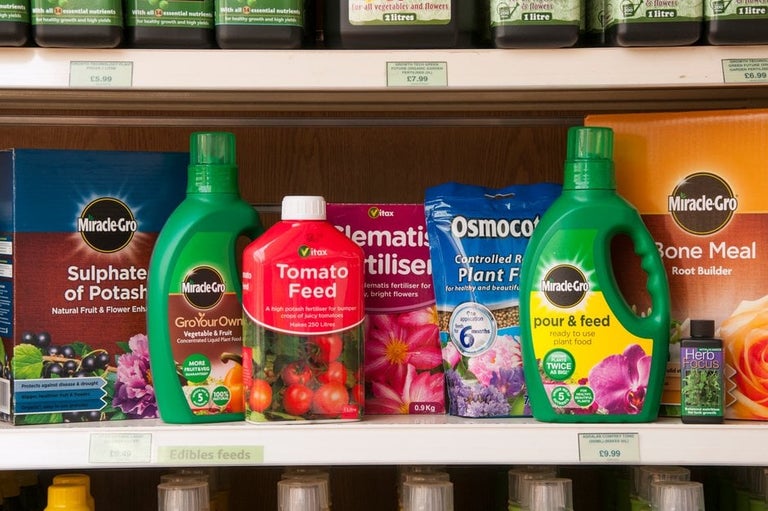
Choosing the right fertiliser from the dozens available to buy and make at home can be daunting.
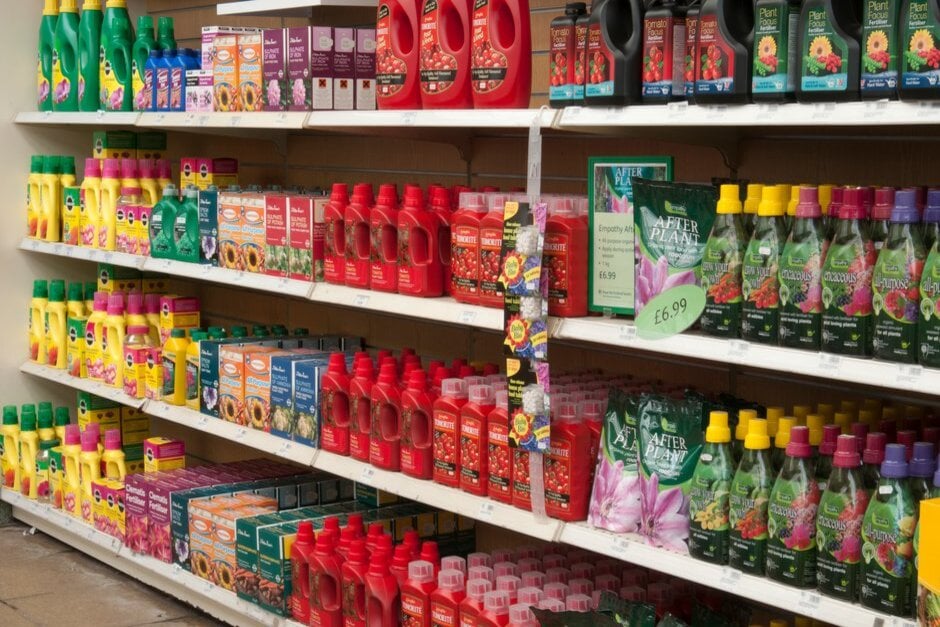
Keep fertiliser use to a minimum. The production, packaging (often plastic), transport and risk of polluting water has an environmental cost. High levels of nutrients in the soil also have a negative impact on soil health, inhibiting the activity of soil microbes including beneficial mycorrhizal fungi.
Below is further information about the types you’ll find for sale, their origins, uses and environmental impact. There are two main types of fertiliser – organic and inorganic.
We list the NPK ratio to indicate the proportions of nitrogen, phosphorus and potassium, which helps gardeners choose the right fertiliser for their needs. These NPK ratios are the ROI/IRL/EU values from the product labels. They provide the easiest indication of the NPK contents without the more complex interpretation needed for UK labelling. For more information, read Fertiliser Labels Explained.
Organic fertilisers are effective, but usually less concentrated and slower acting than inorganic options (see below). They typically have a smaller carbon footprint. Organic fertilisers are derived from living things (carbon-based) and fall into two groups:
The term ‘organic’ has a different meaning when applied to food production and organic growing: it usually refers to not using synthetic inputs such as pesticides and fertilisers.
Dry fertilisers
Powdered or pelleted organic fertilisers release slowly because they need to be broken down by soil organisms. This means they feed plants for a longer period. Examples include:
Liquid fertilisers
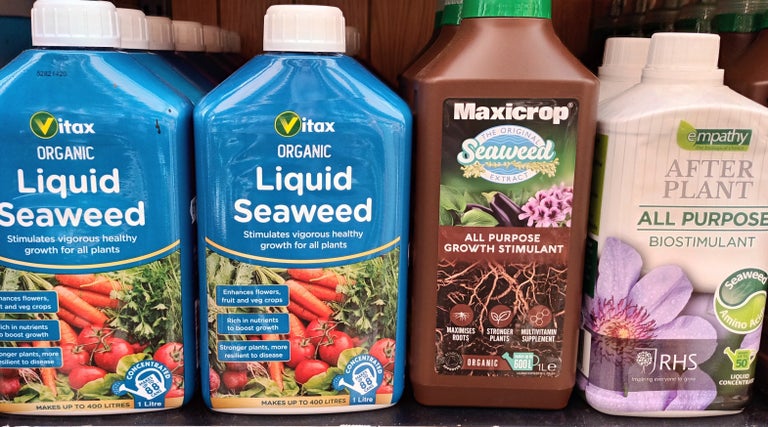
Available in bottles or pouches. Generally faster acting than ‘dry’ organic fertilisers. Best used for plants in containers and to remedy nutrient deficiencies. Examples include:
Just like inorganic fertilisers, organic fertilisers require processing, packaging and transport. For the lowest carbon emissions, choose dry organic pellet fertilisers. However, it is better to feed your soil by home composting, using a wormery and making your own fertiliser.
Inorganic fertilisers are usually more concentrated and faster acting than organic options. They have a higher environmental impact and you’ll need to apply them according to the instructions to avoid plant damage and water pollution. Inorganic fertilisers (those containing no carbon) fall into two groups:
Some organic fertilisers contain naturally occurring mined minerals, such as rock phosphate, rock dust and kieserite (magnesium). Although inorganic, they aren’t synthetic so are accepted under most Soil Association organic growing guidelines.
Dry fertilisers
Available as powders, pellets and granules. Apply to the soil or mix with peat-free potting as stated on the packaging. Examples include:
Liquid fertilisers
Available in bottles and as soluble powders. Generally fast acting and best used for plants in containers and to remedy nutrient deficiencies. Examples include:
When and how to apply fertiliser depends on the product you are using. Always follow fertiliser product instructions for the correct method of application, timing and dosage.
Spring
Dry organic feeds, such as fish, blood & bone, poultry manure pellets, comfrey pellets and seaweed meal, are scattered (a top dressing or base dressing – see below) from February to March as they release more slowly so are applied early.
Inorganic feeds, such as Growmore, are scattered (a top dressing or base dressing – see below) later, from March to April, as they are fast acting.
Spring and Summer
Liquid feeds (see below) for houseplants and outdoor plants are mixed into the water and applied during the , from April to September. Some can be applied to the leaves as foliar feed (see below).
Summer lawn feeds are applied as top dressings when the soil is moist and the grass is growing.
Autumn
Lawn fertilisers specifically for use in autumn are applied from when the soil is moist in September until mid-October, ideally before the first frosts.
Feed plants with fertilisers only when required. Very few plants need fertiliser in the winter months, even if they are winter flowering.
There are four main methods of applying feed to plants. Use the ones described on your product for best results.

Scatter fertiliser on the soil surface around the base of plants.
Example:
To feed fruit trees and soft fruit. Use an organic, slow-release fertiliser such as fish, blood & bone.

Mix fertiliser into potting compost or the top layer of soil before sowing or planting.
Example:
Fork a fertiliser into the top layer of soil before sowing vegetable seeds, for example Vitax Organic Potato Fertiliser.

In a watering can, dilute liquids, soluble powders, granules and homemade fertilisers. This is watered onto the ground or into pots where plants are growing.
Examples:
Feed vegetables and ornamental plants in containers or growbags with a fertiliser such as Maxicrop Seaweed Tomato Growth Stimulant & Feed.
Feed young plants and seedlings raised in peat-free seed compost with a fertiliser such as Elixir Gardens High Nitrogen Liquid Plant Food.

Apply a diluted fertiliser to the leaves of plants with a sprayer or a watering can fitted with a fine rose nozzle on the spout. Spray soft young leaves and the undersides of leaves for good absorption. Spray on dull days to avoid leaf scorch.
Examples:
Boost the health of plants affected by problems, such as rose black spot, using a spray such as Maxicrop Plus Complete Garden Feed (5–2.2–4.2).
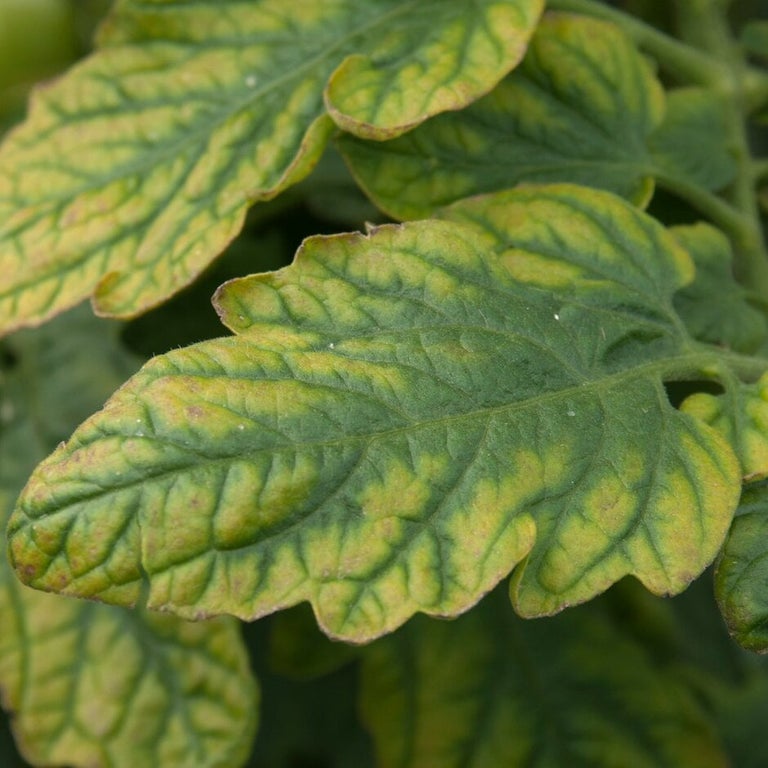
Help correct nutrient deficiencies. Common examples include magnesium deficiency in tomatoes and raspberries, which can be helped by applying a spray of diluted Epsom salts.
Here’s our guide to understanding commonly seen terms in fertiliser information and on the product labels:
Plant feeds and foods
Food is another name for fertiliser. Feeding is the act of applying a plant food/fertiliser – it’s also called fertilising.
All purpose, general purpose or multi-purpose fertilisers
These are ‘compound’ fertilisers: they contain several . Most contain the three major nutrients – nitrogen (N), phosphorus (P) and potassium (K). These fertilisers support leaf, shoot and root growth, flowering and cropping. Some also contain other major nutrients and trace elements. Such fertilisers, Growmore for example, are sometimes called ‘balanced’ as the proportion of nitrogen (N), phosphorus (P) and potassium (K) appear to be similar. Examples include:
Straight fertilisers
These contain just one, or predominately one, nutrient and are usually inorganic. They are used to provide particular nutrients to boost growth or to correct nutrient deficiencies. Examples include:
Controlled-release fertilisers
These are granular or pelleted inorganic fertilisers, coated with a porous material such as sulphur, wax or synthetic plastic resin. They work by absorbing water and then slowly releasing fertiliser into the surrounding potting . Examples include:
Slow-release fertilisers
These are organic fertilisers that break down with the help of soil micro-organisms and release their nutrients over a period of many months. Examples include:
Chelated (sequestered) fertilisers
Chelates are used for correcting nutrient deficiencies, such as iron deficiency. They contain a micronutrient, commonly iron (Fe), that is bound to a chelating agent (complex organic or inorganic compounds). The resulting ‘chelate’ ensures the micronutrient remains available to plants. An example of this is where iron can be made available to plants in a range of different soil levels – without this, the iron would only be available in acid soils or compost. Examples include:
Fritted trace elements
These are glass-based (sodium silicate) synthetic powders containing a trace element or multiple trace elements in a slow-release form. They are mostly used to correct very specific nutrient deficiencies.