Creating raised beds
Raised beds are an accessible way of growing fruit and vegetables, as they reduce the need to bend, and are straightforward to construct.
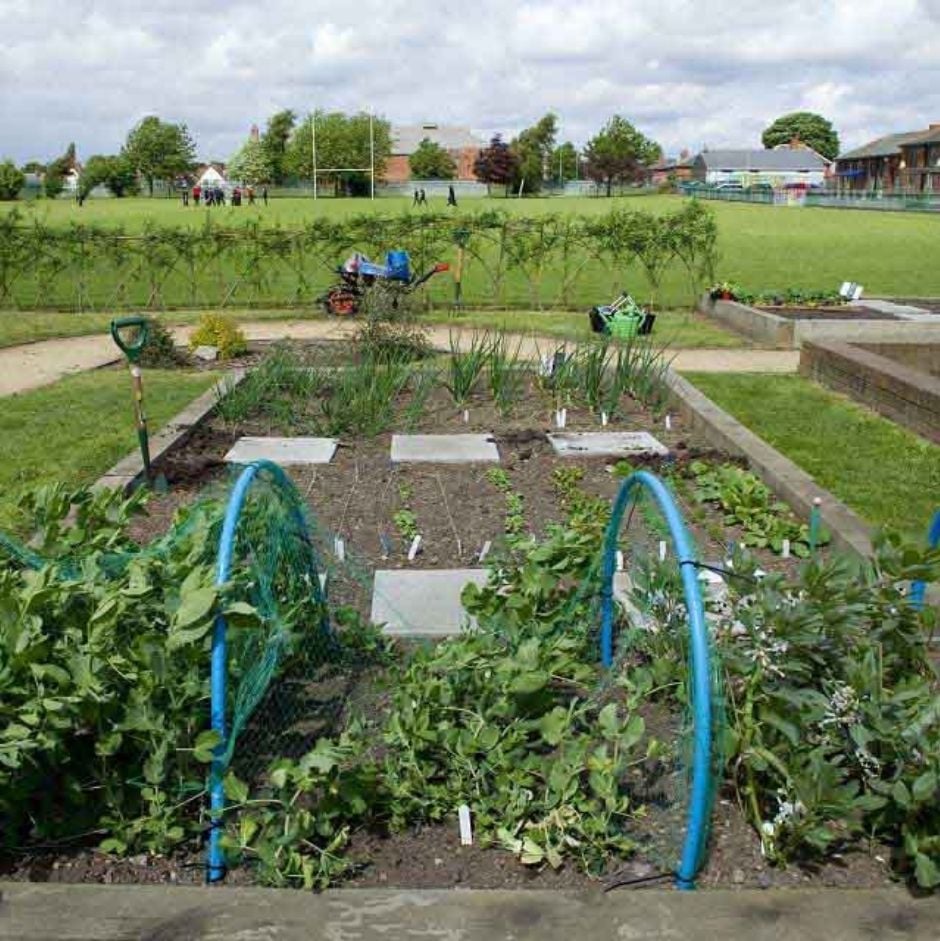
Learning objectives:
- Learn to design a large structure and learn to plan the components of a project
- Prepare the ground and build the structure ready for planting
Curriculum links:
- Science: Explore plant growth, soil preparation, and habitat creation
- Maths: Measure dimensions, calculate soil quantities, and plan layouts
- Design & Technology: Design, construct, and maintain functional garden structures
- PSHE: Foster teamwork, responsibility, and care for the environment
Key vocabulary
Preparation and equipment
Preparation
- Remember to remove perennial weeds (weeds with a lifecycle of longer than one year), for example, dandelions, from underneath your raised beds
- If you are building on tarmac, cover the area with weed suppressant material first. The beds need to be at least 50cm high for this purpose
Equipment
- Spray paint, garden lines and tape measure to mark out
- Materials and tools to construct the raised beds. Such as saw, drill, woodscrews, corner posts/stakes and mallet
- Adult helpers if the project involves younger pupils
- Top soil to fill the beds, wheelbarrow, shovels, rakes
Step by step
- Identify the space and need for raised beds in your school grounds or garden. Will it be easy to manage in that location? Is it protected or near amenities such as a water point?
- Plan where and how you will obtain the materials for it? Are you going to construct the bed from recycled wood, or new? Remember untreated timber will only last one or two years. You could buy a kit of light weight plastic boards? You may need to fundraise for this project
- Raised beds can greatly increase access in your school garden. Check with wheelchair users which height suits them best. Ensure you leave enough space around the raised bed each side to allow a group of pupils to work comfortably
- If you have a large area, raised beds can make the area more manageable for first time growers and those with poor soil. Involve the rest of the school and pupils in planning which plants they are going to grow in the beds