Teach pupils how to water plants correctly
Help pupils to understand the hows and whys of watering.
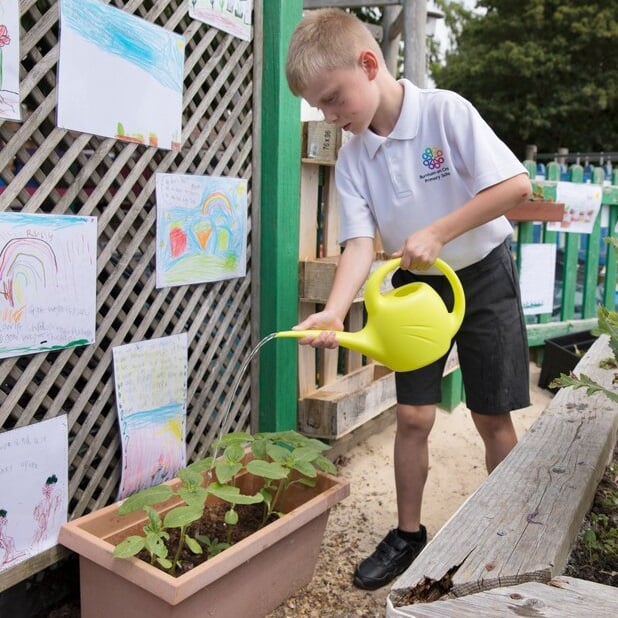
Learning objectives:
- Recognise that plants need water to grow
- Be able to water plants carefully
- Understand when and how to water plants
Curriculum links:
- Science: Learn about plant growth, water needs and plant care
- Design & Technology: Create simple tools for watering
- English: Practice giving and following instructions in a clear sequence
Jump to
Key vocabulary
Symbolised guide
Use this symbol-based guide to support understanding:
Download Widgit guide (112kB)
Preparation and equipment
Preparation
- Fill up a bucket or tub trug with water so pupils can refill easily
- Decide which beds or plants need watering. Water once a week thoroughly, if it hasn’t rained
- If possible, water early in the morning rather than at lunchtimes when the sun is hottest and water will evaporate quickly
Equipment
- Small watering cans
- Home-made watering devices from milk bottles
- Bottle-top waterers and recycled plastic bottles
- Water butts, outside tap or buckets filled with water
- Spade (optional)
Step by step
- Fill the watering can, bottle-top waterer or home-made watering device with water
- Choose a bed or area or particular crop that needs watering and stick to this bed to water the area thoroughly
- Show the pupils how to water the soil at the base of the plants, not the leaves or higher up the plant. Explain that it is the roots of the plants that take up most of the water. They are like ‘underground drinking straws’. Watering the leaves of the plants is not beneficial and can cause scorching, especially on sunny days
- Whilst watering, count slowly to ten before moving along to the next plant, repeating the watering and counting
- If possible dig down with a spade to check if the soil is moist at a depth of 10cm below the surface
Extension Activity
Sink plant pots or upside down bottles with bottoms cut off in the soil next to thirsty plants, such as pumpkins and soft fruit. Group members can direct their watering into these reservoirs and watch the water sink slowly into the soil.
Hints and tips
1,2,3,4,5, water keeps our plants alive,
6,7,8,9,10 to be sure we will do it again,
Why do we water so?
Water helps our plants to grow.
If we count we’ll get it right, then our plants will be a sight
Downloadable resources
Get your toolkit here