James Lawrence, RHS Principal Horticultural Advisor, has designed this simple, attractive, and most importantly, sustainable border design for you to try at home, with plants that are easy to grow, widely available and look good together.
James Lawrence
Choosing edible plants for sensory gardens: berries & cherries
The main function of this planting plan is to provide plants that are edible but also good to look at, providing interest throughout the year.
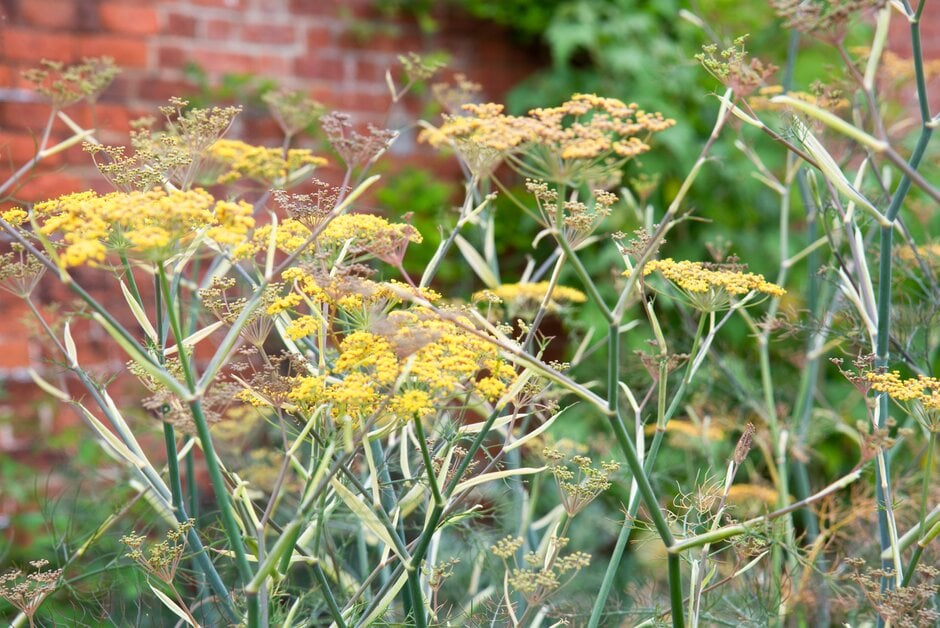
The berries and cherries will attract insects and animals who, in turn, disperse their seeds. The fennel will provide a tall see-through veil to the scheme, but will also produce edible seeds, roots and leaves.
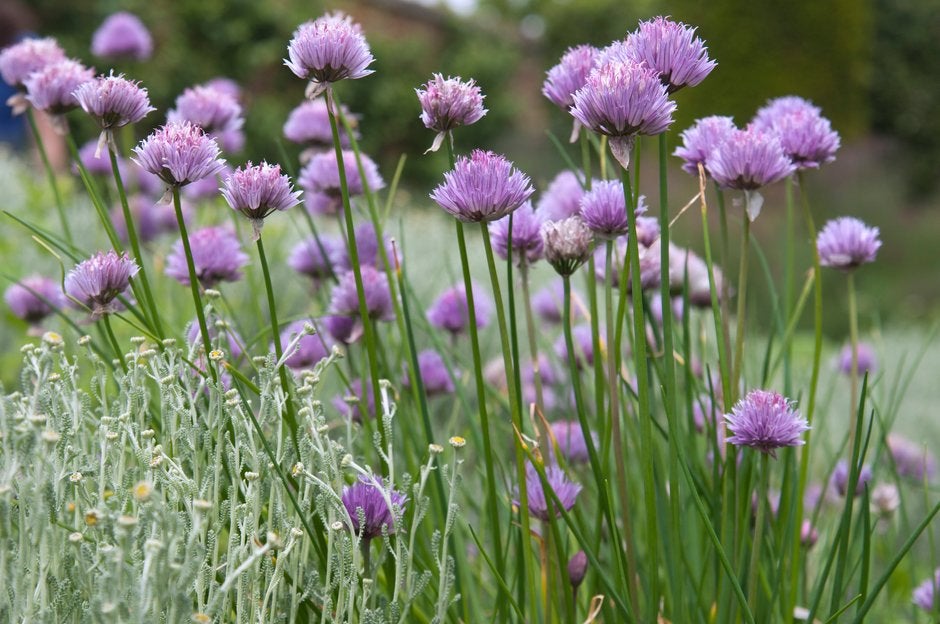
The chives will form ground cover, helping to lock in soil moisture and reduce weed growth.
Using an organic mulch, preferably homemade compost, while the plants establish can help to provide the same benefits. Mulches should be spread when the soil is already moist to help trap some of that moisture before it dries out in summer.
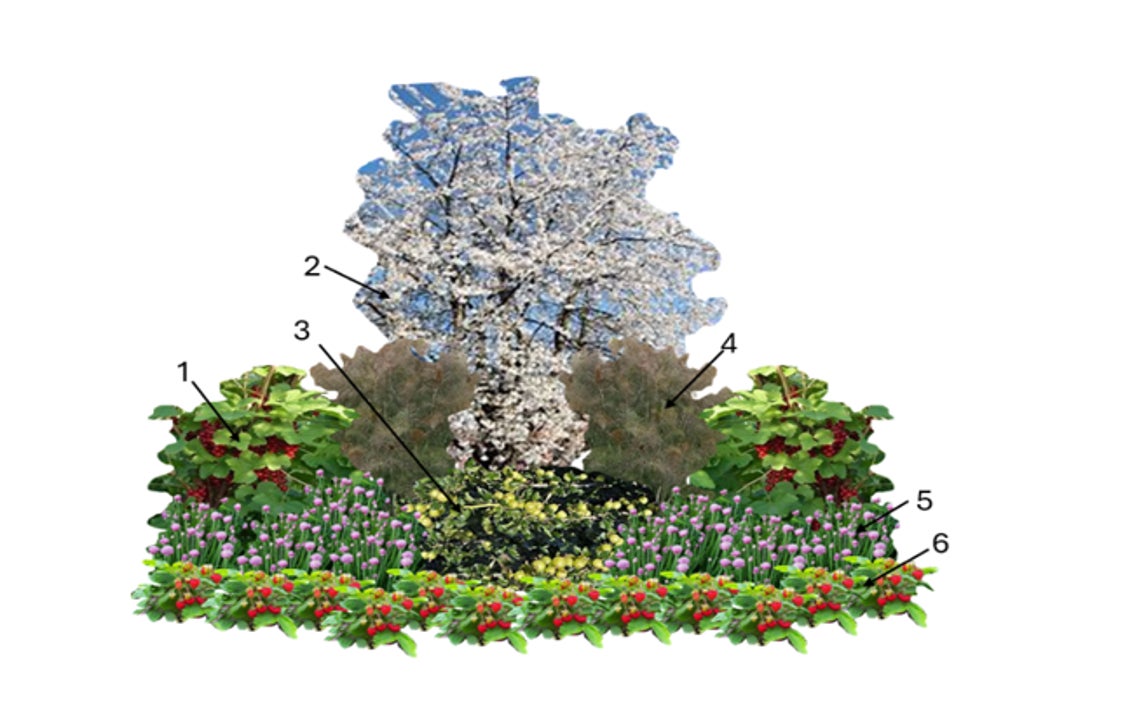
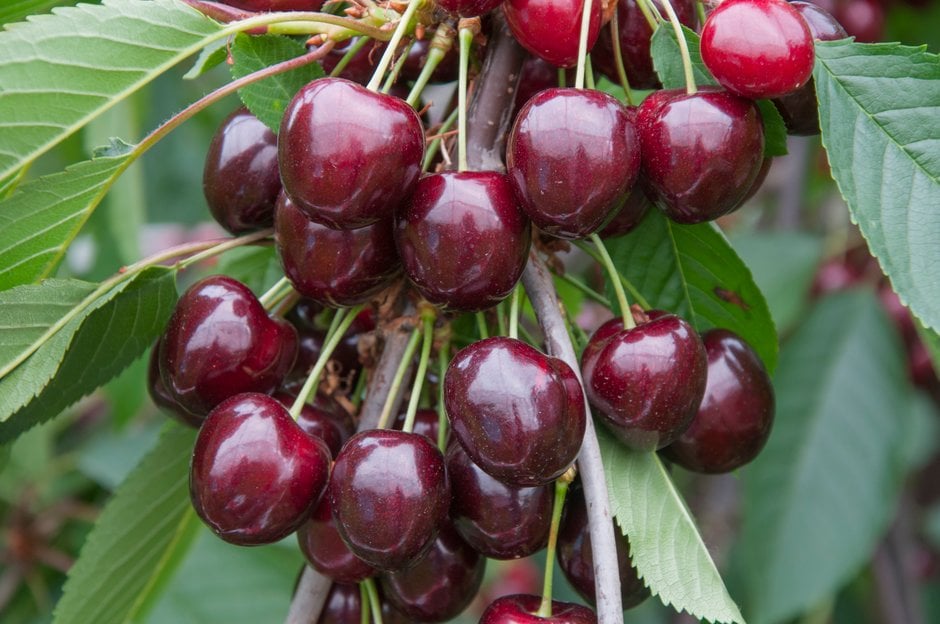
2 - Prunus avium ‘Stella’ is a deciduous tree which bears regular, heavy crops of large black cherries from late July. Its green leaves show good autumn colour.
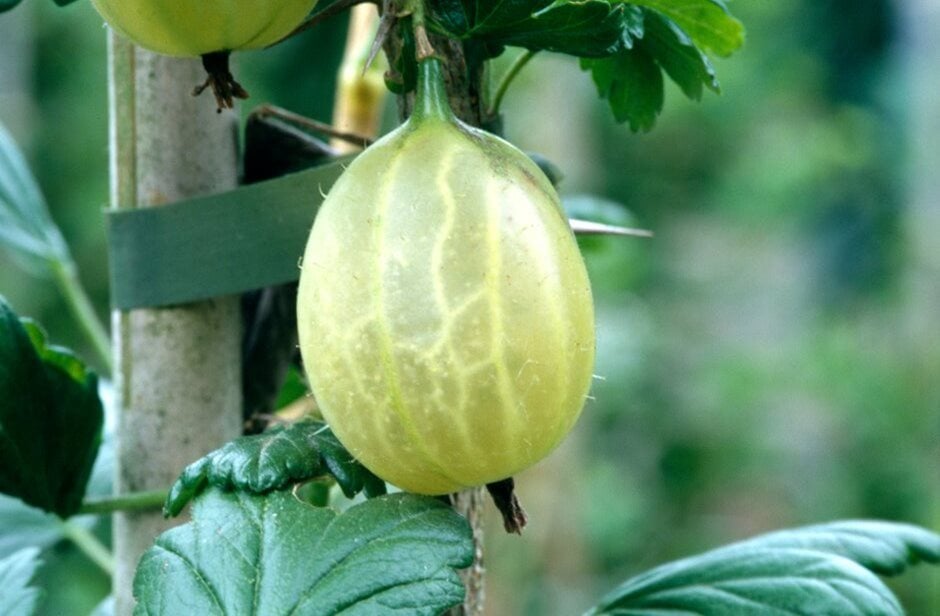
3 - Ribes uva-crispa ‘Invicta’ is a green culinary gooseberry that crops heavily and has good flavour. It is very vigorous with a spreading habit and thorns.
4 - Foeniculum vulgare ‘Giant Bronze’ is an aniseed-scented short-lived with feathery, copper-bronze foliage, made up of fine, hair-like segments. Flat heads of small yellow-green flowers are borne in summer.
5 - Allium schoenoprasum is a semi-evergreen chive with edible leaves, which produces clusters of brilliant pink-purple or white flowers in summer.
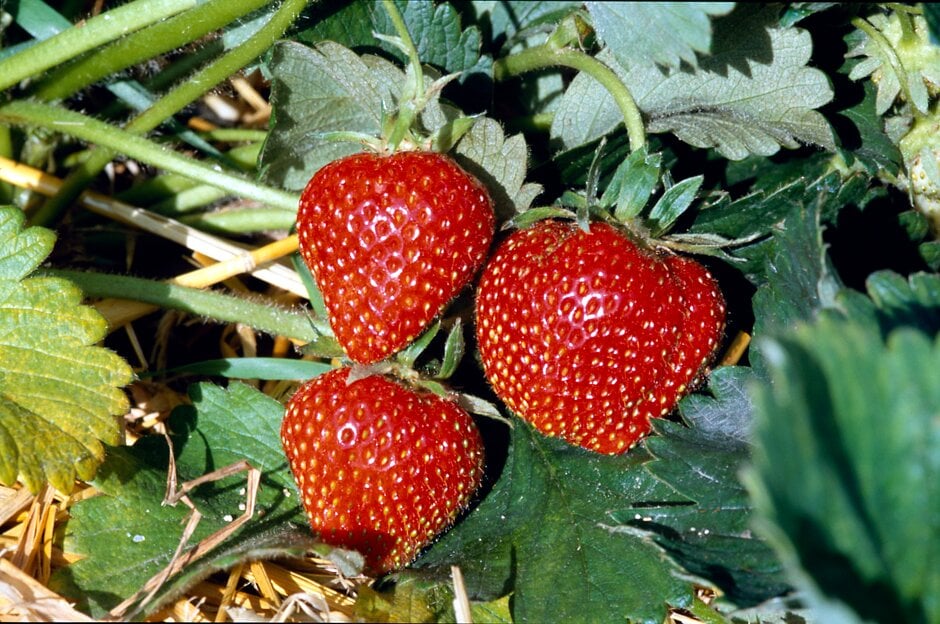
6 - Fragaria x ananassa ‘Hapil’ is an early to mid-season, heavy-cropping of strawberry with large, glossy red berries that have good flavour.
Growing edible plants
Growing your own fruit and herbs is a great way to eat more healthily, and gives you total control over what goes into your produce, from the soil it grows in and water it receives to ensuring that it is organic and pesticide-free. Planting schemes containing edible crops help to reinforce that growing your own food can improve health and overall well-being.
This simple planting plan helps create depth, interest and good coverage in the border.
Why choose a sustainable planting combination?
Using the ethos of ‘right plant, right place’ to create a sustainable planting combination is great for the environment. It helps avoid waste and the use of products and practices needed to try and help ailing plants, such as the application of fertiliser. It also creates robust, long-lived planting that benefits soil health and garden . For more information about sustainable gardening, please see the RHS Sustainability Strategy.