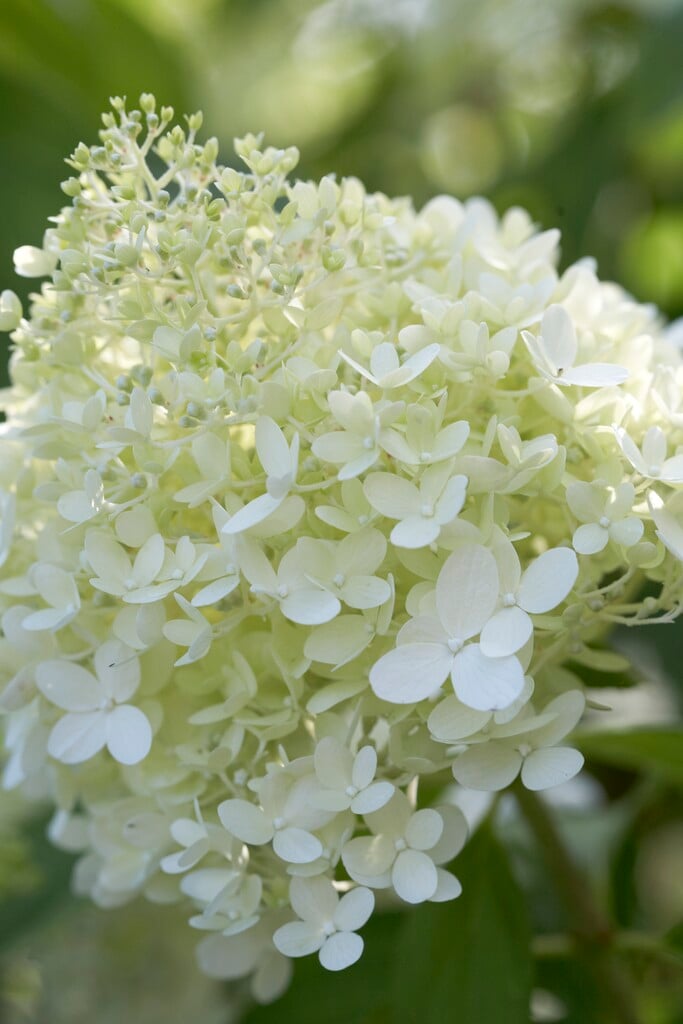
![panicled hydrangea [Pinky-Winky]](https://apps.rhs.org.uk/plantselectorimages/detail/HGW073.jpg?w=1280&fit=clip&fm=jpg&auto=format)
10 award-winning late-flowering perennials
Pick quintessential autumn plants to keep your garden blooming right up until the first frosts

Hydrangeas are bold, long-flowering shrubs that add colour and structure to borders, containers and shady spots, bringing reliable late-season interest and lasting beauty to the garden
Hydrangeas are well-known and well-loved garden plants. They’re easy to grow, flower for many weeks, and often bring extra interest with their autumn leaves. A number of outstanding cultivars have also been recognised with the RHS Recommended: Award of Garden Merit, a mark of quality for reliability and garden performance.
Hydrangeas grow well in most soils, although those with blue flowers are sensitive to acidity – in more alkaline conditions the blooms usually fade to pink or purple. If your garden has limy or chalky soil (with a high ), it’s best to choose white, pink or red-flowered cultivars. If you’re keen on blue flowers and have soil closer to neutral (pH 7), you can use a hydrangea colourant to enhance and maintain their vivid tones.
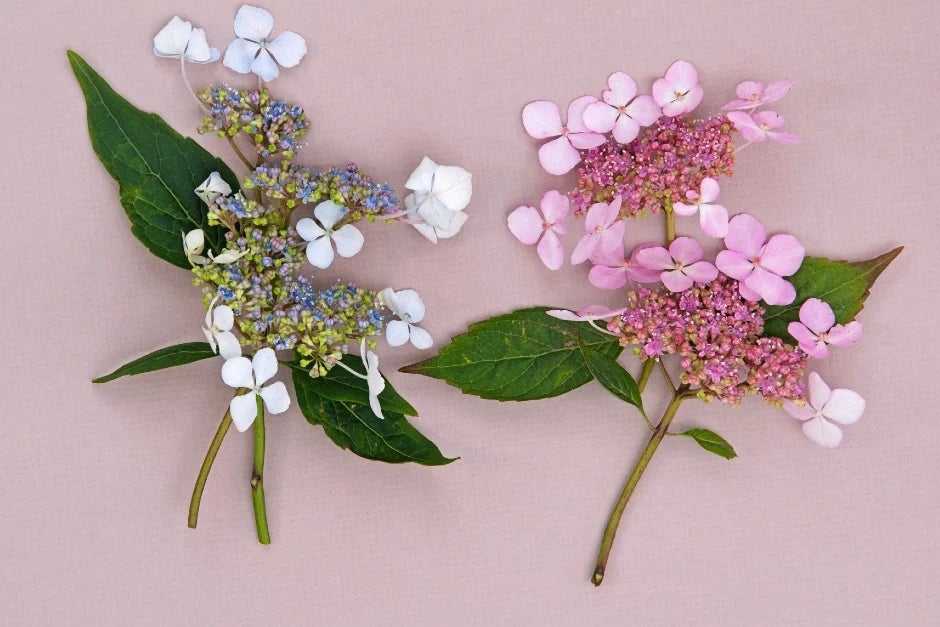
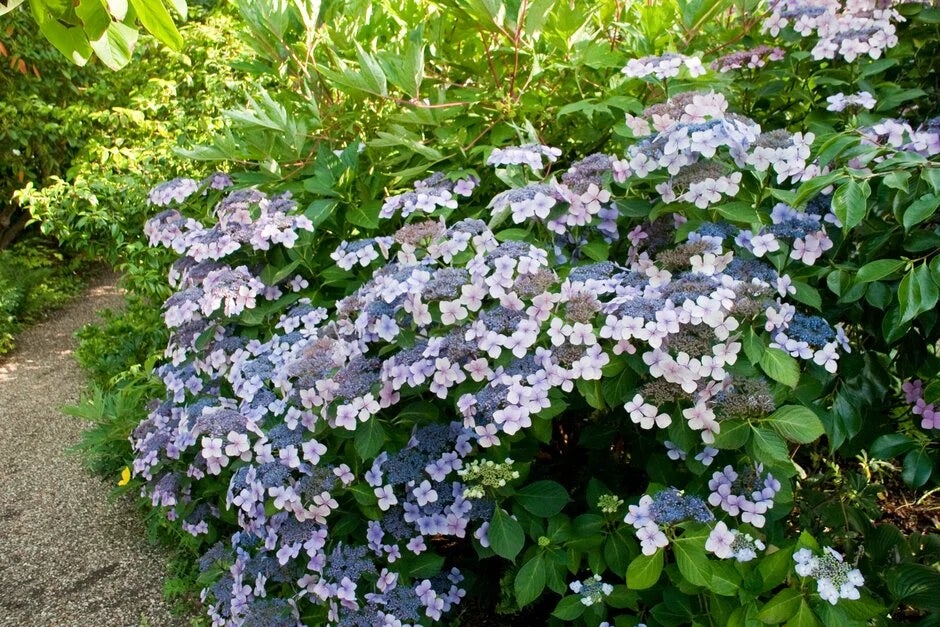
Hydrangea serrata ‘Bluebird’ combines colourful flowers and vivid autumn foliage. It's an old Japanese variety that features 15–17cm (6–7in) lacecap flowers with pink or blue florets, depending on the soil. The flowers open from early July until well into the autumn. As the fertile florets are fertilised, the colourful outer ones bend over to reveal the bright pink colouring on their backs – whatever the soil. Height 1.5m (5ft). Hardiness rating H4.

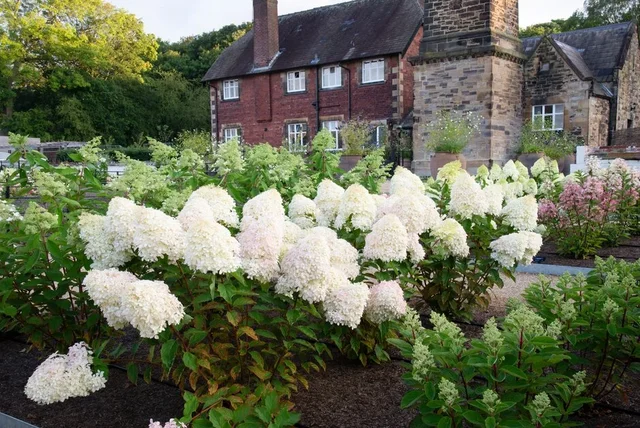
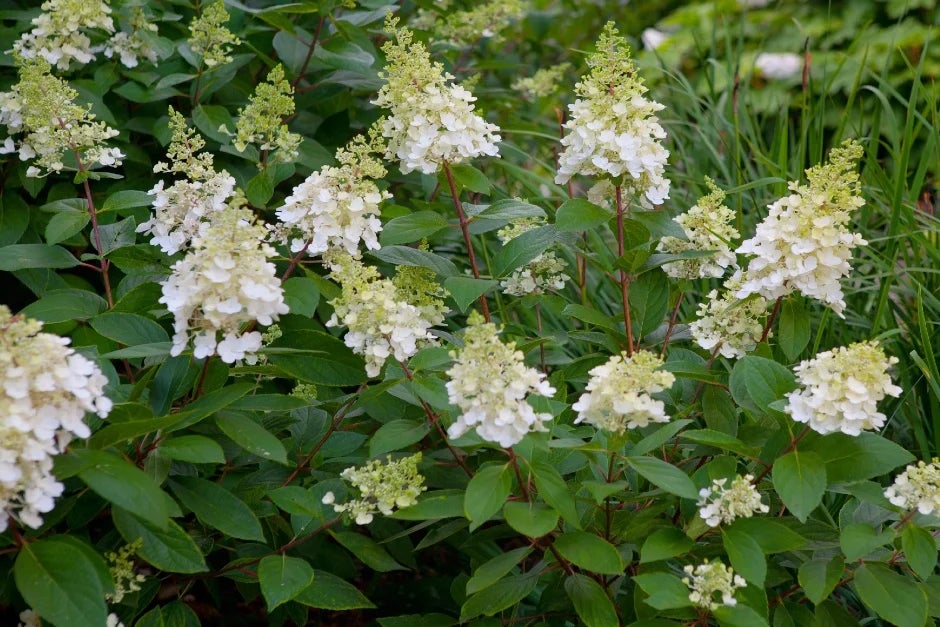
Hydrangea paniculata ‘Limelight’is a robust, upright shrub growing, with dark green leaves. In summer, it produces dense, cone-shaped flower clusters that open pale lime green, turning creamy white with a gentle pink flush that deepens as the season progresses. Flowering from mid-July to early October, this striking variety adds long-lasting color and structure to any garden. Height 1.5m (5ft). Hardiness rating H5.
Don’t forget to annually prune hydrangeas to encourage new, vigorous growth and a better flowering display. See more about hygrangea pruning >
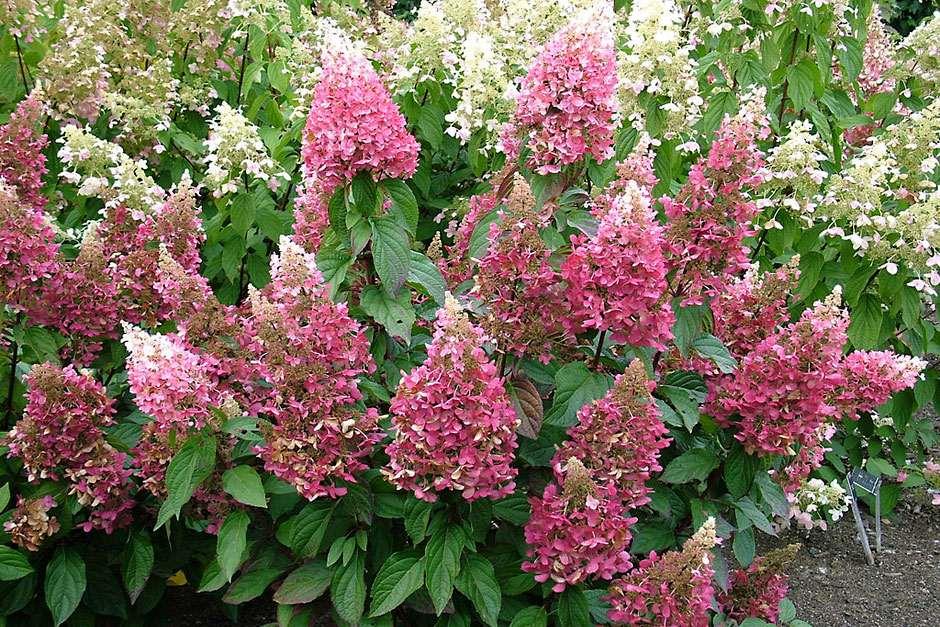
Hydrangea paniculata PINKY-WINKY (‘Dvppinky’) is one of the best for small gardens. Blooming from early August to early October, the flowers open in lime green and develop yellow tints as they age. They mature to deepest pink, often revealing all the colours in one spike – the effect enhanced by red stems. The flowers also have a spicy fragrance. Flowering time can easily be controlled by hard pruning (to give late flowers) or dead-heading only (for early flowers). Height 1.5m (5ft). Hardiness rating H5.

Hydrangea macrophylla ‘Veitchii’ was imported from Japan in the 1860s. Its white lacecaps have florets faintly blushed with lilac, which age to lime green before folding down late in the season to reveal their reddish brown backs. The mass of fertile central flowers are pink in then open to blue on , or remain pink on lime. At their peak from mid July to mid August, the 20cm (8in) heads dry well for the winter. Height 1.5–1.8m (5–6ft). Hariness rating H5.

Hydrangea macrophylla ‘Madame Emile Mouillère’, an old French variety, reveals large 20cm (8in) flowerheads that are distinctive in being so crowded that the individual florets are compressed together but also reveal a touch of elegance as the edges of each floret are prettily serrated. Best out of direct sun, the heads can be weighed down by heavy rain. The pure white flowers open in July, continue well into the autumn and age to palest pink or lime green (generally less blueish than in the photo). Height 1.8m (6ft). Hardiness rating H5.

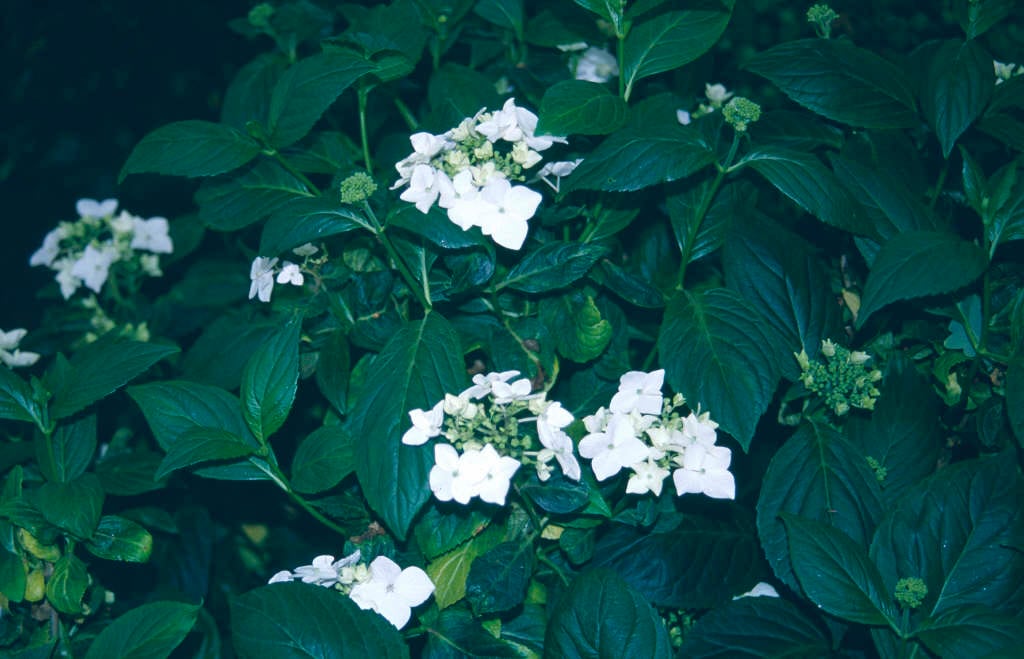
Hydrangea macrophylla ‘Lanarth White’ is one of the best of all lacecaps, and also one of the best hydrangeas for exposed positions, poor soil and by the sea. Blooming from early July to the end of August and beyond, a ring of large pure white florets surrounds a mass of green buds which open to pale blue or lilac. Each sterile white floret may have a pink or purplish fertile floret in the centre. Dries well to cream, almost yellow in the centre. Height 1.2m (4ft). Hardiness rating H5.

The heads of free-flowering mophead Hydrangea macrophylla ‘Générale Vicomtesse de Vibraye’are so crowded with florets that the edges are squeezed together. In fact, if the plant is cut back hard the resulting flowerheads will be so large they will bend over and touch the ground under the weight of rain. So, lighter pruning is advisable. The flowers age to limy green and are good for drying. Height 1.5–1.8m (5–6ft). Hardiness rating H5.
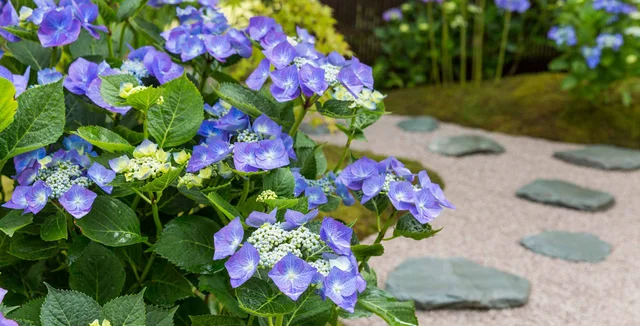
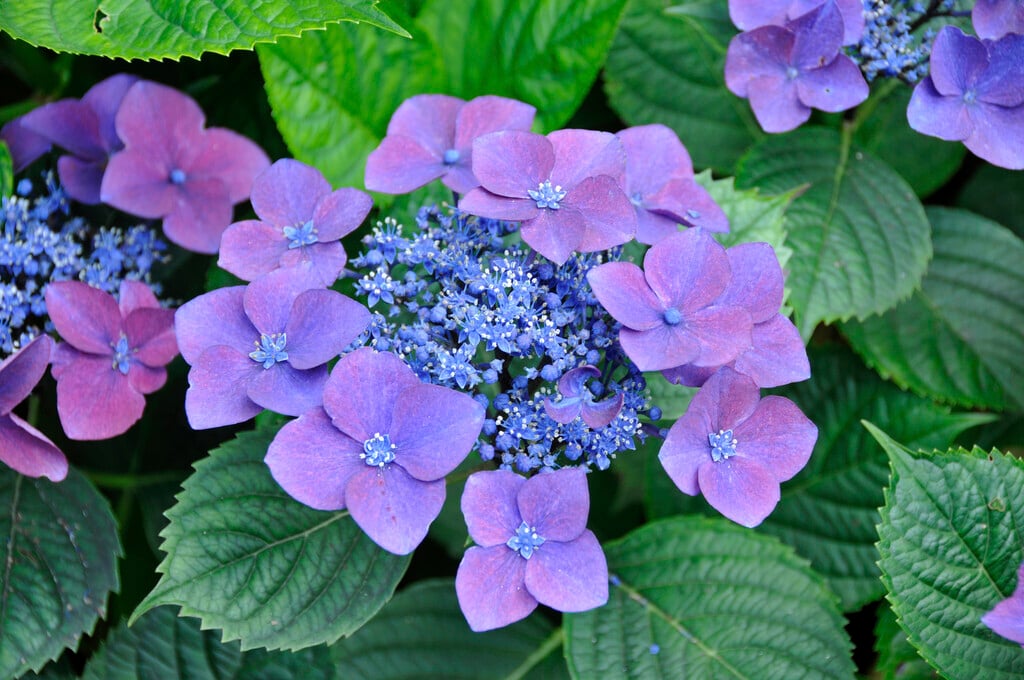
Hydrangea macrophylla ‘Kardinal’ (Teller Series)is a rounded, upright shrub with dark green serrated leaves. From summer through autumn, it produces masses of large lace-cap flowers, rich red to purple in acidic soils and tending pinker in neutral to alkaline conditions. A striking, long-flowering hydrangea that brings vibrant colour to borders and containers. Height 1.5m (4ft 11in). Hardiness rating H5.

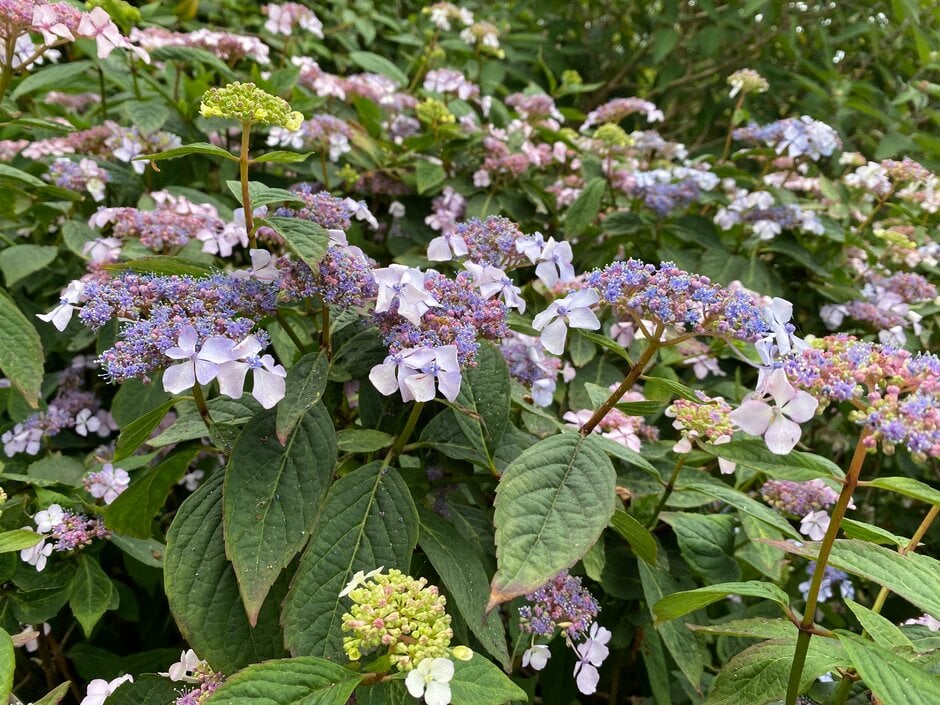
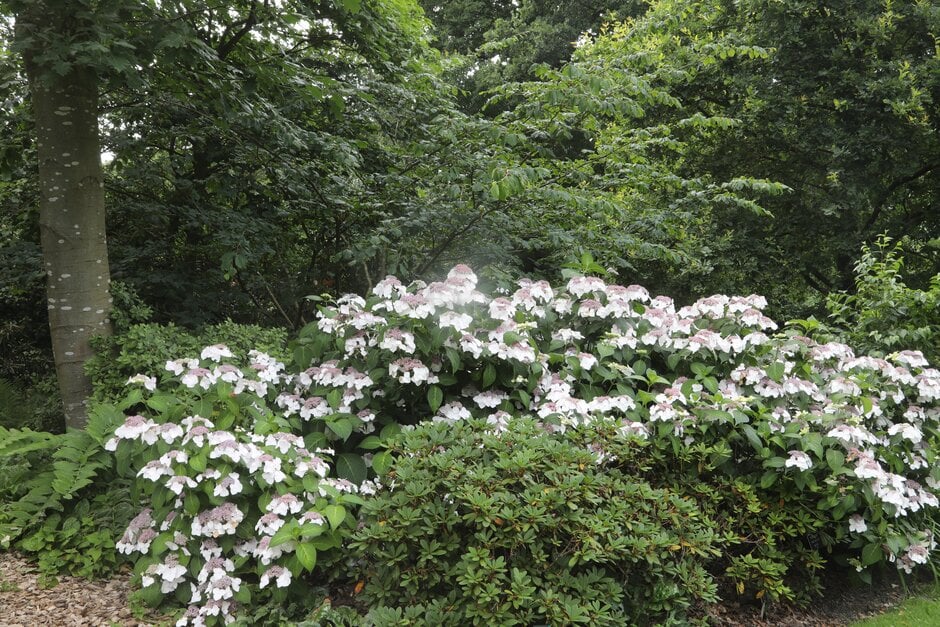
A large deciduous shrub, Hydrangea aspera (Villosa Group) ‘Velvet and Lace’ has lance-shaped green leaves with a soft, velvety underside. In late summer, it produces slightly domed flower heads up to 22cm (8.6in) wide, with small bluish-purple flowers at the centre surrounded by larger pale mauve-pink florets, creating a textured, elegant display in the garden. Height 2m (6ft 7in). Hardiness H5.

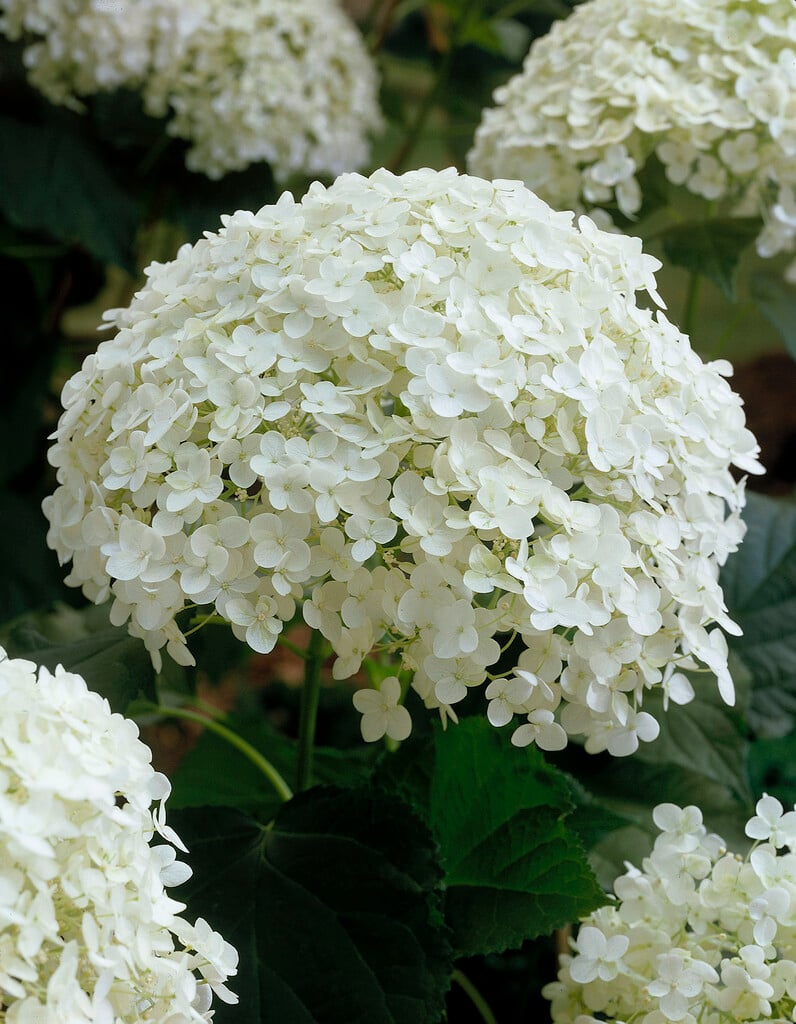
The huge, near-spherical flowerheads of Hydrangea arborescens ‘Annabelle’ can be 20cm (8in) or sometimes even 25cm (10in) across. The harder you prune – you can cut the plant down to the ground in spring if you like – the larger the flowerheads will be. Opening from mid-July in pale green, the flowers mature through cream to pure white and then back to pale green in October. Happy in light shade. Height 1–1.8m (3–6ft). Hardiness rating H6.
RHS hardiness rating
The system of hardiness ratings enables gardeners to understand the hardiness of plants and gives a guide to the best growing conditions.
Find out more >