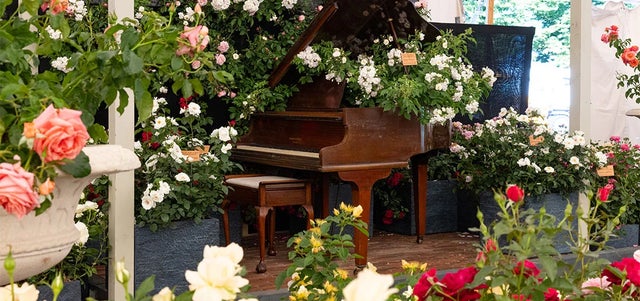
Fabulous rose gardens
Timeless, romantic and endlessly diverse, roses offer something to delight every garden enthusiast. Find your favourite landscape at RHS Partner Gardens

As climate change forces us to rethink the way we garden, Ambra Edwards ponders what’s next for the nation’s favourite flower: the rose
In the UK, climate change has brought us a number of challenges – savage storms and periods of drought but, above all, mild wet winters: roses are holding their foliage through these long damp months, so the cycle of fungal disease (blackspot, mildew and rust) is beginning ever earlier. Roses weakened by drought in a hot, dry summer are all the more susceptible. Nurseries are responding with altered stocklists: the recent retirement of long-standing favourites Rosa Munstead Wood (‘Ausbernard’) and R. Lady Emma Hamilton (‘Ausbrother’) from David Austin’s catalogue caused uproar among rose-lovers. In a recent trial of red roses with reduced water and food and only natural sprays at RHS Garden Wisley, only four cultivars from a starting squad of 60 were robust enough to earn a new RHS Recommended: Award of Garden Merit. Hence whisperings, hushed discussions over garden fences, as we dare to think the unthinkable: does the rose have a future in our changing climate? To find the answer, we must look to the past.

No-one knows exactly when mankind fell under the spell of the rose. The plants that would evolve into roses existed long before humans did, rooted before the more northerly of the world’s two supercontinents, Laurasia, separated into North America and Eurasia some 130 million years ago. This is why roses can be found right across the Northern Hemisphere, from Japan in the East, through Central Asia and Europe, to California in the West. Fossilised pieces of plants belonging to the genus Rosa, dating back 35–40 million years, have been found in China and Alaska, so roses were evolving as the Antarctic ice sheets were forming and the Himalayas were in their infancy. As new mountains thrust skyward, forming fresh and disparate habitats, these early roses adapted rapidly to changing conditions – often cold, dry and inhospitable. Experts disagree about how many rose species evolved to fill these ecological niches: most estimate around 150, plus many wild-occurring hybrids.
Legend has it Rosa gallica var. officinalis was brought back from the Crusades, borne in the helmet of the King of Navarre. Whatever the truth, the apothecary’s rose is ancient and indigenous to central and southern Europe (including France, hence the name gallica, meaning ‘of Gaul’). In rich pinks to deep maroon, some cultivars have extra petals: they are parents of many of what we now call old roses including Alba and Centifolia roses.
Somewhere along an epic journey from wild rose to garden favourite, people brought the blooms into their lives, whether for scent, for decoration, or for domestic or religious purposes, endowing them with myriad cultural resonances. We know that roses were growing in the imperial palaces of China more than 2,000 years ago, but archaeological fragments suggest a far longer history of cultivation. The first definitive sighting occurs at Knossos, the Cretan palace decorated with flower frescoes over 3,500 years ago, showing a bloom that is unambiguously a rose. We know that roses were grown for oil in Greece by the 13th century bc: historian Bettany Hughes describes Helen of Troy wearing garments rendered fragrant and lustrous by dressing with rose oils. In classical Greece, the ‘father of botany’, Theophrastus (c371–c287 bc), identified both wild and cultivated roses, the latter grown for garlands, wreaths and chaplets, while roses became associated with both the cult of Aphrodite, goddess of love, and Dionysus, god of wine.
The Greek delight in roses passed on to the Romans, who used them both in daily life for unguents, foods and medicines, and in their death rituals. Egypt became a centre of floriculture for the Roman Empire, which couldn’t get enough of roses: the blooms adorn the walls preserved in Pompeii and Herculaneum; an annual orgiastic festival, the Rosalia, celebrated the rose; and emperors showered their guests with rose petals.
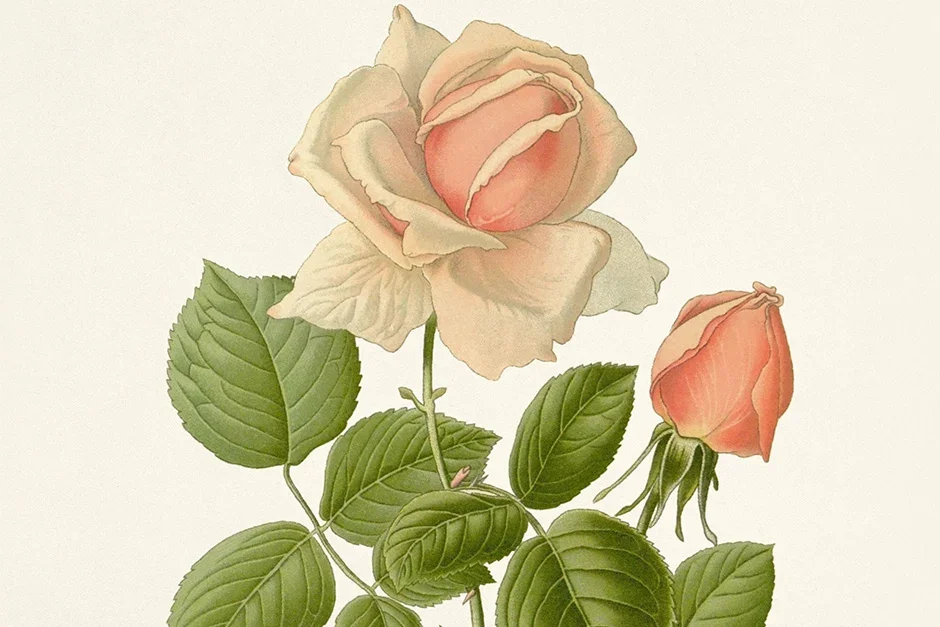
Rose of note
Widely hailed as the first Hybrid Tea, Rosa ‘La France’ won a competition in 1867 to bear this name. That date now marks the division between old and modern categories of rose: a rose is old if its group was introduced prior to 1867, and modern if introduced thereafter. So, if a Tea rose were to be introduced today, it would still count as an old rose.
This association with decadence made the rose distasteful to early Christians, yet by the medieval period (c476–c1450 ad), the rose was identified with the Virgin Mary – the white rose representing her virginity, the red her suffering and the blood of Christ. Roses became a staple of monastery gardens for both devotional and domestic use. However, at the same time as the rose denoted divine love, it was also a powerful symbol of earthly love, especially as understood in the ideals of courtly love celebrated in songs of the troubadours and the legends of King Arthur, Lancelot and Guinevere. Depictions of secular gardens in this period are full of roses, recognisable as the red Rosa gallica and white Rosa × alba, soon to be co-opted as the totems of two warring dynasties, the houses of Lancaster and York.

For centuries, European gardeners were content with white, crimson and pink roses that flowered only once (with the exception of some repeat-flowering autumn damask roses). Then, from the mid-18th century, the first roses began to appear from China, bringing with them new colours (rich, soft yellows), new scents (including in the Tea roses, a subtle waft of tea), more delicate petals and, above all, a mutation that permitted them to flower repeatedly. In the space of a single generation, these ‘China roses’ became parents to whole new classes of roses, prized for their fragrance but more for their readiness to repeat-flower. As the China roses were more tender than their European counterparts, this was only possible under glass. Therefore, a race to make hardy repeat-flowering roses began, achieved with the families of Perpetual roses created in the mid-19th century; these gave rise to the style of rose we now call Hybrid Tea, a term coined in France.
Rosa × alba ‘Alba Semiplena is a semi-double white rose, one of the oldest Albas, and is alleged to be the white rose of York. Resulting from a cross between Rosa gallica and a hedgerow dog rose, the Albas are known for their vigour and longevity, and their genes are in modern cultivars such as R. Scarborough Fair (‘Ausoran’).
In the UK we must recognise the importance of rose breeder Henry Bennett, a Wiltshire farmer who became known as the ‘father of the Hybrid Tea’ on introducing 10 of these large-petalled roses in 1879 – for he was the first to systematically employ scientific breeding methods, transferring pollen from known parents, in controlled conditions, in glasshouses. Until then, breeding had been a somewhat random affair, largely left to the bees. Over the course of the 20th century, the Hybrid Tea, with its elegantly pointed buds and long show of colour, would become the archetypal rose, usually grown in dedicated rose gardens along with new multi-flowered forms such as the Polyantha and , and almost entirely displacing old roses throughout the world.
"As new mountains thrust skyward, forming disparate habitats, early roses adapted rapidly to changing conditions."
Then in the 1940s, David Austin – another farmer turned rosarian – began his quest to combine the beautiful flower forms and fragrance of old roses with the wider colour range and repeat-flowering capacity of the new. It took until 1961 to produce R. ‘Constance Spry’, which had the beauty he sought, but not the repeat-flowering gene. Then, in 1983 came R. Graham Thomas (‘Ausmas’): repeat flowering, tea-scented and a rich, deep yellow. He named it in honour of the man who did most to rehabilitate old roses, and whose historic collection can still be admired at Mottisfont Abbey, Hampshire, today.

The ascendancy of the Hybrid Tea, and the dazzling cluster-flowered Floribunda roses that followed, had gone hand in hand with other major changes in the garden. The post-war development of artificial fertilisers, and fungicides that modern gardeners used as freely as Victorian gardeners had once used nicotine and arsenic generations before had created a downward spiral. Knowing that gardeners employed a strict regime of feeding and spraying to keep roses in tip-top condition, breeders had little incentive to breed robust, disease-resistant cultivars: the colour and size of the bloom were what counted.
Some, however, bucked the trend. The German Kordes family led the way in breeding roses for health and resilience from the 1930s. By the 1970s, awareness of the dangers of chemical over-use was growing and, as eco-minded gardeners declined to use them over the next halfcentury, breeders were forced to make disease resistance a priority. Many worked on improving hardiness, too: the first Floribunda roses were produced in Denmark in the 1910s and 1920s in a bid to create a rose that could survive the Scandinavian climate. Today, there are families of roses in Canada (the Parkland and Explorer Series) able to withstand the bitterest snowy winters.
The voluptuous many-petalled roses that preen in the Dutch and Flemish flower paintings of the 17th century are the Centifolia roses, more prosaically known as cabbage roses. It’s thought this rose was bred in the Netherlands in the late 16th century, and developed over the next 200 years.
Conversely, in hot, humid Texas, research progresses to discover how best to combat the fungal diseases fostered by the climate, while in drought-stricken California and Australia, the focus is on creating roses able to thrive in ever-soaring temperatures without rain. Heat, though, is rarely a problem for roses, as so many have their origins in Central Asia: rose historian Charles Quest-Ritson was surprised to discover “even roses bred to flower within the Arctic Circle tend to bloom better in warmer climes. “To be honest,” says Charles, “Britain is not the ideal climate for roses.” He sympathises with breeders working to produce disease-resistant stock – but that is just the starting point.
“It’s important to sell roses that will stand up to all the pressures in the modern garden, wherever you are in the UK,” says Liam Beddall, Senior Rose Consultant at David Austin Roses. “But expectation of the modern rose is incredibly high. People want them to be fragrant, good for bees, good for cutting, good for growing in containers and for mixed borders. They have to stand up – nobody wants that more lax, relaxed habit – and thrive without being sprayed with chemicals. We’re trying to make sure that our roses encompass all those things, and that’s a real challenge.”
"There remains much untapped potential to create new roses that can weather climate change."
Results will not be achieved overnight: it typically takes 12–13 years from the first cross- to market introduction; in David Austin’s breeding programme, 40,000 individual cross-pollinations and the resulting 350,000 seeds sown may only result in three or four new introductions. Currently no more than 20 wild, or species, roses have lent their genes to the pampered creatures we recognise as today’s garden roses. This suggests there remains much untapped potential to create new roses that can weather climate change. Those early roses were, and still are, extraordinarily adaptable (think of Rosa rugosa from Japan, or R. fedtschenkoana from Kyrgyzstan) and have proved over millennia their capacity to deal with changing environmental conditions.

While rose breeders work their magic, the key thing, experts agree, is to change the way we think about roses. First, we need to heed the principles of ‘right plant, right place’, because we have a blind spot when it comes to the rose: bizarrely, the most important factor in choosing one remains its name. “Rosa ‘Wedding Day’ sells by the million, even though it’s totally unsuitable for most people’s gardens,” says rosarian and author of RHS Roses, Michael Marriott, while Charles Quest-Ritson points to an unremarkable Danish rose that became a best-seller in Britain when it was marketed as Mum in a Million. “Select a suitable and you’re already halfway to success,” says Tim Upson, RHS Director of Gardens and Horticulture.
One of the original China roses, first known as ‘Parsons’ Pink China’, Rosa × odorata ‘Pallida’ played a crucial part in developing our earliest repeat-flowering roses – first the Portlands, then the Bourbons and Noisettes, and finally the Hybrid Perpetuals. This rose was so popular that by 1823, just 30 years after its introduction, it was reputed to be found in every cottage garden.
At RHS Garden Wisley in Surrey, where the soil is sandy and free-draining, drought resistance is a priority; the same is true at RHS Garden Hyde Hall in Essex, where rainfall is low and the heavy clay soil bakes hard in summer. Here the brief for replanting its Rope Walk is to choose roses that can cope with drought, and Tim has high hopes for the new Rosa persica hybrids being trialled at RHS Wisley. On the fringes of notoriously rainy Manchester at RHS Garden Bridgewater, however, the trick is to select single or semi-double blooms, avoiding roses with lots of thin petals that may stick together and ball or rot in . Perhaps surprisingly, the most reliable display is at Devon’s RHS Garden Rosemoor, despite the high rainfall, because disease was always expected in this county’s mild, wet conditions, and disease-resistant cultivars have been planted from the outset.
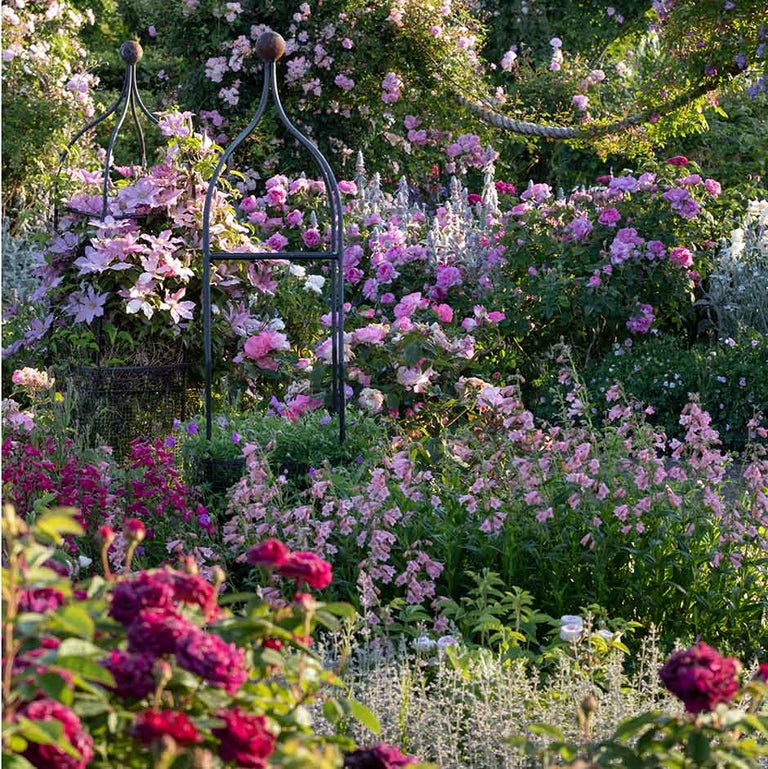
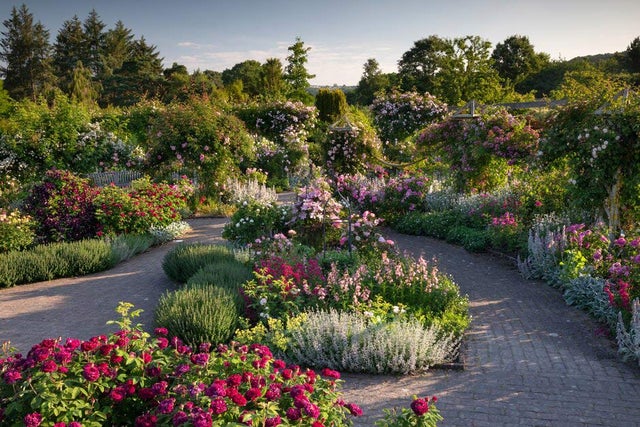
Next, we must rethink the idea of the rose garden, beautiful as it may be. Perversely for a man who has probably designed more of them than anyone else alive, Michael Marriott doesn’t approve of them. “Roses shouldn’t be grown in a monoculture,” he says. “Nothing should. It’s an invitation to pest and disease.” Instead, he recommends mixing roses with other plants, making it more difficult for problems to spread. This is certainly the approach in RHS Gardens: the RHS Wisley rose garden was interplanted with 5,000 perennials some 15 years ago; and in the new walled garden at RHS Bridgewater, roses will form part of mixed plantings, all grown without any chemical intervention. “No-one wants to spray anymore,” says Michael Marriott, “and quite right too. Does it matter if there’s a touch of blackspot? Or aphids? They bring in beneficial insects to feed on them, which will in turn bring in the birds.”
"Roses shouldn’t be grown in a monoculture. It’s an invitation to pest and disease."
We also require a sea change in the way we appreciate roses: rather than valuing bloom and fragrance in splendid isolation, could we not learn to consider the whole plant – its form, its foliage, its usefulness in the garden? And there are other attributes to consider, such as the glorious diversity of hips on offer: at RHS Bridgewater, a plan is afoot to clothe walls with ramblers selected for their beautiful hips – a treat for autumn visitors both human and feathered.

Above all, what will ultimately secure the future of roses in our gardens is to grow them well. We must break up any when planting so that roots can penetrate deeply, liberally, prune circumspectly, give them the odd soaking in dry weather and, crucially, not overfeed. Replace them too, when they pass their prime and become more susceptible to disease. “It’s generally poor husbandry rather than poor weather conditions that make roses look wretched,” says Charles Quest-Ritson.
"It’s generally poor husbandry, rather than poor weather conditions, that make roses look wretched."
However, he hasn’t the slightest doubt that roses are here to stay, and this is another point on which our experts all agree. Roses have changed immeasurably over the past two centuries, in character, size, colour and form, yet we have barely begun this voyage of discovery. “There are roses with blue leaves, roses with grey leaves, roses that grow in the Arctic, roses that grow in the Tropics,” says Charles. “If anyone is prepared to take a long-term view, they may well go back to the wild species and back-cross to select for new characteristics: that is where the growth and the variety in the future will be. The fact that roses already grow over such a wide area in such diverse climates shows they can adapt – even to a change of 5°c up or down, or of rainfall of 40cm a year.”
We can be confident that with exploratory breeding roses can rise to the challenges climate change is bringing and remain a compelling part of our gardens – and culture – for years to come. The question is, however: can we gardeners rise to the challenge, too?
"Above all, what will ultimately secure the future of roses in our gardens is to grow them well."
This page is an adaptation of an article published in the June 2025 edition of The Gardenmagazine, free to RHS members every month when you join the RHS.