
23 places to see glowing organisms in the UK
From glowing plankton to fluorescent fungi, the UK is home to a surprising number of bioluminescent and biofluorescent species. Find out where to spot glow-worms, light-producing mushrooms, and other natural wonders that glow in the dark
There’s something quite magical about glowing plants and nature’s lights, but this isn’t just found in fairytales; glowing organisms are found all over the UK and are a great way to explore the darker evenings.

Bioluminescent Fungi
While the UK doesn’t have as many glowing fungi as other parts of the world, there are a few worth looking out for. These fungi glow due to a chemical reaction involving luciferin and the enzyme luciferase, which influences the release of light energy. It is theorised that these fungi may have evolved this glowing feature to attract insects which help spread their spores.
Sulphur Tuft (Hypholoma fasciculare) produces a very faint glowing light and can be found in clusters of light brown-cream mushrooms, usually around rotting wood and tree stumps in the autumn.
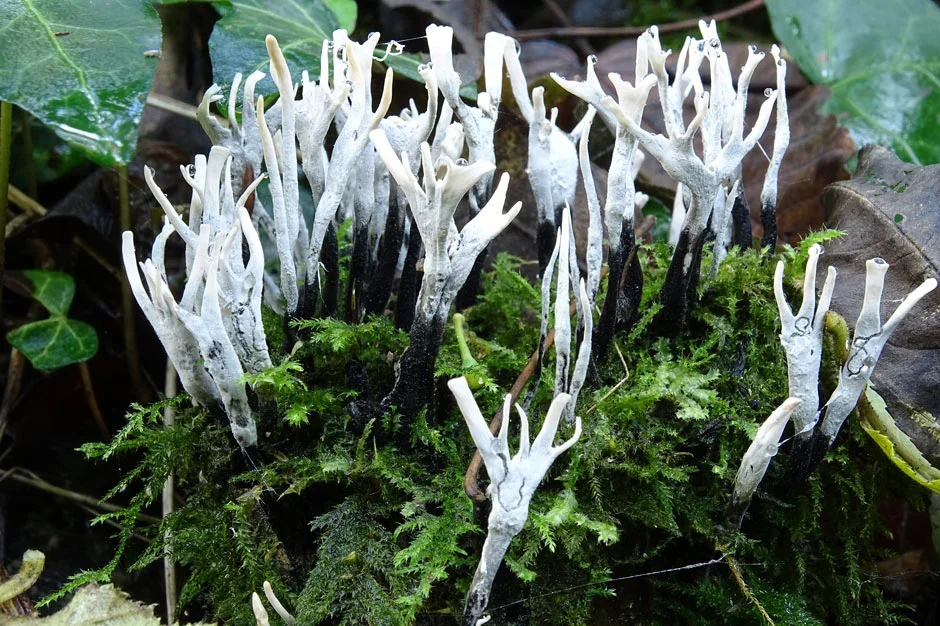
Candlesnuff Fungus (Xylaria hypoxylon) grows in finger-like appendages and glows faintly when using a long exposure setting on a camera and a very dark environment.
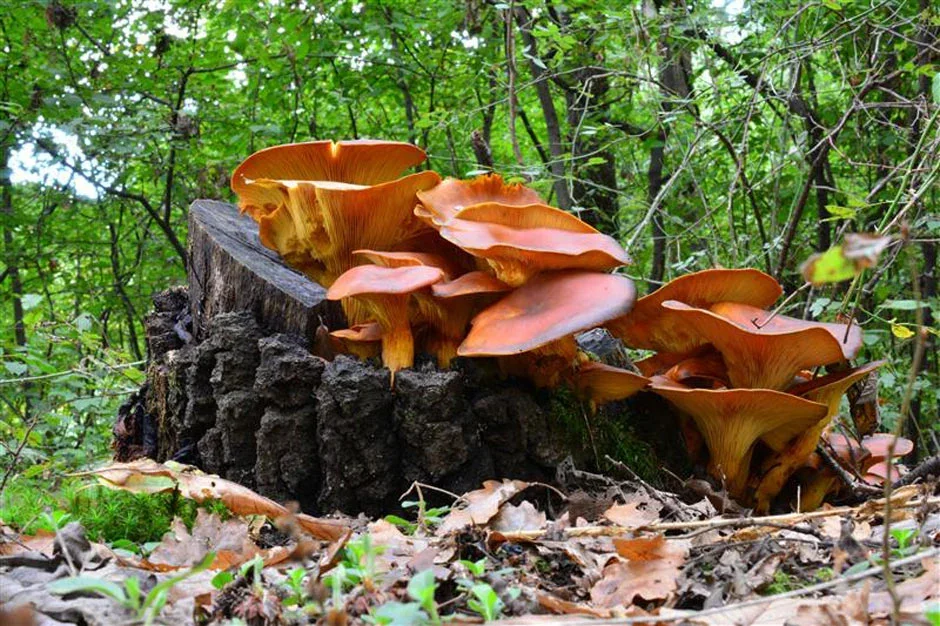
The Jack-o'-Lantern mushroom (Omphalotus olearius) is extremely rare in the UK and in daylight appears orange of bright yellow in colour, producing a greenish glow on dark nights during peak spore production.
Beige clusters of Honey Fungus (Armillaria mellea) are common in UK woodlands and gardens. At night the mycelium can emit a faint glow
Where to find them:
- New Forest, Hampshire
- Undisturbed woodlands and rural forests across the UK
Bioluminescent fungi are seasonal and unpredictable. Even if they appear in a spot one year, there’s no guarantee they’ll fruit there again the next. Timing, weather, and habitat conditions all play a role, so think of these sightings as a rare treat rather than a certainty.
Bioluminescent Plankton
Occasionally, in the autumn and early winter months, you may see some beaches light up with patches of glowing waves. This glow is caused by tiny plankton called dinoflagellates. During the day the plankton appears in the water as faint clouds of orange, but at night when disturbed by the movement of waves, they emit a blue-green glow which is thought to be a defence mechanism to confuse predators. It's quite unusual to see these glowing plankton, so if you do it’s truly special.
Sightings have been documented in:
- Dunraven Bay, South Wales
- Gower Peninsula, South Wales
- Grebe Beach, Cornwall
- Kynance Cove, Cornwall
- Seascale, Cumbria
- St Bees, Cumbria
- Botany Bay, Kent
- Walpole Bay, Kent
- Penmon Point, North Wales
- Breydon Water and other parts of the Norfolk coast

Biofluorescent Fungi (UV-reactive)
Unlike bioluminescent species, biofluorescent organisms don’t produce their own light which is a much more common attribute to mushrooms in the UK. Instead, they absorb UV light and reflect it back in bright colours. Under a UV torch, many fungi and mosses appear to glow.
Common examples include: Sulphur Tuft, Russula species, Cluster Woodlover (Hypholoma lateritium) and many mosses and lichens.
You can spot these in Forests, parks, and even in your own back garden across the UK and are not limited to:
- Mousehold Heath, Norfolk
- Hoveton Great Broad, Norfolk
- Langford Heathfield, Somerset
- Childwall Woods, Liverpool
- Glenan Wood, Scotland
- The Reens, Cornwall
Use a UV torch with a 365 nm wavelength for the strongest effect. It’s a fun activity, especially since biofluorescence is surprisingly common in nature and even some slugs glow! In British woodlands, Sulphur Tuft is one of the most frequently spotted mushrooms, so chances are you’ll find something shining back at you.

Glow-Worms
Despite the name, glow-worms are beetles. Female glow-worms appear more worm-like and emit a green-yellow glow that’s used to attract males and even their larvae and eggs can emit light. They are easiest to spot in the late summer on warm evenings.
- Glow-worms are found most often in chalky soil regions or grassy regions such as the South Downs, Kent Downs, Norfolk and Cambridgeshire
- They are less common to find in Scotland and are not present in Northern Ireland

Before you go
If you’re heading out to spot glowing wildlife, remember:
- Bring a UV torch for spotting biofluorescent species
- Visit at dusk or after dark for the best chance of seeing bioluminescence
- Stick to paths and respect wildlife habitats