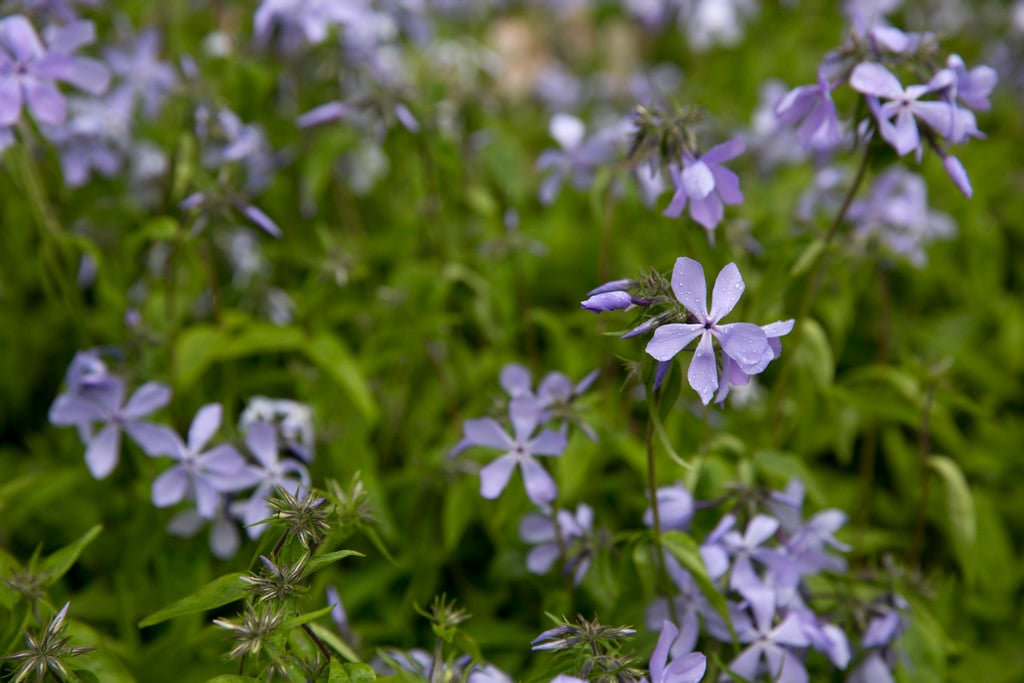
Phlox divaricata

RHS Plant Profile
wild sweet william
wild sweet william RHS

Other common names

blue phlox, early-flowering lychnidea, struggling phlox, wood phlox

Synonyms

Phlox canadensis

Award of Garden Merit
Herbaceous Perennial

A semi-evergreen perennial to 30cm in height, with trailing, rooting stems, hairy ovate leaves and loose cymes of slightly fragrant, pale violet-blue or white flowers 2-3cm in width in early summer

Position

Full sun, Partial shade

Soil Types

Chalk, Loam, Sand

Max Height

0.1-0.5 metres

Max Spread

0.1-0.5 metres

Size

Time to Maturity
2–5 years
Max Spread
0.1-0.5 metres
Max Height
0.1-0.5 metres

Growing Conditions

Chalk Loam Sand
Moisture
Well–drained
pH
Acid or Alkaline or Neutral

Position

Full sun Partial shade
Aspect
East–facing or South–facing
Exposure
Exposed
Hardiness
H5

Colour & Scent

Fragrance Flower
Season Stem Flower Foliage Fruit
Spring
Summer
Autumn
Winter

Botanical Details

Family
Polemoniaceae
Native to GB/Ireland
No
Foliage
Semi evergreen
Habit
Trailing
Genus
Phlox may be evergreen or herbaceous, mat-forming or erect perennials or shrubs, with simple leaves and salver-shaped flowers in terminal clusters
Name Status
Correct
Plant Range
E North America

How to Grow

Cultivation

Grow in fertile, moist soil in full sun or partial shade. See phlox cultivation for further advice

Propagation

Propagate by taking softwood cuttings of non-flowering stems in spring

Suggested planting locations and garden types

  • Cottage and informal garden
  • Rock garden
  • Ground cover
  • Underplanting of roses and shrubs
  • Banks and slopes
  • Flower borders and beds

Pruning

Deadhead to prolong flowering

Pests

Generally pest-free, though may be susceptible to grazing by rabbits

Diseases

Susceptible to powdery mildews and a leaf spot