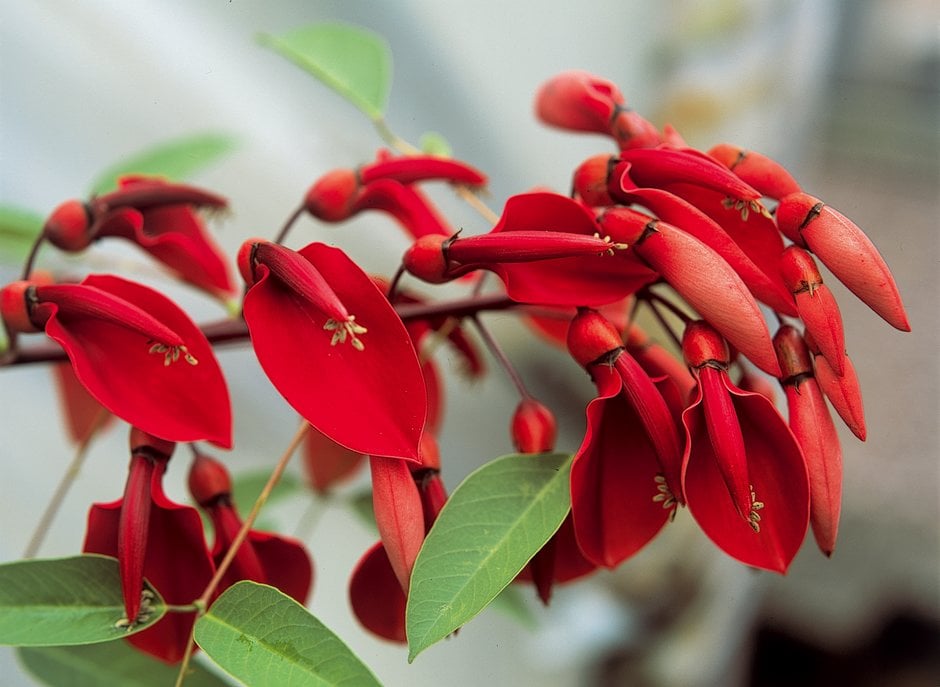
Erythrina crista-galli 'Compacta'

<em>Erythrina</em> <em>crista-galli</em> 'Compacta' RHS
Shrubs Herbaceous Perennial

A subtropical shrub or woody-based perennial, to around 1.5m high in cultivation, with spiny stems and dark green leaves divided into three leaflets. Produces long clusters of striking deep red pea-like flowers from summer into autumn

Position

Full sun

Soil Types

Sand, Loam

Max Height

1-1.5 metres

Max Spread

1-1.5 metres

Size

Time to Maturity
2–5 years
Max Spread
1-1.5 metres
Max Height
1-1.5 metres

Growing Conditions

Sand Loam
Moisture
Moist but well–drained
pH
Acid or Alkaline or Neutral

Position

Full sun
Aspect
South–facing or West–facing
Exposure
Sheltered
Hardiness
H3

Colour & Scent

Season Stem Flower Foliage Fruit
Spring
Summer
Autumn
Winter

Botanical Details

Family
Fabaceae
Native to GB/Ireland
No
Foliage
Deciduous
Habit
Bushy
Genus
Erythrina can be deciduous or evergreen subshrubs, shrubs or trees, often spiny, with trifoliate leaves and showy pea-like flowers which may be solitary, or in axillary or terminal racemes
Name Status
Unresolved

How to Grow

Cultivation

In frost-free areas, may be grown outdoors in fertile, moist but well-drained soil in full sun; needs heat to flower well, so a position against a sunny wall is ideal. Plants often die back over winter and should be protected with a thick mulch. In colder areas, grow in a peat-free, loam-based compost in a temperate greenhouse, or in containers that can be moved indoors over winter

Propagation

Propagate by softwood cuttings in early summer, or by semi-ripe cuttings in late summer, both will need bottom heat

Suggested planting locations and garden types

  • City and courtyard gardens
  • Cottage and informal garden
  • Patio and container plants
  • Sub-tropical
  • Conservatory and greenhouse
  • Flower borders and beds

Pruning

Pruning group 1; restrictive pruning may be required if grown under glass

Pests

May be susceptible to glasshouse red spider mite and mealybugs when grown under glass

Diseases

May be susceptible to honey fungus (rarely)