Ranunculus arvensis
corn buttercup
This dainty annual buttercup was once a common cornfield weed but is now found only in a few scattered locations in England and Scotland. The leaves are deeply divided, with three or five narrow leaflets, and the flowers are relatively small, pale lemon-yellow, appearing in late spring and early summer. The seeds have distinctive, spiky seed cases. Provides nectar for bees and butterflies, and seed for birds
Other common names
cornfield crowfootdevil on both sides
see moredevil's coach wheel
devil's curry comb
hellweed
hungerweed
starve-acre
devil's claws
hedgehog
cranfanc yr ŷd
Synonyms
Ranunculus reticulatus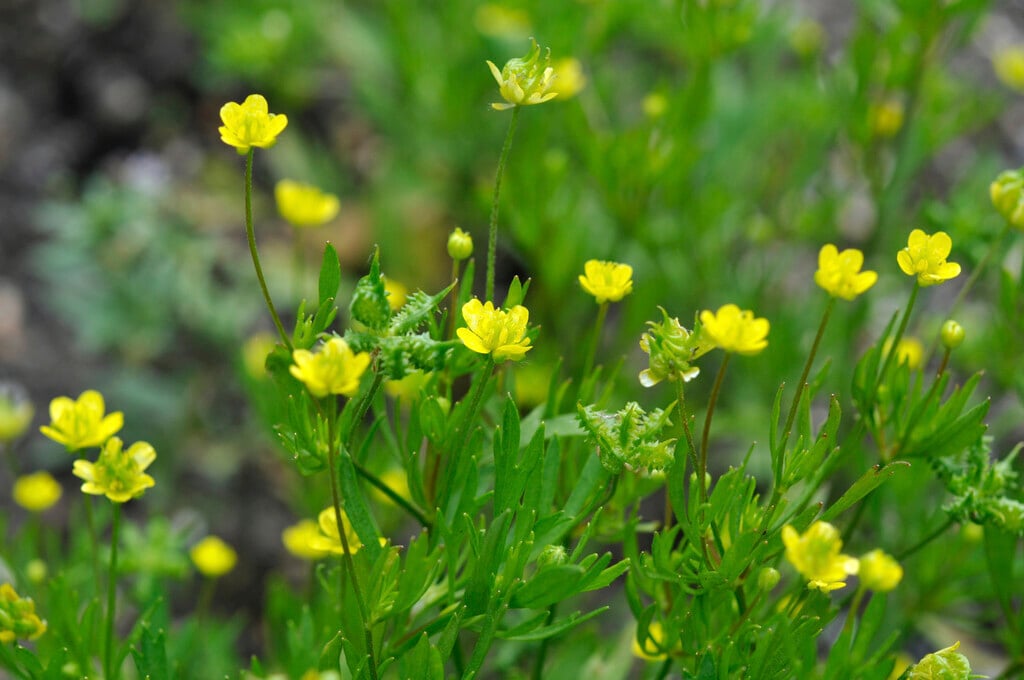
Size
Ultimate height
0.1–0.5 metresTime to ultimate height
1 yearUltimate spread
0.1–0.5 metresGrowing conditions
Moisture
Moist but well–drained, Well–drainedpH
Alkaline, NeutralColour & scent
| Stem | Flower | Foliage | Fruit | |
| Spring | Yellow | Green | ||
|---|---|---|---|---|
| Summer | Yellow | Green | ||
| Autumn | Green | |||
| Winter |
Position
- Full sun
Aspect
South–facing or West–facing
Exposure
Exposed or Sheltered Hardiness
H5Botanical details
- Family
- Ranunculaceae
- Native to GB / Ireland
- Yes
- Foliage
- Deciduous
- Habit
- Clump forming
- Potentially harmful
- Harmful if eaten, skin irritant. Wear gloves and other protective equipment when handling. Pets: Harmful if eaten, skin irritant - for further information and contact numbers regarding pets, see the HTA guide to potentially harmful plants
- Genus
Ranunculus can be annuals, biennials, evergreen or herbaceous perennials, with rhizomes, tubers or spreading by runners. The leaves are variable but often palmately lobed or dissected and the flowers usually bowl-shaped
- Name status
Correct
How to grow
Cultivation
Naturally found in disturbed or cultivated ground on a wide range of soils. Tolerant of heavy clay, it prefers neutral to alkaline soil in full sun
Propagation
Propagate by seed
Suggested planting locations and garden types
- Cottage and informal garden
- Wildlife gardens
- Flower borders and beds
Pruning
No pruning required
Pests
Generally pest-free
Diseases
Generally disease-free
Get involved
The Royal Horticultural Society is the UK’s leading gardening charity. We aim to enrich everyone’s life through plants, and make the UK a greener and more beautiful place.