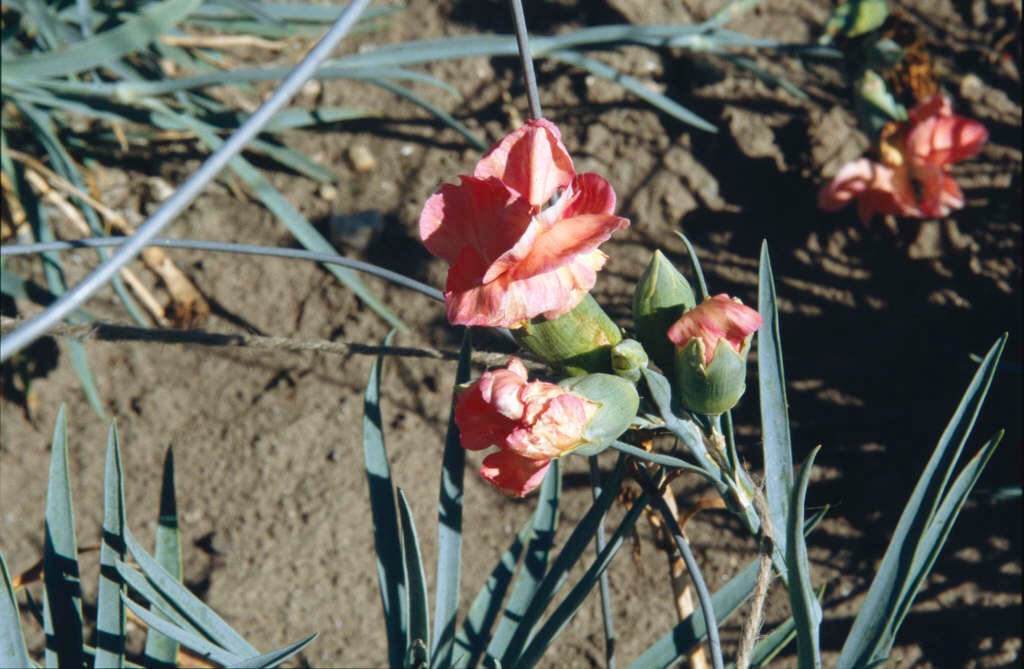
Dianthus 'Spinfield Happiness' (b)

RHS Plant Profile
border carnation 'Spinfield Happiness'
border carnation 'Spinfield Happiness' RHS 1995
Herbaceous Perennial

'Spinfield Happiness' is a vigorous perennial with unscented, double, pale orange-yellow flowers 6cm across, the petals becoming streaked with deep rose towards the margins

Position

Full sun

Soil Types

Chalk, Loam, Sand

Max Height

0.1-0.5 metres

Max Spread

0.1-0.5 metres

Size

Time to Maturity
2–5 years
Max Spread
0.1-0.5 metres
Max Height
0.1-0.5 metres

Growing Conditions

Chalk Loam Sand
Moisture
Well–drained
pH
Alkaline or Neutral

Position

Full sun
Aspect
South–facing or East–facing
Exposure
Exposed or Sheltered
Hardiness
H6

Colour & Scent

Season Stem Flower Foliage Fruit
Spring
Summer
Autumn
Winter

Botanical Details

Family
Caryophyllaceae
Native to GB/Ireland
No
Foliage
Evergreen
Habit
Bushy
Potentially harmful
Humans/Pets: Skin allergenwear gloves and other protective equipment when handling. For further information and contact numbers regarding pets, see the HTA guide to potentially harmful plants
Genus
Dianthus can be annuals, evergreen perennials or subshrubs with narrow, often greyish leaves and showy flowers that are frequently fragrant
Name Status
Accepted
Horticultural Group
Border carnations are hardy evergreen perennials with linear leaves and erect stems bearing fully double flowers to 8cm across in mid-summer, sometimes clove-scented

How to Grow

Cultivation

Grow in a well-drained, neutral to alkaline soil in full sun. Prefers a soil enriched with well-rotted manure or garden compost and an application of a balanced fertiliser in spring

Propagation

Propagate by softwood cuttings of non-flowering shoots in summer or by layering after flowering

Suggested planting locations and garden types

  • Coastal
  • Cottage and informal garden
  • Gravel garden
  • Patio and container plants
  • Cut flowers
  • Flower borders and beds
  • Banks and slopes
  • Garden edging

Pruning

Deadhead regularly to prolong flowering

Pests

May be susceptible to slugs and aphids

Diseases

May be susceptible to powdery mildews, a rust, a virus and fusarium wilt