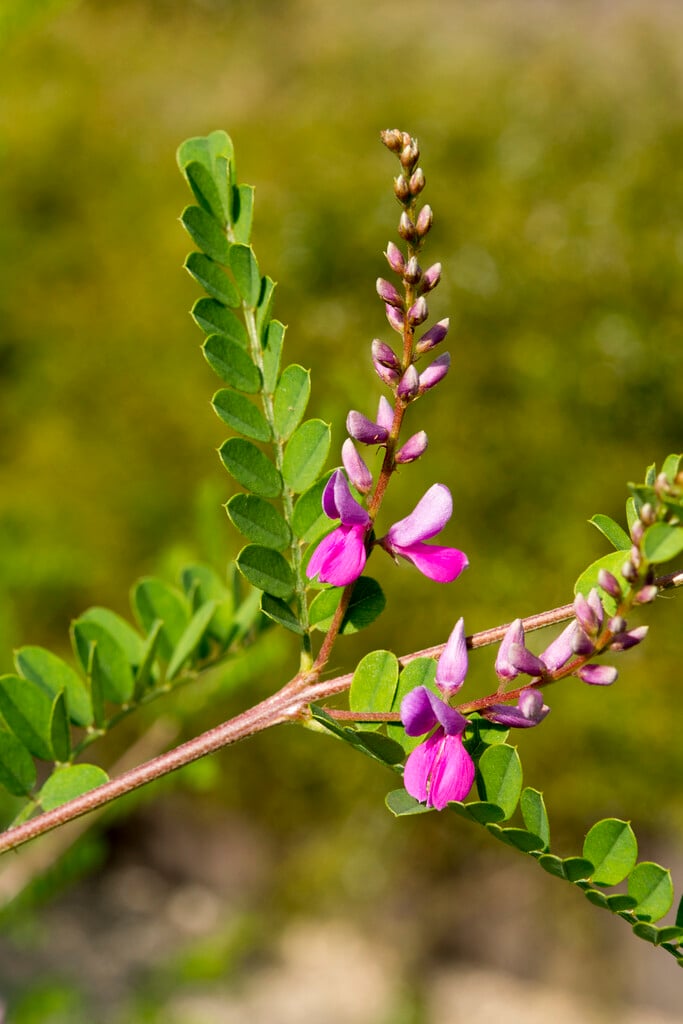
Indigofera tinctoria

RHS Plant Profile
black henna
black henna visionspictures.com

Other common names

devil's dye, dyer's indigo, indigo

Shrubs

A spreading, deciduous shrub with arching stems up to 2m high and wide, with pinnate, pale green leaves and producing racemes of small wisteria-like pink flowers in summer. This plant is the source of the blue vegetable dye indigo which is present in small quantities in the leaves

Position

Full sun

Soil Types

Chalk, Clay, Loam, Sand

Max Height

1.5-2.5 metres

Max Spread

1.5-2.5 metres

Size

Time to Maturity
5–10 years
Max Spread
1.5-2.5 metres
Max Height
1.5-2.5 metres

Growing Conditions

Chalk Clay Loam Sand
Moisture
Moist but well–drained or Well–drained
pH
Acid or Alkaline or Neutral

Position

Full sun
Aspect
South–facing or West–facing
Exposure
Sheltered
Hardiness
H5

Colour & Scent

Season Stem Flower Foliage Fruit
Spring
Summer
Autumn
Winter

Botanical Details

Family
Fabaceae
Native to GB/Ireland
No
Foliage
Deciduous
Habit
Bushy
Genus
Indigofera can be deciduous or evergreen trees or shrubs, herbaceous perennials or annuals with pinnate leaves and spikes or racemes of small, pea-like flowers in summer or autumn
Name Status
Correct

How to Grow

Cultivation

Grow in well-drained, moderately fertile soil in full sun

Propagation

Propagate by seed or semi-hardwood cuttings

Suggested planting locations and garden types

  • City and courtyard gardens
  • Cottage and informal garden
  • Low Maintenance
  • Banks and slopes
  • Wall side borders

Pruning

Pruning group 1 or Pruning group 13 if wall trained, but can be hard pruned in spring if needed

Pests

Generally pest-free

Diseases

May be susceptible to honey fungus in gardens where it is present but insufficient data to determine degree of susceptibility