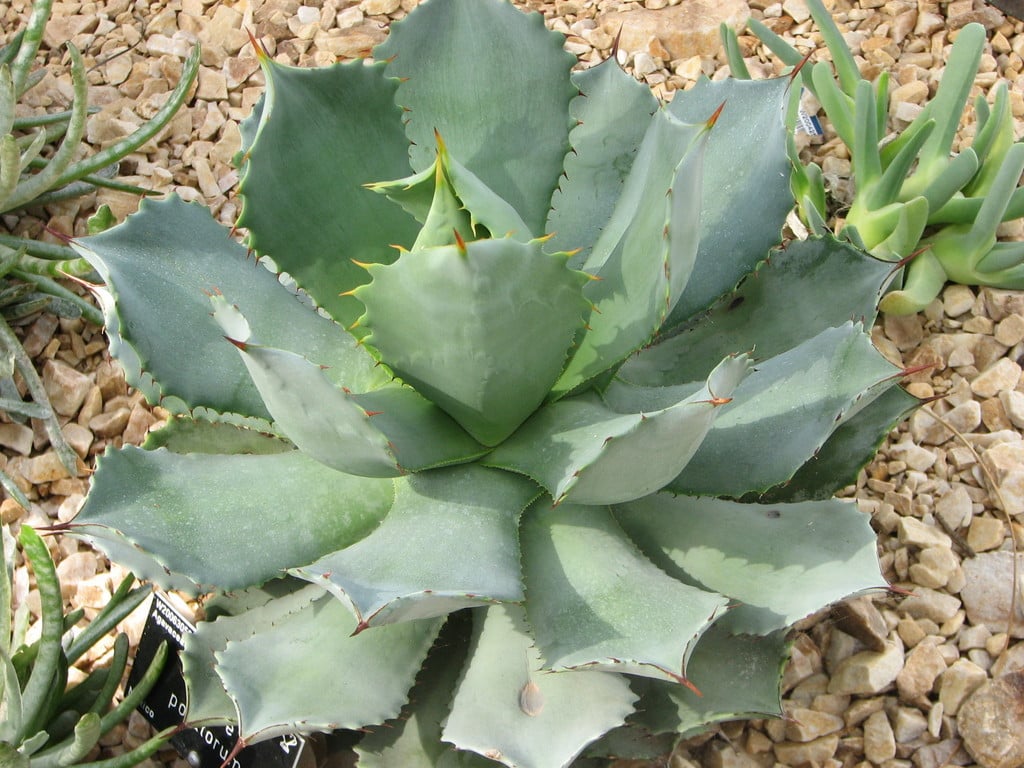
Agave potatorum

RHS Plant Profile
Verschaffelt agave
Verschaffelt agave RHS

Other common names

toper's agave

Synonyms

Agave verschaffeltii

Award of Garden Merit
Cactus Succulent Conservatory Greenhouse

A variable species, in terms of colour and habit, but is generally a solitary or slowly clump-forming species forming a compact and symmetrical rosette of light green to blue-grey, glaucous foliage with reddish-brown marginal spines and a larger, twisted spine at the leaf-tip. Stems are monocarpic, producing flowers and seeds only once on reaching maturity and then dying. Flower spikes can be 3-5m with light green flowers tinged with red and with red bracts

Position

Full sun

Soil Types

Loam, Sand

Max Height

4-8 metres

Max Spread

0.5-1 metres

Size

Time to Maturity
10–20 years
Max Spread
0.5-1 metres
Max Height
4-8 metres

Growing Conditions

Loam Sand
Moisture
Well–drained
pH
Acid

Position

Full sun
Aspect
West–facing or South–facing
Exposure
Sheltered
Hardiness
H2
Drought Resistance
Yes

Colour & Scent

Season Stem Flower Foliage Fruit
Spring
Summer
Autumn
Winter

Botanical Details

Family
Asparagaceae
Native to GB/Ireland
No
Foliage
Evergreen
Habit
Bushy
Potentially harmful
Skin irritant. Wear gloves and other protective equipment when handling. Pets (dogs, cats): harmful if eaten. For further information and contact numbers regarding pets, see the HTA guide to potentially harmful plants
Genus
Agave can be perennial or monocarpic succulents, forming rosettes of usually rigid, fleshy, spiny-edged leaves, with funnel-shaped flowers in racemes or panicles often much taller than the rosettes
Name Status
Correct
Plant Range
Mexico

How to Grow

Cultivation

Grow in sharply-draining or cactus compost in full light. Water freely in summer, but allow compost to become dry in before watering again. Give a low-nitrogen feed three or four times during the growing period. Water less in autumn and keep cool and dry in winter. Provide winter protection, or grow in a container and overwinter in a greenhouse or conservatory. See houseplant cacti and succulent cultivation for further information

Propagation

Propagate by seed, or remove offsets

Suggested planting locations and garden types

  • Architectural
  • City and courtyard gardens
  • Sub-tropical
  • Gravel garden
  • Patio and container plants
  • Mediterranean climate plants

Pruning

No pruning required

Pests

May be susceptible to scale insects

Diseases

Generally disease-free