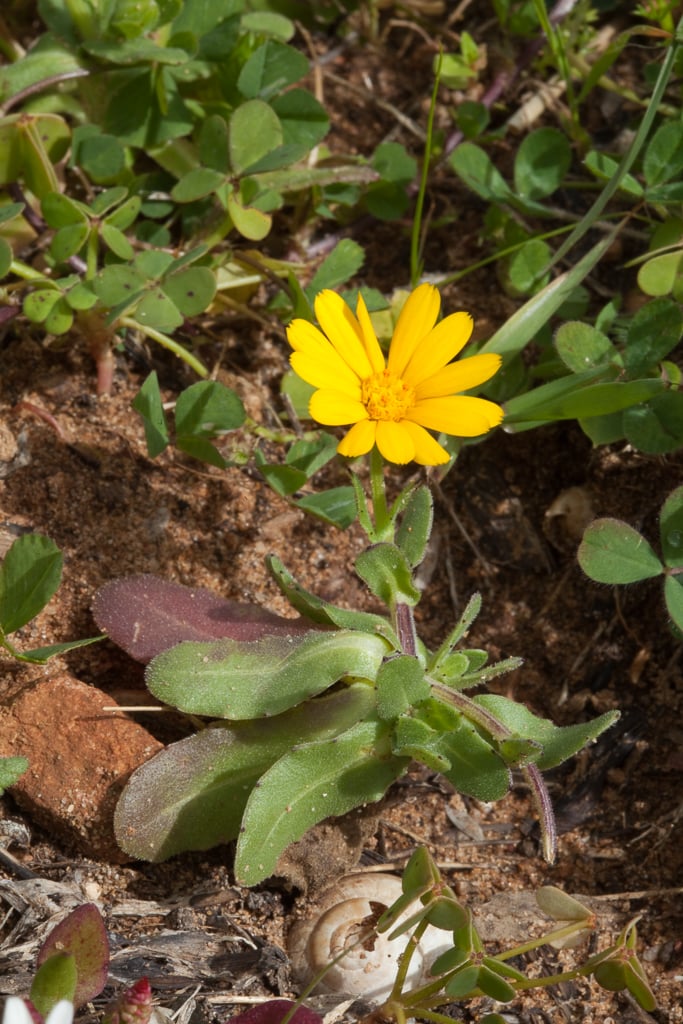
Calendula suffruticosa subsp. algarbiensis

<em>Calendula</em> <em>suffruticosa</em> subsp. <em>algarbiensis</em> John Fielding
Herbaceous Perennial

An attractive perennial marigold species native to the South East Iberian Peninsula and growing to 30cm tall. It has rounded lower green leaves and a tall, single stem bearing a bright yellow flower

Position

Full sun, Partial shade

Soil Types

Loam, Sand

Max Height

0.1-0.5 metres

Max Spread

0.1-0.5 metres

Size

Time to Maturity
2–5 years
Max Spread
0.1-0.5 metres
Max Height
0.1-0.5 metres

Growing Conditions

Loam Sand
Moisture
Well–drained
pH
Acid or Alkaline or Neutral

Position

Full sun Partial shade
Aspect
East–facing or South–facing or West–facing
Exposure
Exposed or Sheltered
Hardiness
H4
Drought Resistance
Yes

Colour & Scent

Season Stem Flower Foliage Fruit
Spring
Summer
Autumn
Winter

Botanical Details

Family
Asteraceae
Native to GB/Ireland
No
Foliage
Deciduous
Habit
Bushy, Clump forming
Genus
Calendula can be annuals or woody-based perennials, with simple, aromatic leaves and showy, orange or yellow, daisy-like flower-heads in summer and autumn
Name Status
Correct

How to Grow

Cultivation

Grow in well drained soil in full sun. Sow direct in summer, 0.5cm deep into finely prepared soil

Propagation

Propagate by seed sown in spring or autumn

Suggested planting locations and garden types

  • Gravel garden
  • Mediterranean climate plants
  • Patio and container plants

Pruning

Regularly deadhead to extend flowering. Cut back to ground level after flowering

Pests

May be susceptible to aphids

Diseases

May be susceptible to Powdery mildews and a virus