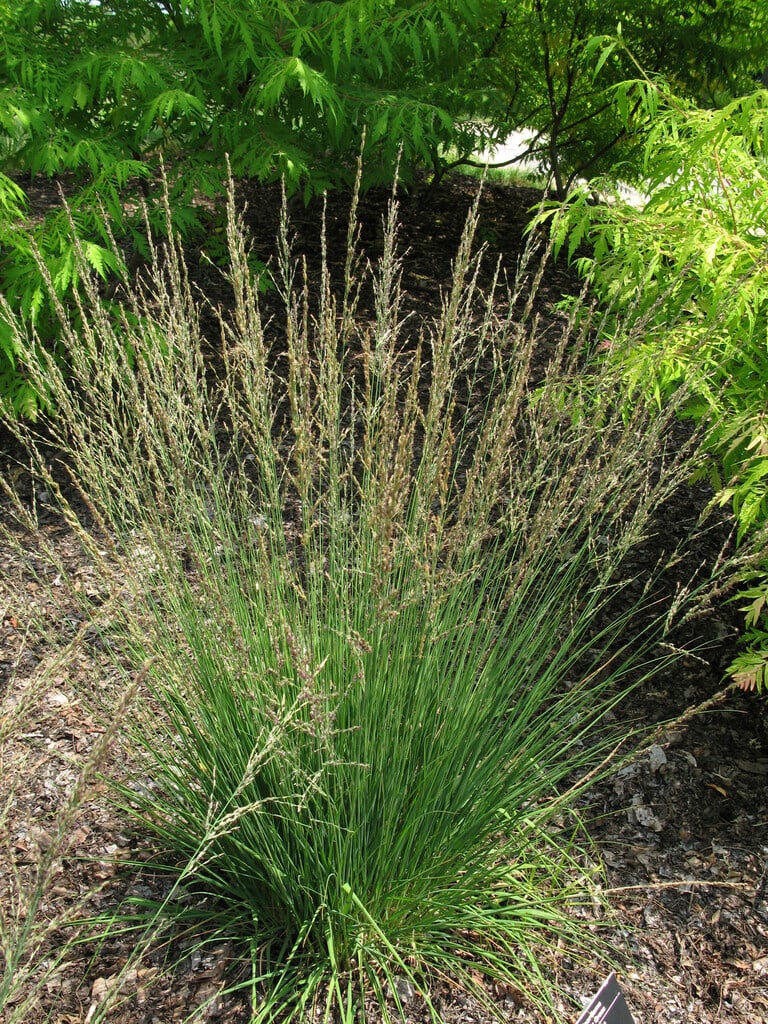
Molinia caerulea subsp. caerulea 'Moorflamme'

RHS Plant Profile
purple moor-grass 'Moorflamme'
purple moor-grass 'Moorflamme' visionspictures.com

Synonyms

Molinia caerulea 'Moorflamme'

Grass Like

Compact, clump-forming deciduous grass about 90cm in height with narrow, linear rich green leaves, purple tinted in autumn. Slender airy plumes of tiny purple flowers, on deep purple, slightly upright stems, are held high above the foliage from summer to autumn, the stems and foliage turn orange-bronze by late autumn

Position

Full sun, Partial shade

Soil Types

Clay, Loam, Sand

Max Height

0.5-1 metres

Max Spread

0.5-1 metres

Size

Time to Maturity
2–5 years
Max Spread
0.5-1 metres
Max Height
0.5-1 metres

Growing Conditions

Clay Loam Sand
Moisture
Moist but well–drained
pH
Neutral or Acid

Position

Full sun Partial shade
Aspect
South–facing or West–facing or East–facing or North–facing
Exposure
Exposed or Sheltered
Hardiness
H7

Colour & Scent

Season Stem Flower Foliage Fruit
Spring
Summer
Autumn
Winter

Botanical Details

Family
Poaceae
Native to GB/Ireland
No
Foliage
Deciduous
Habit
Clump forming, Tufted
Genus
Molinia are deciduous perennial grasses, tufted in habit, with flat, linear leaves and erect stems bearing open flowering panicles in summer
Name Status
Accepted

How to Grow

Cultivation

Will grow in full sun or part shade in any moderately fertile, moist but well-drained soil, but prefers neutral to acidic soil. See ornamental grasses cultivation

Propagation

Propagate species by seed sown in pots in a cold frame in spring or by division in spring. Pot up until established

Suggested planting locations and garden types

  • City and courtyard gardens
  • Coastal
  • Cottage and informal garden
  • Gravel garden
  • Patio and container plants
  • Prairie planting
  • Wildlife gardens
  • Cut flowers
  • Flower borders and beds

Pruning

Cut down dead foliage and old flowered stems, just before growth commences in spring

Pests

Generally pest-free

Diseases

Generally disease-free