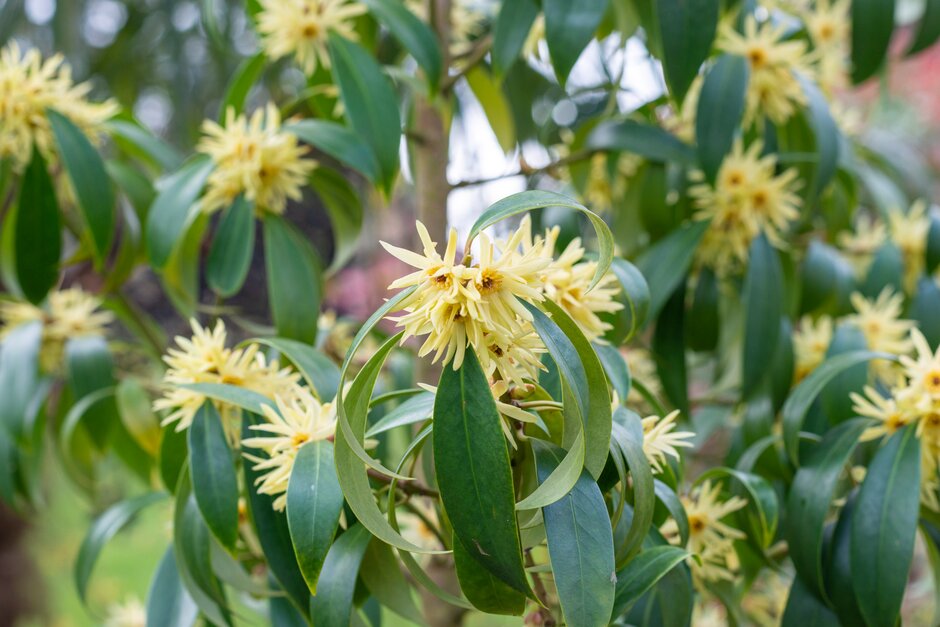
Illicium simonsii

RHS Plant Profile
Simons anise tree
Simons anise tree RHS

Synonyms

Illicium yunnanense

Shrubs

A rare and unusual medium-sized, slow-growing evergreen shrub with narrow, leathery glossy dark green leaves and delicate pale yellow flowers with darker yellow centres which appear from mid to late summer. Although specimens are generally reasonably hardy, it can be a temperamental plant to grow, and requires a warm position which is sheltered from cold temperatures and cold winter winds

Position

Full sun, Partial shade

Soil Types

Loam, Sand

Max Height

1.5-2.5 metres

Max Spread

1.5-2.5 metres

Size

Time to Maturity
10–20 years
Max Spread
1.5-2.5 metres
Max Height
1.5-2.5 metres

Growing Conditions

Loam Sand
Moisture
Well–drained
pH
Acid

Position

Full sun Partial shade
Aspect
South–facing or West–facing
Exposure
Sheltered
Hardiness
H4

Colour & Scent

Season Stem Flower Foliage Fruit
Spring
Summer
Autumn
Winter

Botanical Details

Family
Schisandraceae
Native to GB/Ireland
No
Foliage
Evergreen
Habit
Bushy
Potentially harmful
TOXIC if eaten. Wear gloves and other protective equipment when handling Pets (dogs, cats): TOXIC if eaten - see the HTA guide to potentially harmful plants for further information and useful contact numbers
Genus
licium are evergreen shrubs or small trees with entire, leathery leaves. Both leaves and bark may be aromatic. The many-petalled flowers are borne in the leaf axils, usually singly, followed by star-shaped fruits
Name Status
Correct
Plant Range
China, Myanmar

How to Grow

Cultivation

Grow in moist, but well-drained, humus-rich acidic soil in full sun or partial shade. Under glass grow in ericaceous potting compost in bright light, but shaded from the hottest sun. In the growing season, water moderately and apply a balanced fertiliser on a monthly basis

Propagation

Propagate by semi-ripe cuttings in summer. Can also be propagated by layering in summer

Suggested planting locations and garden types

  • City and courtyard gardens
  • Cottage and informal garden
  • Coastal
  • Patio and container plants
  • Flower borders and beds
  • Wall side borders

Pruning

Pruning group 1

Pests

Generally pest-free

Diseases

Generally disease-free