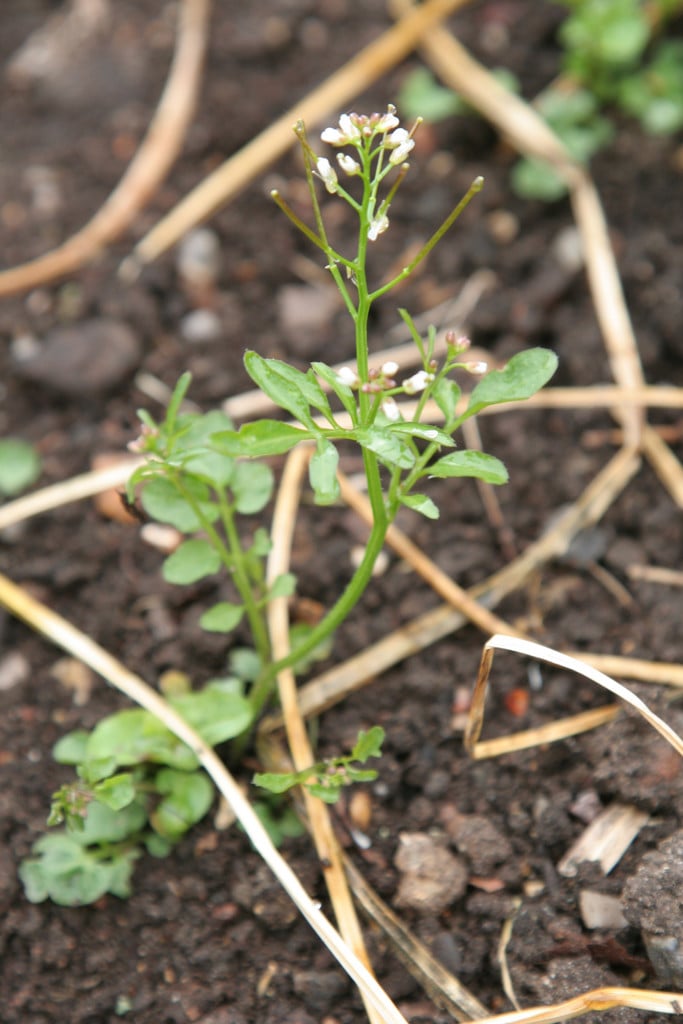
Cardamine flexuosa

RHS Plant Profile
wavy bittercress
wavy bittercress RHS

Other common names

chwerw'r coed

Synonyms

Cardamine sylvatica

Annual Biennial

A fast-growing annual or biennial, with pinnate leaves and small white flowers on wavy stems. It is often found in damp shady spots where it can grow up to 50cm high, though it is usually shorter in garden environments

Position

Full sun, Partial shade

Soil Types

Clay, Loam, Chalk

Max Height

0.1-0.5 metres

Max Spread

0.1-0.5 metres

Size

Time to Maturity
1 year
Max Spread
0.1-0.5 metres
Max Height
0.1-0.5 metres

Growing Conditions

Clay Loam Chalk
Moisture
Moist but well–drained or Poorly–drained
pH
Acid or Alkaline or Neutral

Position

Full sun Partial shade
Aspect
East–facing or North–facing or South–facing or West–facing
Exposure
Exposed or Sheltered
Hardiness
H4

Colour & Scent

Season Stem Flower Foliage Fruit
Spring
Summer
Autumn
Winter

Botanical Details

Family
Brassicaceae
Native to GB/Ireland
Yes
Foliage
Deciduous
Habit
Clump forming
Genus
Cardamine are herbaceous perennials with simple, palmately or pinnately divided leaves and short racemes of 4-petalled white, yellow, pink or purplish flowers in spring or summer
Name Status
Correct

How to Grow

Cultivation

Grows best in moist, shady conditions, but will tolerate a range of positions and soil types. Edible, with a peppery taste, similar to cress and used in the same way. Self-seeds readily, but unwanted plants are easily removed by hand weeding or hoeing. See the advice page on bittercress for more details

Propagation

Propagates by seed produced prolifically through the growing season and dispersed explosively from seed pods. Seeds are sticky when wet and can be spread on shoes and clothing

Suggested planting locations and garden types

  • Wildlife gardens

Pruning

No pruning required

Pests

Generally pest-free

Diseases

May be susceptible to club root