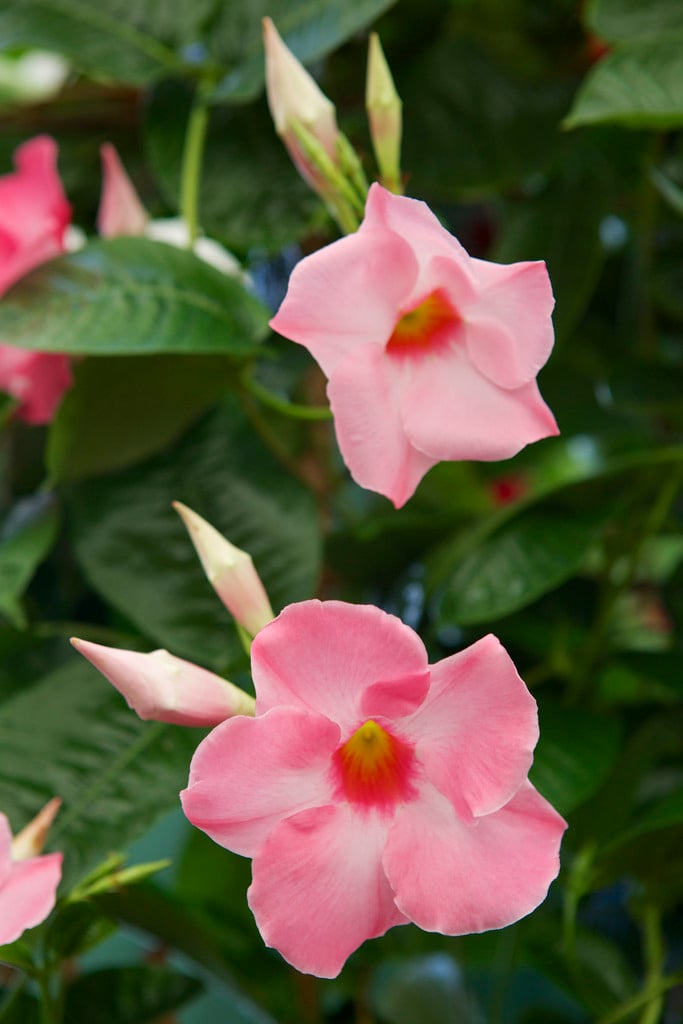
Mandevilla × amabilis 'Alice du Pont'

RHS Plant Profile
mandevilla 'Alice du Pont'
mandevilla 'Alice du Pont' RHS

Synonyms

Mandevilla × amoena 'Alice du Pont'

Award of Garden Merit
Climber Wall Shrub Conservatory Greenhouse

A woody-stemmed, twining climber with slightly wrinkled, evergreen, oval leaves 10-15cm long. In mid- to late summer it produces sprays of up to 20 tubular, bright pink flowers 8-10cm across

Position

Full sun

Soil Types

Loam

Max Height

4-8 metres

Max Spread

1-1.5 metres

Size

Time to Maturity
5–10 years
Max Spread
1-1.5 metres
Max Height
4-8 metres

Growing Conditions

Loam
Moisture
Moist but well–drained
pH
Acid or Alkaline or Neutral

Position

Full sun
Aspect
East–facing or West–facing
Exposure
Sheltered
Hardiness
H1C

Colour & Scent

Season Stem Flower Foliage Fruit
Spring
Summer
Autumn
Winter

Botanical Details

Family
Apocynaceae
Native to GB/Ireland
No
Foliage
Semi evergreen
Habit
Climbing
Potentially harmful
May cause mild stomach upset if eatensap may cause skin irritation. Wear gloves and other protective equipment when handling
Genus
Mandevilla can be woody climbers or perennials, often with tuberous roots, and twining stems bearing simple leaves and axillary racemes of showy, funnel-shaped flowers with 5 spreading lobes
Name Status
Accepted

How to Grow

Cultivation

Grow in a temperate or warm greenhouse or conservatory in peat-free, loam-based compost in full light but with shade from hot sun. Young plants can be grown in pots to stand outside in summer. Usually evergreen, but will drop leaves if too cold in winter

Propagation

Propagate by seed sown with heat in spring, or root softwood cuttings in late spring or semi-ripe cuttings in summer, with bottom heat

Suggested planting locations and garden types

  • Patio and container plants
  • Sub-tropical

Pruning

Pruning group 12 in late winter or early spring

Pests

Maybe susceptible to glasshouse red spider mite, glasshouse whitefly and mealybugs

Diseases

Generally disease-free