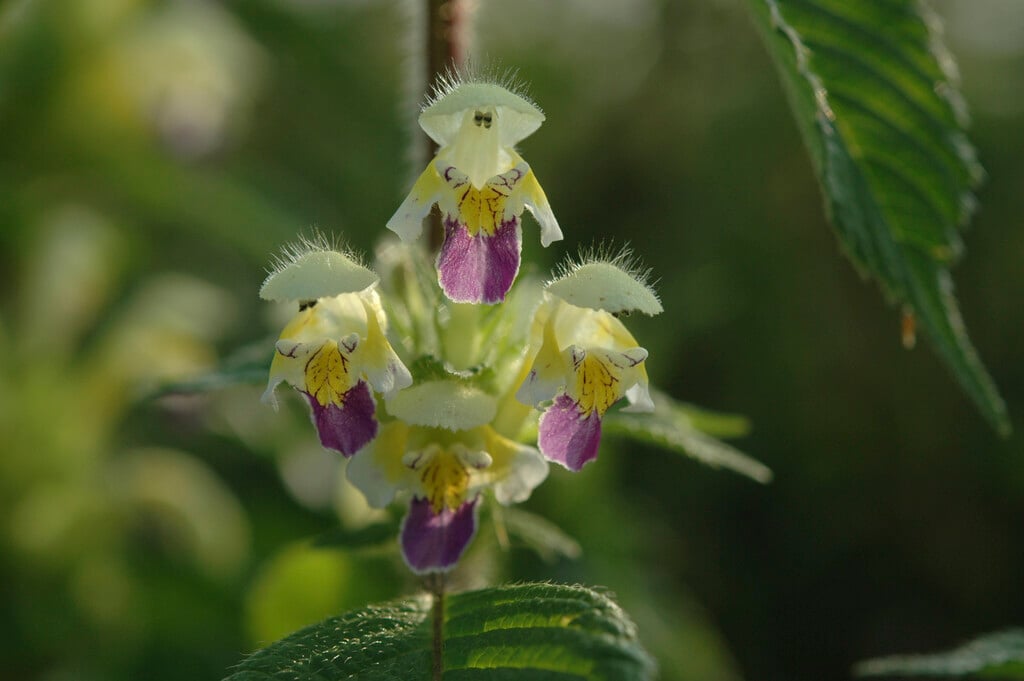
Galeopsis tetrahit

RHS Plant Profile
common hemp nettle
common hemp nettle visionspictures.com

Other common names

bee nettle, day nettle, false hemp, flowering nettle, hemp deadnettle, penboeth cyffredin

Annual Biennial

A widespread annual wildflower found all over the country and growing to a metre tall, with square stems and toothed, oval leaves. In mid-summer to autumn it bears whorls of pinkish-red or white flowers, providing nectar and pollen for insects

Position

Full sun, Partial shade

Soil Types

Clay, Loam

Max Height

0.5-1 metres

Max Spread

0.1-0.5 metres

Size

Time to Maturity
1 year
Max Spread
0.1-0.5 metres
Max Height
0.5-1 metres

Growing Conditions

Clay Loam
Moisture
Moist but well–drained
pH
Acid or Alkaline or Neutral

Position

Full sun Partial shade
Aspect
East–facing or South–facing or West–facing
Exposure
Exposed or Sheltered
Hardiness
H5

Colour & Scent

Season Stem Flower Foliage Fruit
Spring
Summer
Autumn
Winter

Botanical Details

Family
Lamiaceae
Native to GB/Ireland
Yes
Foliage
Deciduous
Habit
Bushy
Genus
Galeopsis is a genus of poisonous, annual herbaceous plants with nettle-like leaves and tubular-shaped, purple, pink or yellow flowers in summer and autumn. Found in shady woodland areas, fields and on waste ground, they provide a valuable source of nectar for insects and seeds for birds
Name Status
Correct

How to Grow

Cultivation

Occurs naturally in cultivated fields, waste ground, woodland clearings and other disturbed areas, and tolerates a range of conditions provided there is reasonable moisture in the soil

Propagation

Propagate by seed

Suggested planting locations and garden types

  • Wildlife gardens

Pruning

No pruning required

Pests

Generally pest-free

Diseases

Generally disease-free