Not the plant you're looking for? Search over 300,000 plants
Annual Biennial

Cuscuta europaea

greater dodder

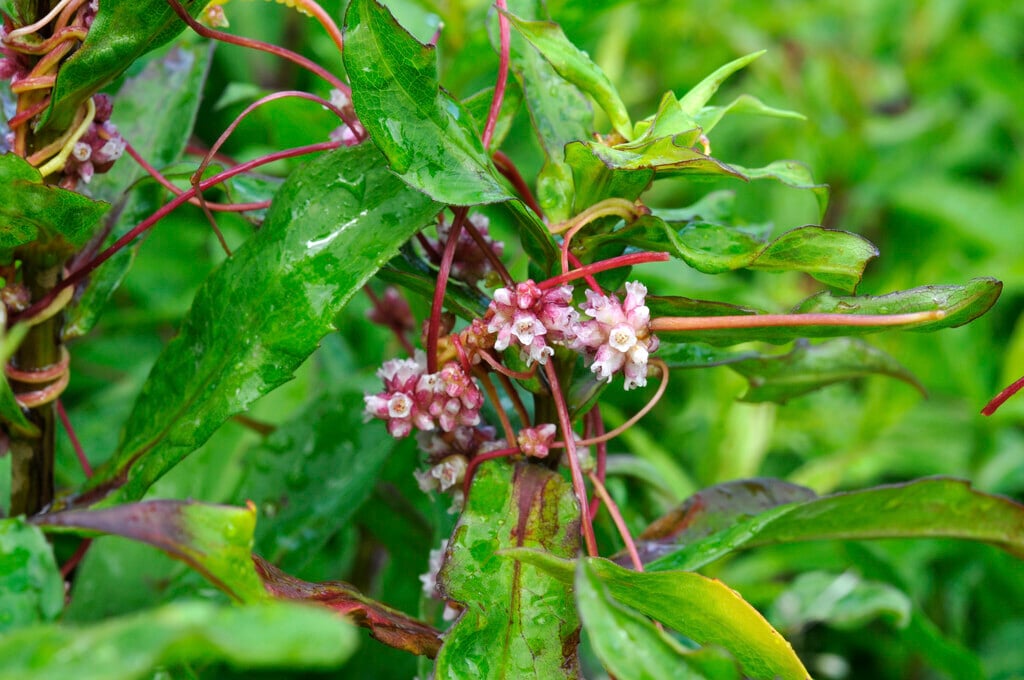
An annual parasitic vine, notable for its distinctively vibrant orange-yellow, thread-like stems. Growing approximately 1–2m in height and spread extensively across host plants, it entirely lacks conventional leaves, instead possessing minute scale-like structures. Small clusters of lightly scented, cream-white to pinkish, bell-shaped flowers bloom from July to September. Although interesting ecologically for its parasitic lifestyle, it is not recommended for garden use due to its aggressive and harmful effect on host plants

Other common names
strangle tare
strangle weed
Size
Ultimate height
1.5–2.5 metres
Time to ultimate height
1 year
Ultimate spread
1.5–2.5 metres
Growing conditions
Chalk
Clay
Loam
Sand
Moisture
Poorly–drained
pH
Acid, Alkaline, Neutral
Colour & scent
StemFlowerFoliageFruit
Spring Orange Yellow
Summer Cream Pink White Orange Yellow
Autumn Orange Yellow
Winter
Position
  • Full sun
  • Partial shade
Aspect

South–facing or West–facing

Exposure
Exposed or Sheltered
Hardiness
H7
Botanical details
Family
Convolvulaceae
Native to GB / Ireland
Yes
Foliage
Deciduous
Habit
Climbing
Name status

Correct

How to grow

Cultivation

Thrives best in damp, sunny sites, parasitising vigorous hosts like nettles (Urtica dioica), willowherbs (Epilobium spp.), and hops (Humulus lupulus) in nutrient-rich conditions

Propagation

Primarily propagates by seed, which can remain dormant in soil for years. Once sprouted, seedlings must quickly locate a host plant or perish

Suggested planting locations and garden types
  • Wildlife gardens
Pruning

No pruning required

Pests

Generally pest-free

Diseases

Generally disease-free

Get involved

The Royal Horticultural Society is the UK’s leading gardening charity. We aim to enrich everyone’s life through plants, and make the UK a greener and more beautiful place.