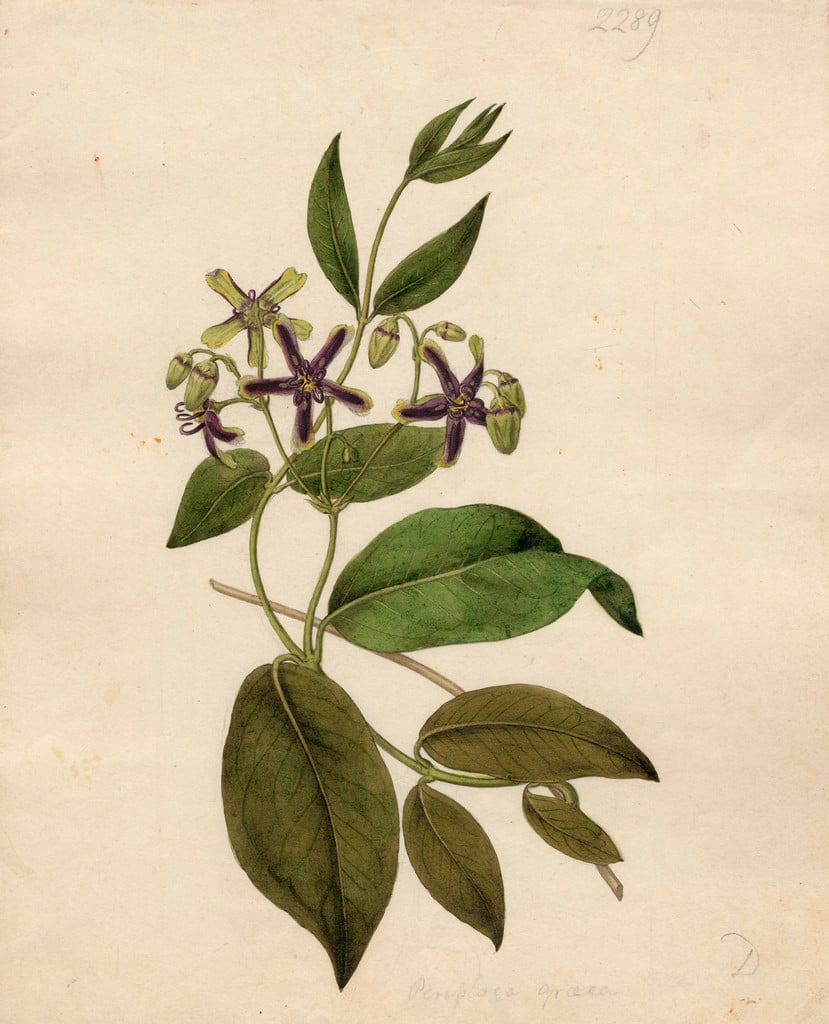
Periploca graeca

RHS Plant Profile
silk vine
silk vine RHS

Other common names

climbing dog's bane, milk vine, Syrian silk vine, Virginian silk

Climber Wall Shrub

This vigorous climber's common name, silk vine, refers to its oval pods that split to show their fluffy seed. They are preceded in summer by clusters of small, star-shaped, hanging flowers of intricate construction. They are purplish on the inside, pale green on the outer. Leaves are ovate, waxy and glossy. Like other members of the milkweed family, cut stems exude a milky sap

Position

Full sun

Soil Types

Chalk, Clay, Loam, Sand

Max Height

8-12 metres

Max Spread

4-8 metres

Size

Time to Maturity
5–10 years
Max Spread
4-8 metres
Max Height
8-12 metres

Growing Conditions

Chalk Clay Loam Sand
Moisture
Moist but well–drained
pH
Acid or Alkaline or Neutral

Position

Full sun
Aspect
South–facing or West–facing or East–facing
Exposure
Sheltered
Hardiness
H3

Colour & Scent

Fragrance Flower
Season Stem Flower Foliage Fruit
Spring
Summer
Autumn
Winter

Botanical Details

Family
Apocynaceae
Native to GB/Ireland
No
Foliage
Deciduous
Habit
Climbing
Potentially harmful
The sap and fruit are poisonous. Wear gloves and other protective equipment and wash hands after handling
Genus
Pericploca are a genus of shrubs capable of growing up to a height of 2m. Leaves are lanceolate and woody stems can grow up to 15cm tall and 1cm thick. Flowers are purple-brown on the inside and greenish-white on the outside.
Name Status
Correct

How to Grow

Cultivation

Cold spells may cause die back. Enjoys fertile, well-drained soil and sun. Provide support for twining habit

Propagation

Propagate by seed or semi-ripe cuttings in summer

Suggested planting locations and garden types

  • Cottage and informal garden
  • Wall side borders

Pruning

Pruning is not normally required. Flowers are borne on new wood, so prune in early spring if necessary. See Pruning group 11

Pests

Generally pest-free

Diseases

Generally disease-free