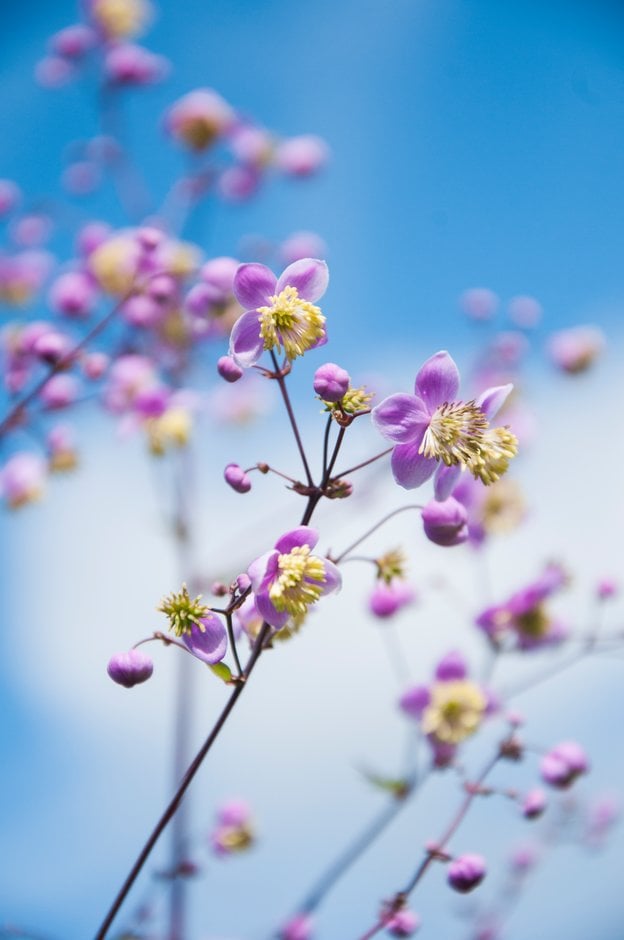
Thalictrum reniforme

RHS Plant Profile
kidney-shaped meadow rue
kidney-shaped meadow rue RHS
Herbaceous Perennial

An erect, rhizomatous, herbaceous perennial up to 1.8m high, with three-pinnate leaves, up to 20cm long, of broadly ovate, orbicular-ovate, or rhombic-obovate, grey-green leaflets, softly hairy beneath, and panicles 20-30cm long of flowers about 2cm across of long, pointed, pale lilac-pink sepals and creamy stamens and pistils from midsummer to early autumn; honeybees visit Thalictrum flowers for pollen

Position

Partial shade

Soil Types

Chalk, Clay, Loam, Sand

Max Height

1.5-2.5 metres

Max Spread

0.1-0.5 metres

Size

Time to Maturity
2–5 years
Max Spread
0.1-0.5 metres
Max Height
1.5-2.5 metres

Growing Conditions

Chalk Clay Loam Sand
Moisture
Moist but well–drained
pH
Acid or Alkaline or Neutral

Position

Partial shade
Aspect
South–facing or North–facing or West–facing or East–facing
Exposure
Exposed or Sheltered
Hardiness
H7

Colour & Scent

Season Stem Flower Foliage Fruit
Spring
Summer
Autumn
Winter

Botanical Details

Family
Ranunculaceae
Native to GB/Ireland
No
Foliage
Deciduous
Habit
Columnar upright
Genus
Thalictrum can be rhizomatous or tuberous perennials with ternately or pinnately divided, often attractive foliage, and panicles or racemes of small flowers with showy stamens and sometimes large colourful petal-like sepals
Name Status
Correct

How to Grow

Cultivation

Grow in moisture-retentive, humus-rich but well-drained soil in full or partial shade, and provide support if necessary, for example by growing among shrubs. See staking perennials for further advice.

Propagation

Propagate by seed, sown in containers in a cold frame as soon as ripe or in early spring, or by division as new growth begins in spring; divisions may be slow to re-establish

Suggested planting locations and garden types

  • City and courtyard gardens
  • Cottage and informal garden
  • Cut flowers
  • Flower borders and beds

Pruning

No pruning required

Pests

May be susceptible to slugs

Diseases

May be susceptible to powdery mildews in dry conditions